What Does a Wind Turbine Technician Do? UK Pay, Skills and Routes In
What UK wind turbine technicians do onshore and offshore, typical pay, the GWO tickets you need, and the apprenticeship and direct-entry routes into the job.
If you've ever stood on a beach in Norfolk, Yorkshire or the Sussex coast and watched a line of turbines turning on the horizon, you've seen a workplace. Every one of those machines needs people who can climb it, fault-find it and keep it generating for twenty-plus years. Those people are wind turbine technicians, and I think it's one of the most underrated career moves an electrician, an engineering apprentice or an ex-forces technician can make right now.
This is the next instalment in our series on what each electrical role actually involves. So far we've covered HV cable jointers, substation fitters, OLE technicians and EV charge point installers. Today it's the people who look after the turbines themselves: what they do, what they earn, the tickets you'll need, and how to get in.
What a wind turbine technician actually does
The short version from the National Careers Service is that wind turbine technicians maintain and repair wind farm turbines on land and at sea. The longer version is more interesting, because a modern turbine is basically a power station on a stick: a gearbox or direct-drive generator, power electronics and converters, a transformer, hydraulic systems, pitch and yaw drives, sensors, and a control system talking constantly to an onshore control room.
On a typical day or shift, a technician might be:
- Carrying out scheduled maintenance: inspections, torque checks, lubrication, filter changes and functional tests.
- Fault-finding when a turbine trips or underperforms, which often means working through electrical, control and hydraulic systems to find the root cause.
- Replacing components, from sensors and contactors to larger parts that need cranes or vessels.
- Testing control systems and blades, and running safety checks on the electrical substations and cables that link turbines to the grid.
- Commissioning new turbines on construction projects, which is where a lot of electrical testing work sits.
- Writing it all up: safety documentation, permits, job reports and records.
It's genuinely multi-skilled. The best technicians are comfortable with a multimeter, a laptop and a torque wrench in the same afternoon. That's why the role suits electricians so well: the mechanical side can be taught, but strong electrical fault-finding is gold.
Onshore vs offshore
Onshore technicians usually work from a regional base and drive out to wind farms, often in rural Scotland, Wales and northern England. You'll be home most nights, though there can be travel and on-call work.
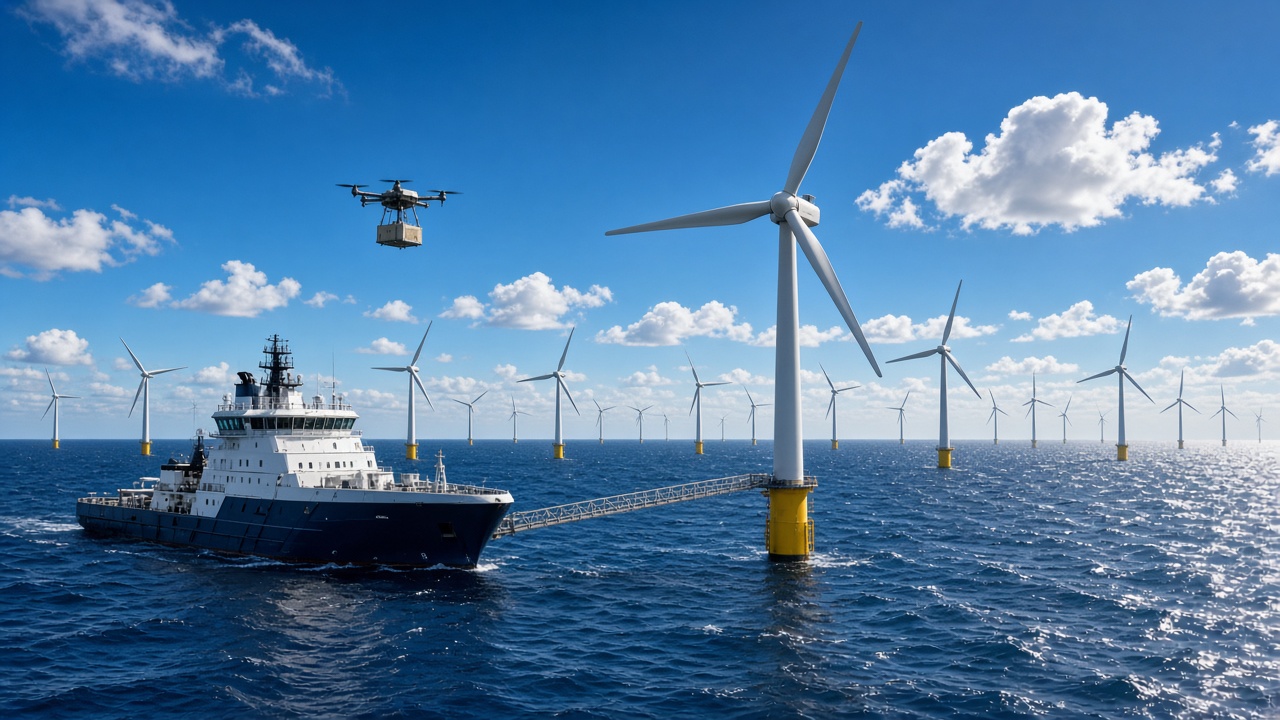
Offshore is a different lifestyle. Technicians transfer to turbines by crew transfer vessel, larger service operation vessels or sometimes helicopter. Rotational patterns, with a block of shifts offshore followed by a block of time at home, are common, and they're a big part of the appeal for many people. Look at RWE's operations bases and you get a sense of the scale: Rampion is run by a 65-strong team from Newhaven, Galloper by about 60 people from Harwich, and Humber Gateway by around 30 from Grimsby, according to RWE's apprenticeship page. That's skilled, permanent work in coastal towns that really value it.
What you'll earn
Let's be precise and honest here, because pay figures online vary wildly.
The National Careers Service puts the typical range at around £25,000 for a starter and £47,000 for an experienced technician, on 37 to 40 hours a week. That's the UK-wide baseline, and it blends onshore and offshore work.
Apprentices start lower while they train. RWE's offshore wind turbine technician apprenticeship, for example, paid £17,510 in the first year, rising each year of the three-year programme, with a pension and private medical cover.
In practice, offshore roles, rotation and shift allowances, senior and supervisory positions, and specialisms such as high-voltage work or commissioning tend to push packages higher than the baseline. My advice: compare total packages, not just basic salary. Ask about rotation, travel, overtime, allowances, training budgets and progression before you sign. If you see a range that sounds too good, check what's included.
The tickets and training you'll need
Your trade or engineering qualification gets you in the door. The wind industry then adds its own safety layer.
GWO Basic Safety Training (BST) is the standard most employers expect. The Global Wind Organisation's BST covers first aid, manual handling, fire awareness and working at heights, with sea survival added for offshore work. Many employers will fund it for new starters, but turning up with it already done can make your application stand out.
GWO Basic Technical Training (BTT) covers mechanical, electrical, hydraulic and installation basics, and is often requested for technician roles.
An offshore medical and a fitness test are standard for offshore work. Some employers also run swimming and climbing assessments.
A full driving licence is usually required, and the National Careers Service notes you'll need to pass background checks. RWE also says some roles may require security vetting to SC level.
If you're already an electrician, your 18th Edition knowledge and test and inspection experience are a big advantage. Turbines and the substations behind them are high-voltage environments, and electrically strong technicians are often the ones who move into authorised roles.
Routes in
There isn't one single route, which is good news.
Apprenticeships. The classic path is a Level 3 apprenticeship lasting three to four years, such as Maintenance Operations Engineering Technician or Mechatronics Maintenance Technician. RWE's programme trains apprentices at Coleg Llandrillo in North Wales or IPS International in Rochester, with time on its offshore wind farms. Entry usually needs five GCSEs at grade 4 or above, including maths, English and science. Timing matters: RWE's 2026 intake opened applications in January and early February, with assessment centres in late April or May. So if you or someone you know is aiming for a 2027 start, now is the time to get the GCSE grades and a CV ready, and to watch the big operators' early careers pages closely in the new year. Programmes change, so check each employer's current page; some operators pause or rework their schemes from year to year.
College and university. Courses in electrical or mechanical engineering, renewable energy engineering or the T Level in Maintenance, Installation and Repair can lead into trainee roles. Degrees and HNDs open the door to engineering and management later.
Direct entry. This is the one I'd shout about. The National Careers Service says you can apply directly if you've got electrical or mechanical engineering experience from another industry or from the armed forces. Industrial electricians, maintenance engineers, marine and military technicians all bring exactly the fault-finding mindset turbines need. Get your GWO training, tailor your CV to show fault-finding, PLC or controls exposure, HV experience and safety culture, and apply.
Where it can take you
The National Careers Service lists progression to authorised technician, supervising a technical team and managing health and safety, and with further training to operations and maintenance manager, control systems engineer or energy engineer.
I'd add a few more. Experienced turbine technicians move into commissioning, blade and drivetrain specialisms, HV authorised person roles on wind farm substations, technical training, and asset management for owners and investors. And because the industry is global, the skills travel. Denmark, Germany and the Netherlands all have large offshore fleets and big projects in the pipeline, which makes this one of the most portable careers in the electrical world.
Why now is a good moment
There's a real tailwind here. Hundreds of turbines are already turning around Britain's coast, new projects are being built in the North Sea, and older wind farms are being looked at for life extension. All of that means long-term operations and maintenance work, not just a construction spike. The UK's next renewables auction, AR8, is now pencilled in for bidding in December, with results expected in February, and I covered the wider picture in our North Sea wind news round-up.
The job is changing for the better, too. Operators are trialling cargo drones and robotics to reduce risky transfers, and turbines generate huge amounts of data that technicians increasingly use to predict faults before they happen. The technician of 2030 will spend more time on diagnostics and less on guesswork. I find that genuinely exciting.
Is it right for you?
Be honest with yourself about the working environment. You'll be at height, outdoors in all weathers, and offshore you'll spend stretches away from home. Fitness matters. Safety culture is non-negotiable. If that sounds daunting, onshore wind is a great middle ground.
But if you like solving problems, enjoy working in a tight team, and want a skilled career that's directly powering the energy transition, it's hard to beat.
Ready to look? Browse the latest electrical, renewables and grid jobs across the UK and Europe on ElectricalRoles.co.uk, and set up a job alert so you hear first when wind and renewables roles are posted.