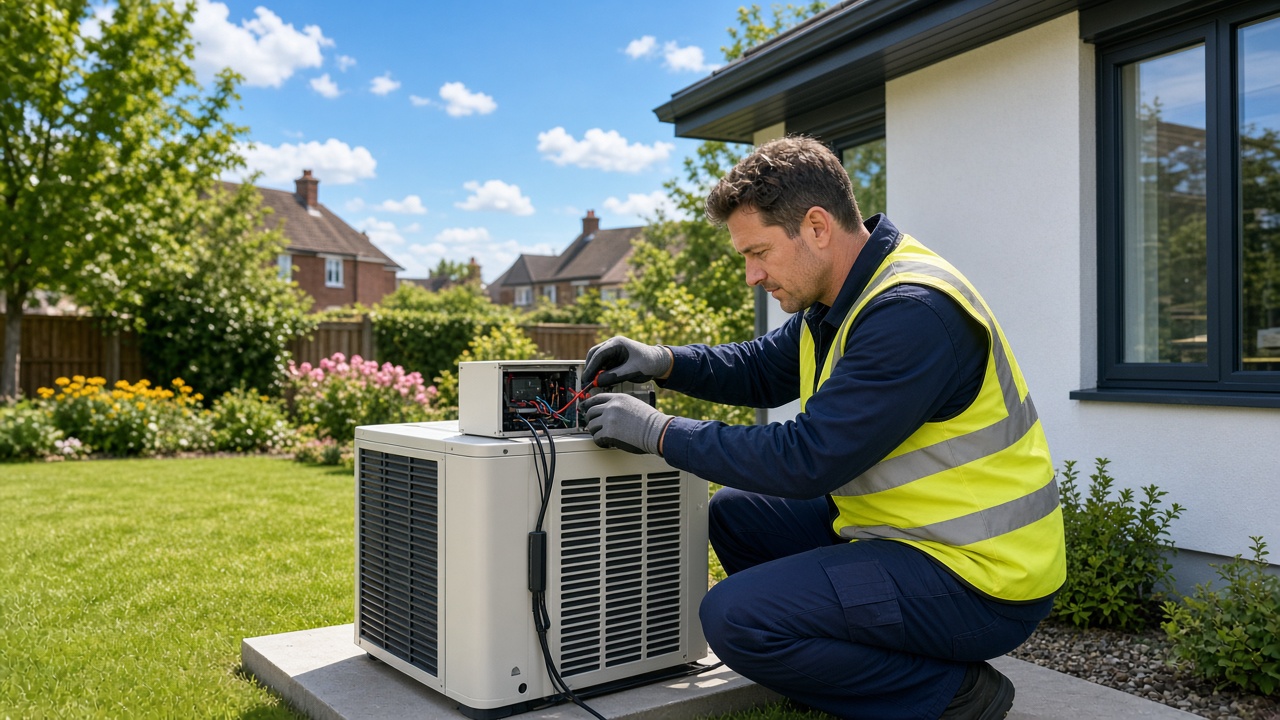
What Does an Inspection and Testing Electrician Do? UK Pay & Routes
What an inspection and testing electrician does in the UK: EICRs, the 2391, new EAS rules, JIB and market pay, and practical steps to get qualified.
Every rented home in England needs one. Every new circuit needs one. Every consumer unit change, rewire, EV charger and solar install ends with one. Behind all that paperwork is a specialist the industry can't get enough of: the inspection and testing electrician.
If you like detective work more than chasing cable, this is one of the smartest moves you can make in the trade right now. Demand is baked in by law, the qualification rules just got tighter (which makes qualified people more valuable), and the skills carry straight into Approved Electrician grading and beyond. Here's what the job really involves, what it pays, and how to get there.
What the job actually is
An inspection and testing electrician (you'll also see "electrical tester", "EICR engineer" or "fixed wire tester" on job ads) proves that an installation is safe and compliant with BS 7671, the 18th Edition Wiring Regulations. The work splits into two families.
Initial verification. This is testing new work before it's energised and handed over: a new circuit, a rewire, a new build or a commercial fit-out. You carry out the inspection and the dead and live tests, record the results, and the installation gets an Electrical Installation Certificate (EIC). On smaller jobs it's a Minor Works certificate.
Periodic inspection and testing. This is reporting on the condition of an existing installation, and the result is the famous Electrical Installation Condition Report (EICR). You're not certifying your own work here; you're assessing someone else's, sometimes decades old, and deciding whether it's safe for continued use.
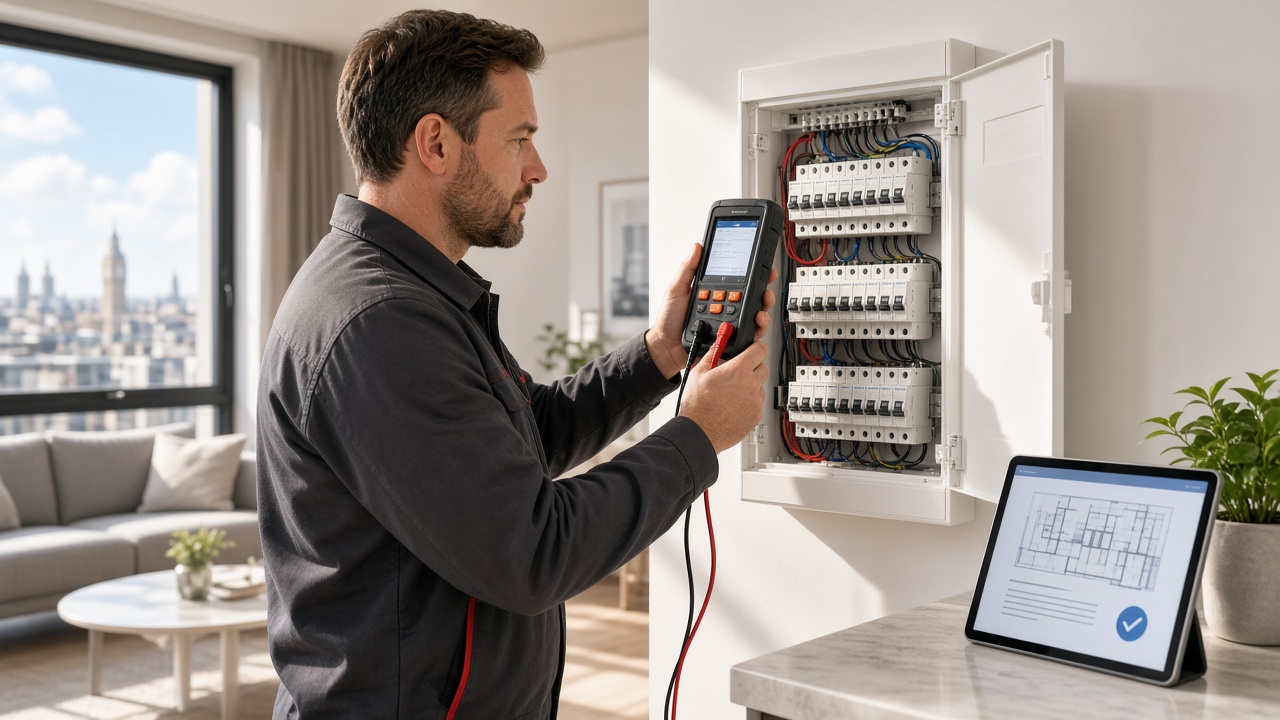
A typical day on periodic work looks like this: a safe isolation, a careful visual inspection of the consumer unit, accessories and bonding, then the test sequence with a multifunction tester. That means continuity, insulation resistance, polarity, earth fault loop impedance and RCD operation, circuit by circuit. Then comes the part that separates a good tester from a box-ticker: coding what you find.
The government guidance for landlords spells out the codes clearly: C1 (danger present), C2 (potentially dangerous), C3 (improvement recommended) and FI (further investigation required without delay). A C1 or C2 makes the report unsatisfactory, and the landlord has 28 days to put it right. Get your coding right and you protect people, protect your client and protect your own name. Get it wrong in either direction and you're either missing danger or scaring people into work they don't need.
Why demand is locked in
This isn't a role that depends on a building boom. It's driven by regulation.
The Electrical Safety Standards in the Private Rented Sector (England) Regulations 2020 require landlords to have their installations inspected and tested by a qualified person at least every five years, with the report given to tenants and, on request, the council. Councils can fine landlords up to £40,000 for breaches.
In 2025 the rules were extended to the social rented sector. Social landlords had to get existing tenancies inspected before 1 November 2026, and they must also have the electrical equipment they supply (cookers, fridges and so on) checked at least every five years. That's a huge, rolling, five-year cycle of work across housing associations and councils, and it sits alongside the wider push on standards in social housing. We covered that side, including Awaab's Law, in our Awaab's Law Phase 2 explainer.
Add commercial premises on their own inspection schedules, insurers wanting reports, home sales, and every new installation needing initial verification, and you've got a specialism that rarely runs dry.
The new EAS rule: individual qualifications now count
This is the big change of autumn 2026, and it's why I wanted to write this guide now.
From 1 October 2026, the updated Electrotechnical Assessment Specification (EAS) applies. As Electrotechnical News reported on 6 November, individuals working for firms registered with scheme providers such as NICEIC, NAPIT, ECA and SELECT must now show formal individual Level 3 qualifications in Solar PV, Electrical Energy Storage, EV Charging, Micro Wind and Periodic Inspection and Testing. It's a shift away from relying only on the Qualified Supervisor model towards recognising each person's competence.
NICEIC's guidance spells out what that means for EICR work. Every "employed person" and QS who carries out or is responsible for periodic inspection and testing needs:
- evidence of at least two years' experience in periodic inspection and testing
- the City & Guilds 2391-51 or 2391-52 Level 3 Award, or another acceptable qualification
- evidence of ongoing CPD
Crucially, "employed persons" includes agency workers, subcontractors and self-employed people working under a firm's registration. NAPIT's EAS guide sets out the same three requirements. The good news for newer sparks is that trainees and apprentices can still do periodic inspection and testing under close supervision of a qualified person, which is how they build that two years.
Electrotechnical News also makes a fair point: awareness has been patchy, and some electricians are only finding out at the wholesaler's counter. For most experienced testers, as the article puts it, this "isn't about learning something new, it's about proving what they already know." NICEIC says that if a firm can't show compliance yet, assessors will agree an action plan, and booking onto the right course usually counts as evidence of progress.
My view? This is great news if you're qualified. Firms that want to keep doing EICRs now need people with the right tickets, and that's a straightforward supply-and-demand argument for better pay.
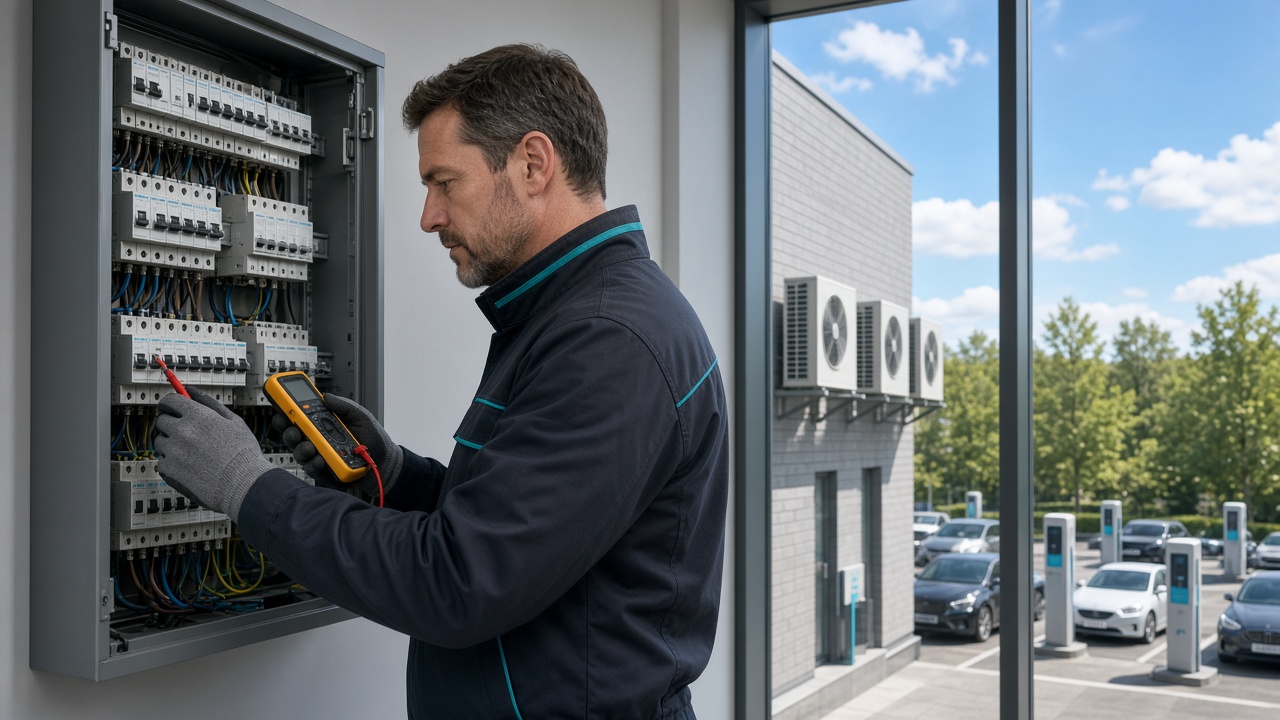
The qualifications that matter
18th Edition (BS 7671). The baseline. Make sure you're current on Amendment 4, which became the only valid version on 15 October 2026. Our BS 7671 Amendment 4 guide covers that.
City & Guilds 2391. According to City & Guilds, there are three pathways, each assessed by an online multiple-choice test and a practical task:
- 2391-50 Initial Verification, for people who verify new installations.
- 2391-51 Periodic Inspection, for people who already hold initial verification (often through their apprenticeship) and want to add condition reporting.
- 2391-52 Combined, for experienced electricians who never gained formal inspection and testing qualifications or want to refresh. It carries 50 guided learning hours.
2394 and 2395. These are the older City & Guilds initial verification and periodic inspection awards that the 2391-50 and -51 replaced. The JIB grading rules say previously recognised inspection and testing qualifications stay valid. For EAS purposes, though, check your certificate against your scheme provider's acceptable qualifications list rather than assuming.
The 2391 isn't for beginners. City & Guilds pitches it at practising electricians, so you'll normally have your Level 3, NVQ and AM2 behind you first.
What it pays
JIB rates. Inspection and testing competence is one of the conditions for the JIB Approved Electrician grade, alongside two years' post-qualification experience, according to the JIB grading definitions. That grade comes with a real pay step. On the JIB Handbook 2026 rates, an Approved Electrician on own transport earns £21.19 an hour now, against £19.54 for an Electrician. In London (inside the M25) it's £23.73. From 4 January 2027 the Approved rate rises to £22.16.
On a 37.5-hour JIB week over 52 weeks (my maths, basic only), that's about £41,300 a year now and £43,200 from January, or about £46,300 on today's London rate, before overtime, shift premiums or responsibility money.
Market rates. Specialist testing roles often pay above the JIB floor. Reed's salary data puts the average advertised Electrical Tester salary at £46,076. The live ads I read there for social housing and council EICR contracts in London and Bristol offered £38,000 to £45,000 basic, with a van, paid qualifications and advertised on-target earnings of £60,000 to £70,000 with overtime and remedial work.
Self-employed. If you go it alone, it helps to know what customers pay. The Less.co.uk EICR Price Survey 2026 found electricians charge an average of £200 including VAT for an EICR on a typical three-bed house, with a typical range of £156 to £264. A one-bed flat averages £125. Landlord-certificate companies averaged £129, which tells you where the price pressure comes from.
So here's my honest advice: don't try to win on price alone. The money in self-employed testing comes from being thorough and trusted, building repeat relationships with letting agents, housing providers and commercial clients, and doing the remedial work properly. You'll also be carrying the costs an employer would otherwise cover: a calibrated tester, insurance, scheme registration, software and your van. Employed roles give you steadier income, paid training and a pipeline of work. Both are good options; pick the one that suits your life.
How to get into it
- Get fully qualified first. Level 3, NVQ and AM2 are the foundation. Testing is where experience pays off.
- Shadow a qualified tester. NICEIC says a written letter from an employer confirming you've shadowed a qualified tester can count towards the two years' experience. Ask your firm to get you on EICR jobs and keep records.
- Book the 2391-52 (or the -51 if you already hold initial verification). Training is getting easier to fit around work: CEF's TechTraining programme, for example, offers City & Guilds Level 3 Inspection and Testing across the UK, according to Electrotechnical News.
- Invest in your kit and your writing. A good multifunction tester matters, and so does clear report writing. Clients judge you on the report.
- Keep a CPD log. It's now an EAS requirement, and it's handy evidence at your next assessment.
- Use the tools. AI assistants such as Grok Bot, Claude or ChatGPT can help you revise regulations, check your understanding of a fault, or tidy up your report wording. Always check the answer against BS 7671 and Guidance Note 3.
- Get graded. Once you've got the qualification and experience, apply for Approved Electrician grading so your ECS card reflects it.
My take
Inspection and testing is where electrical knowledge turns into judgement, and judgement is what clients pay for. With five-yearly checks written into law for private and social rented homes, and the EAS now asking for proof of individual competence, the qualified tester has never been in a stronger position. If you've been putting off the 2391, this is your sign.
Ready to put those skills to work? Browse inspection and testing roles and other electrical jobs across the UK and Europe on ElectricalRoles.co.uk.