North Sea Wind News: What October Means for UK Electricians
Hornsea 3's £3.5bn grid link, East Anglia TWO, Dogger Bank delays and AR8: October's North Sea news and what it means for UK electrical careers.
If you want to know where a big slice of Britain's electrical work is heading over the next few years, look east, out past the coast, into the North Sea. The last fortnight has delivered a burst of offshore wind news: a record-sized transmission tender for Hornsea 3, a cable landfall milestone at East Anglia TWO, a supply-chain deal for Berwick Bank B that's expected to support nearly 500 UK jobs, a frustrating delay at Dogger Bank A, and a slower timetable for the next renewables auction.
Some of that is good news and some of it isn't. But read together, I think it tells a really clear story for electricians, jointers, HV engineers and commissioning technicians across the UK and Europe: the work is real, it's long-term, and the bottleneck is increasingly skilled people, not ambition. Here's my take on what happened and what it means for your career.
Hornsea 3: a £3.5bn transmission link up for grabs
On 21 October, Ofgem launched Tender Round 14 of its offshore transmission owner (OFTO) regime, and it's expected to be the biggest one ever. Investors will compete to own and operate the transmission assets for Hornsea 3, with an estimated value of around £3.5 billion.
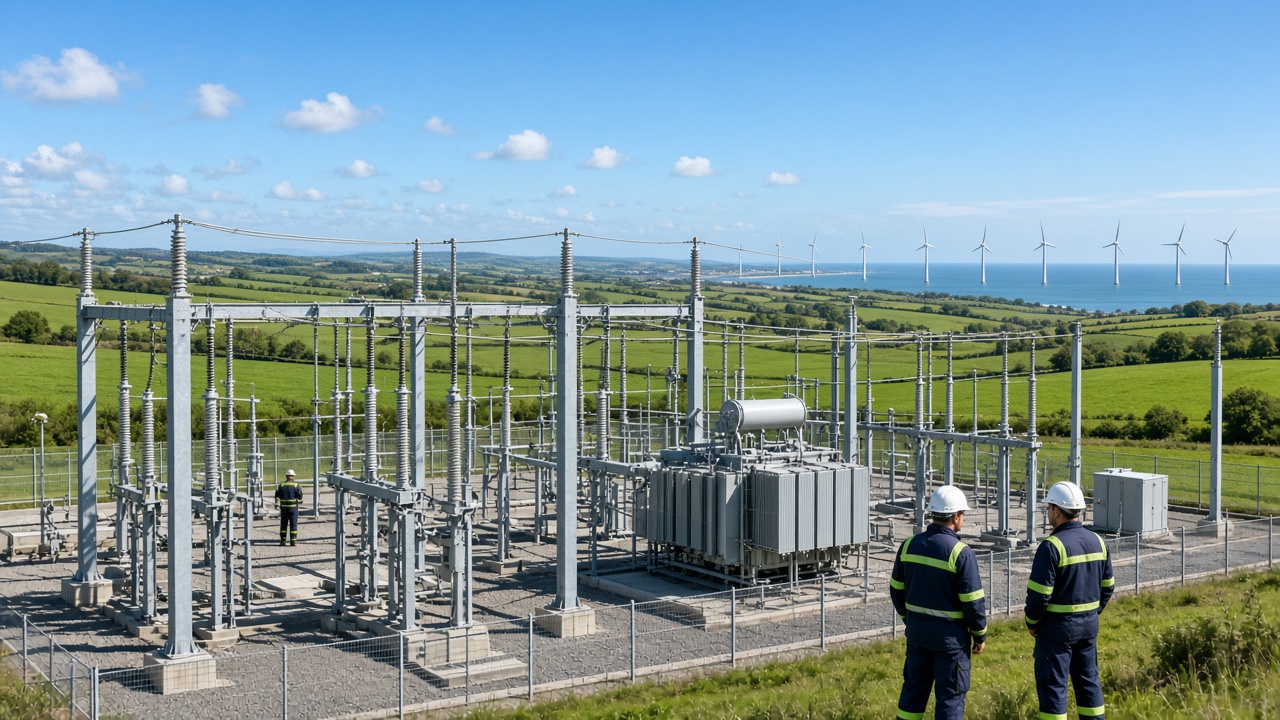
Hornsea 3 sits more than 100 kilometres offshore in the North Sea. Ofgem says it's due for completion by the end of 2027 and is projected to be able to power 3.3 million UK homes. The assets being tendered include the cables plus the offshore and onshore substations, and the winning bidder gets an inflation-linked revenue stream for up to 25 years in return for financing, operating and maintaining them.
Why should an electrician care about a financing tender? Because of that 25-year operating window. Somebody has to maintain, test, fault-find and look after those substations and cable systems for a quarter of a century. Since 2009, Ofgem says winning OFTO bidders have invested over £10 billion in links connecting 28 offshore wind farms, and it expects more North Sea transmission assets to come to market. That's a steady, growing base of operations and maintenance work for HV people, not just a construction spike.
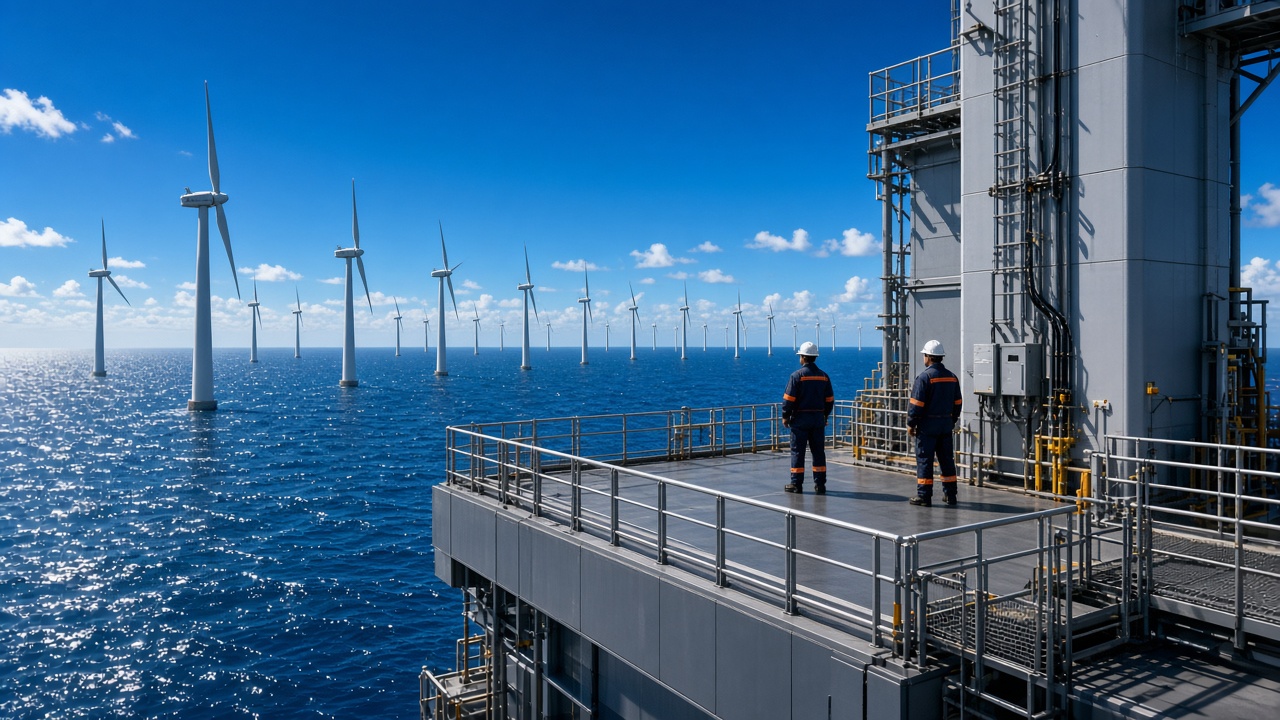
There's a nice detail on the construction side too. Offshore Magazine reports that Heerema installed Hornsea 3's two converter stations last month, and that OEG will supply temporary power during offshore converter station commissioning, using five 200kVA and two 300kVA generators running in sync, up to 1,400kVA in total. Commissioning a converter station at sea is about as specialist as electrical work gets, and it's happening right now off the Yorkshire coast.
East Anglia TWO and Berwick Bank B: progress you can see
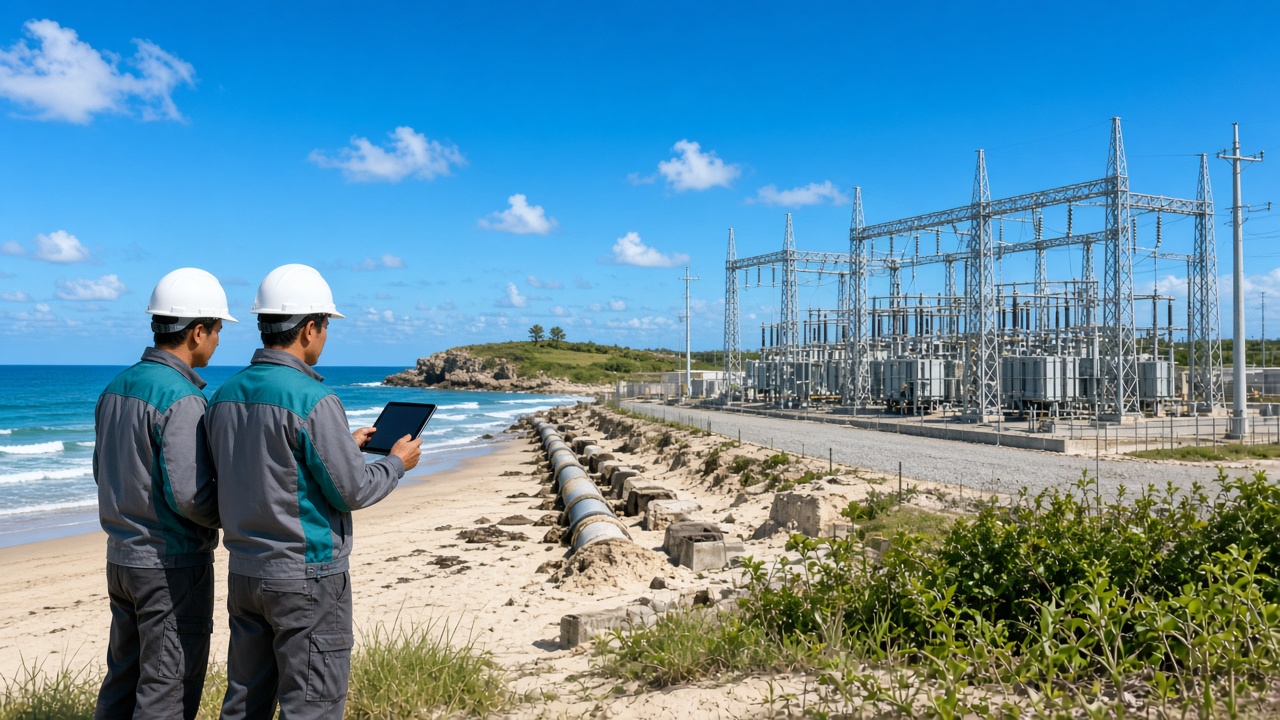
ScottishPower Renewables has completed a subsea drilling and duct pull-in operation at its £4 billion, 960MW East Anglia TWO project off the Suffolk coast. According to the same Offshore Magazine round-up, horizontal directional drilling was used to bore under the coastline and seabed, and the programme included the world's longest continuous single sections of extruded polyethylene ducts, just under 1,800m long and 800mm across. Those ducts will protect the high-voltage export cables bringing power ashore.
The first East Anglia TWO export cables should go in next summer, with commercial operation targeted for late 2028. Read that timeline again if you're a cable jointer or HV technician: that's two more years of cable installation, termination, testing and onshore substation work on just one project.
Further north, SSE reported on 20 October that its preferred supplier agreement with Seaway7 for Berwick Bank B, in the outer Firth of Forth about 38km off Scotland, is expected to support nearly 500 UK jobs. Subject to a final contract award, Seaway7 would design, supply and install the foundations and subsea inter-array cables. That's welcome news for Scotland's east coast, where so much of the next decade's grid and generation work is concentrated.
Dogger Bank A: a reminder that this stuff is hard
Not everything went to plan this month. Dogger Bank A, part of what's planned to be the world's biggest offshore wind farm, 130km off the English coast, has had the contractual deadline for its first 300MW tranche pushed back by eight months, from 30 November 2026 to 31 July 2027. Maritime Journal explains that the Low Carbon Contracts Company granted the extension after a chain of setbacks that started with blade failures in 2024 and rolled on into installation stoppages and commissioning delays.
The detail that jumped out at me: DESNZ said the project hasn't yet been able to test its HVDC transmission assets at a high enough power level to complete grid code compliance. In other words, the last mile of an offshore wind farm is electrical. You can have turbines spinning, but until the transmission system is tested, compliant and handed over, the job isn't done.
I'm not going to pretend delays are good. But I'd read this one realistically rather than gloomily. Projects of this scale are first-of-a-kind engineering, and the lesson the industry keeps relearning is that testing and commissioning capacity matters enormously. If you've got HV testing, protection or commissioning experience, the market is telling you that your skills are exactly what's in short supply.
AR8 slips to December
The other bit of news to note: the UK's next Contracts for Difference auction, Allocation Round 8 (AR8), has been delayed by at least two months. Maritime Journal reports that the government has chosen the longest of five possible timetables because of appeals from applicants whose projects were ruled ineligible. Ofgem has until 18 November to consider those appeals, bidding is now pencilled in for 3 to 9 December, and results are expected on 15 to 17 February. NESO is due to confirm the bidding dates on 19 November.
AR8 covers fixed-bottom and floating offshore wind, plus solar, onshore wind, tidal stream and more. A two-month slip creates some uncertainty for developers and the supply chain, but it doesn't change the direction of travel. When the results land in February, they'll shape the pipeline of construction work into the 2030s, and I'll cover what it means for jobs when they do.
What's happening across the water
This isn't only a British story. In the Dutch North Sea, DEME has secured a contract to install 69 turbines at the Zeevonk offshore wind farm, owned by Vattenfall and Copenhagen Infrastructure Partners, with mobilisation scheduled from 2028 and completion expected in 2029. Ørsted, meanwhile, is taking full ownership of the 172MW Gunfleet Sands wind farm off Essex and looking at options including a potential lifetime extension, which is a quiet signal that older wind farms will need refurbishment and upgrade work too.
It's also great to see the tech moving on. Ørsted has trialled drones carrying cargo between service vessels and turbines at Hornsea 2, aiming to cut technician vessel transfers, and has ordered a third electric ROV for subsea inspection. The offshore technician of 2030 is going to be working alongside drones, robots and digital monitoring, and I think that makes it one of the most exciting jobs in the trade.
My take: where the opportunities are
Put all of this together and here's how I'd think about it if I were building an electrical career today.
HV and commissioning skills are gold. Converter stations, offshore and onshore substations and HVDC links all need authorised persons, protection and control engineers, test engineers and commissioning technicians. If you've got industrial or HV experience, this is the moment to lean into it with further training.
Cable jointers will be busy for years. Export cables, inter-array cables and onshore connections all need skilled jointing and termination. East Anglia TWO alone has its first export cables going in next summer.
Operations and maintenance is the long game. OFTO assets run for up to 25 years. Wind farms like Gunfleet Sands are being considered for life extension. That's steady, skilled work that doesn't disappear when construction finishes, and much of it is based in coastal towns from Suffolk to Yorkshire to the east coast of Scotland.
Offshore isn't the only route in. Plenty of the work is onshore: substations, cable routes, grid connections and the network reinforcement needed behind them. You don't have to love boats to be part of this.
Get your tickets in order. Offshore work typically needs safety training on top of your electrical qualifications, so check what employers are asking for in the ads you're interested in and plan ahead.
I'm genuinely optimistic about this. The UK has some of the best offshore wind resources in the world, and the projects in the water now will be powering millions of homes for decades. Yes, there'll be delays and wobbles along the way. But the demand for skilled electrical people across offshore wind and the grid behind it isn't going anywhere.
Ready to be part of it? Browse the latest electrical, HV and renewables jobs across the UK and Europe on ElectricalRoles.co.uk.