Energy Independence Bill: What It Means for UK Electricians
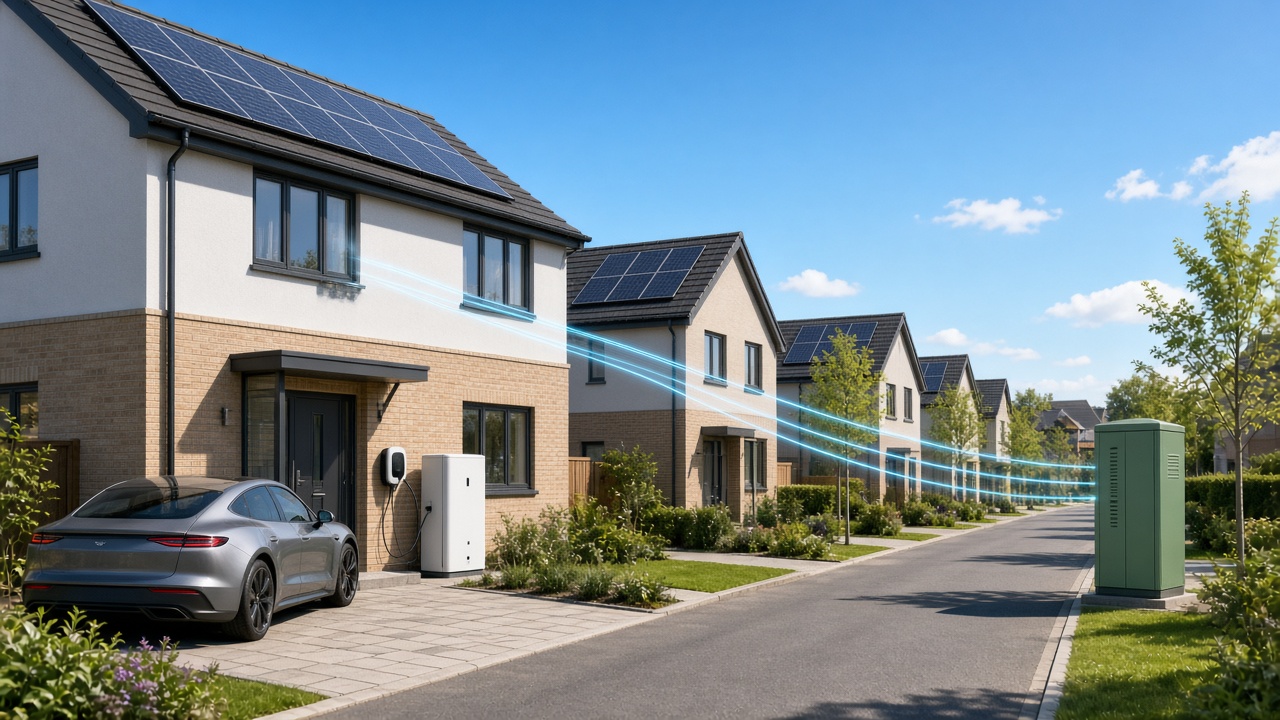
The Energy Independence Bill will make installers register EV chargers, solar, batteries and heat pumps with DNOs. Here's what UK sparks need to know now.
Yesterday (Wednesday 4 November) the government introduced the Energy Independence Bill to Parliament. Most of the headlines went on gas standing charges, Ofgem's new teeth and community stakes in wind and solar farms. Fair enough. But tucked into the Bill's factsheets are a handful of measures that land squarely on the van of every electrician who fits EV chargers, solar PV, batteries or heat pumps.
I've read through the lot so you don't have to. Here's what's actually in it for UK sparks, what's still to be decided, and what I'd be doing about it now.
The big one for installers: registering every asset with the DNO
The measure I'd circle in red is the asset visibility installer obligation. In plain English, the Bill gives the Secretary of State powers to make regulations that require installers of distributed energy assets to register those installations with the Distribution Network Operator. The factsheet names EV charge points, heat pumps, solar PV and domestic batteries specifically.
Why now? Because DESNZ says it understands that less than 40% of these assets are currently registered with DNOs. Think about that. More than half of the low-carbon kit going onto Britain's local networks is effectively invisible to the people who have to plan and run those networks. The factsheet is blunt that existing requirements are "unclear and fragmented" and that enforcement regimes are "ineffective".
If you've ever filled in a G98 or G99 notification, or a DNO application for a heat pump or charger, you'll know the honest reason the number is low: the process differs between DNOs, the forms are clunky, and there's been almost no consequence for skipping it. The Bill is designed to change that, with "an effective, proportionate enforcement regime".
What the Bill doesn't do yet is tell us the detail. The measure is an enabling power, and the factsheet says the full regime, including monitoring and enforcement, will be set out in secondary legislation. So there's no start date, no fine schedule and no confirmed registration portal today. What we do know is the direction of travel, and it's clear.
Why this is good news (yes, really)
I know how this sounds: another bit of admin for small firms already juggling MCS paperwork, Part P notifications and customer handovers. I get it. But I genuinely think this is one of the more useful things in the Bill for our trade, for three reasons.
First, it fixes a problem electricians are already living with. eFIXX reported this week on Britain's growing voltage problem, citing data from charger maker Ohme suggesting more than one in ten UK consumers are seeing excessive voltage spikes. Rooftop solar pushes power back into local networks, and plenty of kit protects itself by shutting down as voltage approaches the 253 V upper limit. That means chargers that stop charging and inverters that stop exporting, and it's usually the installer who gets the call. DNOs can only manage what they can see. Better asset data is a precondition for fixing it properly.
Second, it saves real money. DESNZ analysis in the factsheet estimates that if better information let DNOs use just one percentage point more of existing low-voltage capacity, it could avoid between £240 million and £571 million of network investment by 2050. That's money that doesn't end up on customers' bills, and lower bills make every heat pump and battery quote easier to sell.
Third, it opens the door to flexibility income for your customers. Registered assets are the ones that can take part in flexibility services. That turns a battery or a V2G charger from a cost into something that earns, which is exactly the conversation you want to be having at the kitchen table.
Export charges on batteries and V2G: a quiet game-changer
The second measure that matters is removing charges to unlock energy flexibility. Right now, some charges placed on suppliers are based on the volume of electricity supplied, and they're applied even when that electricity is stored and exported back to the grid rather than used. In effect, a household with a battery or a vehicle-to-grid charger can be charged for electricity it never consumed.
The Bill gives the Secretary of State powers to remove those charges for re-exported electricity, including through battery storage and vehicle-to-grid, and where people increase their usage to soak up surplus renewable generation that would otherwise be wasted. The impact assessment evidence quoted in the factsheet suggests that for V2G alone, cumulative household savings could be around £200 million between 2025 and 2040.
For installers, that strengthens the payback story on home batteries and gives bidirectional charging a proper commercial footing in the UK. If you haven't looked seriously at V2G-capable chargers yet, I'd start now. This is the sort of change that moves a niche product into the mainstream within a couple of years.
Batteries are joining the smart mandate
The government's notes on the Bill also say existing smart-appliance powers don't currently cover batteries, and that the Bill will allow government, if needed, to require batteries to have smart capabilities. It also extends smart meter oversight powers to 2033 to finish the rollout and its communications upgrade.
Put that alongside the smart tariff interoperability rules we covered earlier this week, and the picture is consistent: the home battery of 2027 is expected to be a connected, controllable grid asset, not a box on the garage wall that just runs on its own. Electricians who can commission, configure and troubleshoot the comms side, not just the AC and DC wiring, are going to be in demand.
Faster grid connections and a publicly owned Great British Grid
On the bigger infrastructure side, the Bill includes powers to modernise consents, land access and rights for essential network works, plus reforms to market rules, network charging and trading arrangements. The government also says it will bring an amendment to establish the publicly owned Great British Grid in law.
For anyone working on HV, substations or utility-scale solar and storage, that's another tailwind on top of the grid connections reform already moving through the queue. Faster consents mean projects move from paper to site sooner, and that's where the hours are.
There's also a smaller line that deserves attention if you work offshore: the Bill will let government close gaps so that offshore renewable workers beyond UK territorial waters get protections such as the minimum wage, unfair dismissal protection and working-time rights, in line with offshore oil and gas workers. That's a welcome step for wind technicians and offshore electrical crews.
What isn't changing yet
Let me be realistic. This is a Bill, not an Act. It has to get through both Houses, and most of the installer-facing detail sits in regulations that haven't been written. Nothing changes on your next job tomorrow morning. Don't let anyone sell you a "compliance package" for a registration regime whose rules don't exist yet.
What I'd do now
Here's my practical take, whether you're a one-van domestic installer or running a team:
- Get your DNO notifications watertight today. If you fit chargers, PV, batteries or heat pumps, make notification part of your standard job closeout, not an afterthought. When the rules tighten, firms with clean records won't even notice.
- Keep tidy asset data. Make, model, rated output, serial numbers, MPAN, commissioning date. If your job management software can export it, even better. That's exactly the information a registration regime will ask for.
- Learn the comms side. Smart batteries, V2G and smart tariffs all depend on the kit talking to the outside world. Commissioning that properly is a skill customers will pay for.
- Talk flexibility with customers. Removing export charges makes batteries and V2G more attractive. Be the installer who explains the money, not just the kit.
- Watch for the consultation. Secondary legislation usually comes with consultation. Trade bodies will want installer input, and you should give it, because practical feedback is how we get a registration process that's quick rather than painful.
My take
I'm optimistic about this one. For years we've been bolting cutting-edge kit onto a network that couldn't see it, then wondering why voltages wander and connections stall. A Bill that makes registration clear, takes unfair charges off stored and exported electricity, and pushes batteries towards smart control is the right foundation for a grid that runs on millions of small assets instead of a few big power stations.
The electricians who win from this will be the ones who treat themselves as energy system installers, not just people who fit boxes. If that's the direction you're heading, have a look at the latest electrical jobs across the UK on Electrical Roles. The work is only going one way.