Grid Connections Reform: What It Means for UK Electricians
Britain's grid queue is shrinking and Gate 2 offers are landing. What NESO reform, Great British Grid and IFA's £400m upgrade mean for UK electricians.
For years, the honest answer to "when will this project connect?" was a shrug and a date somewhere in the late 2030s. Solar farms, batteries and even modest demand projects sat in a grid queue that had grown far beyond what the system could ever deliver. That's finally changing, and I think it's one of the most important stories for UK electricians this autumn, even if it's buried in regulatory letters and code modifications.
Saturday 31 October 2026 is the deadline for the last batch of NESO's first-phase "Gate 2" connection offers. A new publicly owned body, Great British Grid, has just been announced. And National Grid has committed up to £400 million to keep the IFA interconnector to France running until 2050. Put together, it adds up to a pipeline of substation, battery storage, solar and HV work that's much more likely to actually get built. Here's what's happening, and how I'd position myself if I were a spark looking at the next five years.
The queue is finally being sorted by who's ready
The old system was first come, first served. If you applied early, you held your place, whether or not you had land, planning or funding. The result was a queue full of speculative projects blocking the ones that were ready to build.
The reform led by the National Energy System Operator (NESO) under code modifications CMP434 and CMP435 replaces that with what Laura Henry, Director of Regulation at Eclipse Power, describes in Electrical Review as "first ready and needed, first connected". Projects now have to pass a readiness test, such as having land rights secured and planning moving. Henry writes that the reforms have taken more than 300 GW out of the queue and brought average connection dates forward by six years for the projects that can advance. The government's own Great British Grid announcement confirms the 300 GW figure, describing it as speculative capacity removed.
There are teeth, too. Under CMP448, projects that accept a Gate 2 contract but stall before their first milestone can face a progression commitment fee that rises every six months. And for battery storage specifically, Ofgem has proposed an Oversubscribed Technologies Commitment Fee of £3,000 to £25,000 per MW. The reason is stark: around 90 GW of batteries are either operating or in the reformed queue, against a projected need of about 29 GW by 2035.
For us, that's actually good news. A smaller queue full of serious projects means more of what's on paper turns into real work on site, with real start dates you can plan a career around.
The deadlines that matter right now
The rollout of offers hasn't been perfectly smooth. Ofgem's decision letter of 2 October granted NESO a second extension for Gate 2 Phase 1 offers, moving the deadline from 30 September to 31 October 2026. It covers about 62 offers. The main reason was delays from National Grid Electricity Transmission in providing Transmission Owner Construction Offers, plus around 25 offers pushed back mostly at customers' request. Ofgem said it was "disappointed", but noted that NGET says it got all DNO offers and 98% of transmission offers to NESO within two weeks of the original milestone. As Solar Power Portal put it, the delays won't surprise anyone who has followed delivery so far.
The rest of the timetable holds. Gate 2 Phase 1 distribution offers should be completed by 30 November 2026. Phase 2 transmission offers are due by 31 January 2027, and Phase 2 distribution offers by 31 March 2027.
Why should an electrician care about connection offers? Because an offer with a firm date and connection point is what lets a developer secure finance, sign an EPC contractor and start hiring. Every batch that lands this winter is a step closer to a site compound, a substation build and a list of jobs.
Great British Grid: a new player in network building
On 29 September, Prime Minister Andy Burnham used his first Labour conference speech as leader to announce Great British Grid, which the BBC reported he described as "a publicly-owned company that will challenge the private sector operators". The GOV.UK announcement from DESNZ and Great British Energy sets out the detail. It's a new publicly owned body within Great British Energy that will invest public capital alongside private investment in network infrastructure.
It doesn't replace anyone. Ofgem stays the regulator, NESO keeps running and planning the system, and existing network operators keep their roles. Start-up costs come from Great British Energy's existing budget, with long-term funding left to a future spending review. Two other measures in the same announcement may matter more on the ground. The government will expand self-build connections, letting developers and businesses build their own connections where appropriate (similar reforms in Ireland cut connection times by up to 11 months). It will also speed up competitive tendering for transmission projects, with Great British Grid able to bid.
I'm optimistic but realistic here. A new body won't wire a single substation by itself, and full details are still to come. But more competition and more self-build means more clients for electrical contractors, ICPs and independent connection providers, not just the usual handful of network owners. The scale of spending is already huge. The BBC notes Ofgem's estimate that £70bn of grid investment is needed between 2025 and 2031, and Energy UK's Dhara Vyas pointed out that transmission owners are spending £90bn over the next five years.
IFA at 40: investment in the link to Europe
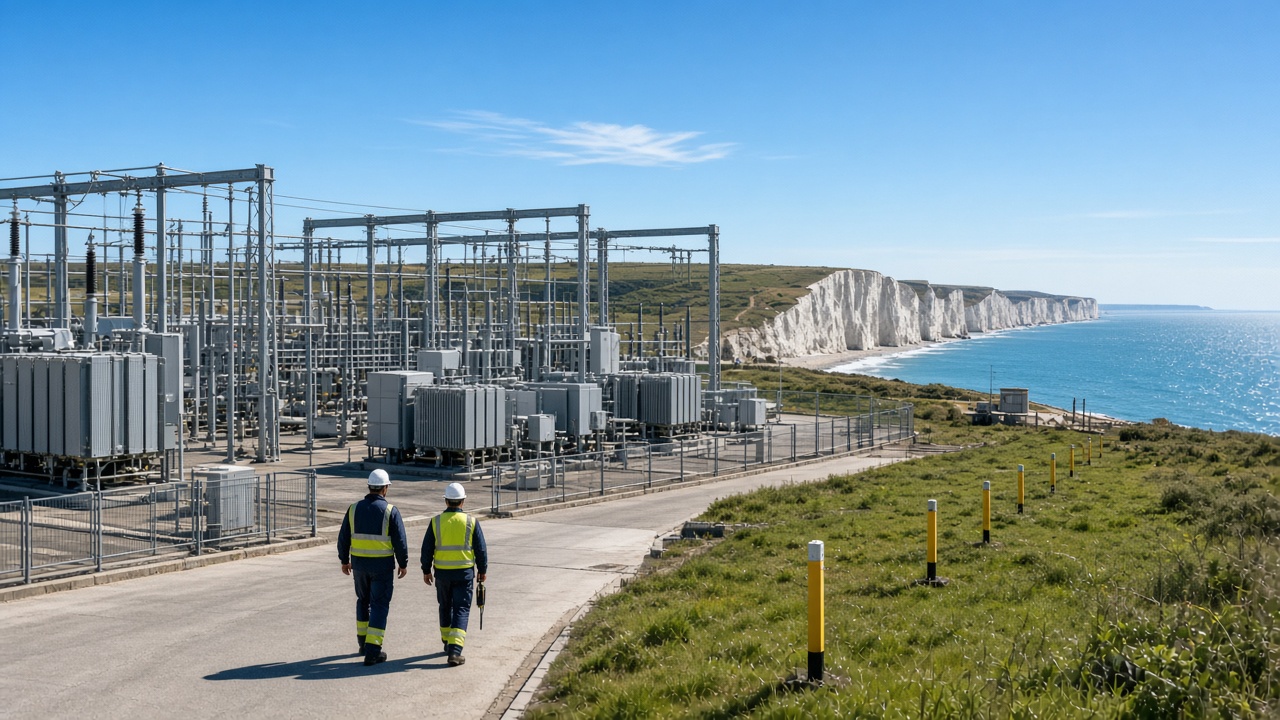
The cross-Channel story is a nice reminder that grid work isn't only about new builds. On 29 October, National Grid announced it will invest up to £400 million in IFA, the Interconnexion France-Angleterre it jointly owns with French operator RTE, to keep it running until at least 2050. IFA began operating in 1986 as the first modern interconnector between Great Britain and continental Europe. It's still Britain's largest subsea link by capacity and can carry enough power for about three million homes.
The programme covers upgrades to essential technical equipment, buildings and facilities at the site. National Grid says its interconnectors have delivered £2 billion in net benefits to British consumers since 2023. For HV and HVDC specialists, life-extension work like this is steady, highly skilled and long-running. Refurbishing an asset that's 40 years old is exactly the kind of work that rewards experienced engineers with converter station, protection and control backgrounds.
Batteries and storage: real builds, not just queue positions
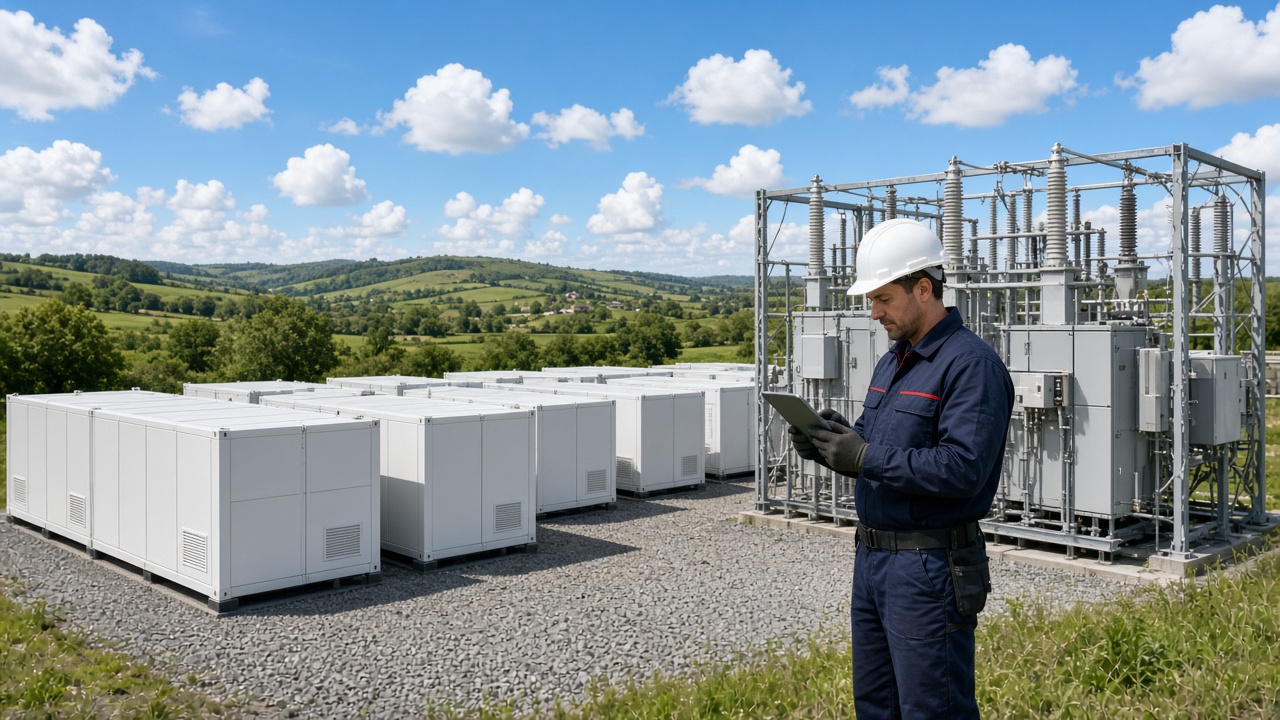
On the storage side, the projects are physically arriving. Solar Power Portal reported on 21 October that Ørsted has finished building its 300MW/600MWh Iceni battery near Norwich. Iceni is co-located with Hornsea 3 and shares its grid connection point, and commissioning is underway. In Scotland, Econergy has connected its 40MW/120MWh Dalmarnock battery, with commercial operation expected in December.
Modo Energy's October 2026 pipeline update gives a balanced picture. Reform has pushed 6.5 GW of projects back by at least six months. Even so, its tracked pipeline holds 217 projects totalling 20.7 GW, with 19.5 GW expected to connect by the end of 2029. That includes giants like Fidra Energy's 1,400 MW Thorpe Marsh in Yorkshire and Statera's 680 MW Carrington in the North West. That's years of work for HV electricians, commissioning engineers, SCADA specialists and the LV crews who fit out the auxiliary supplies, lighting, CCTV and security on every site.
There's a demand-side story too. Henry notes the demand queue grew from 41 GW in November 2024 to 125 GW in June 2025, with 80 GW of that from data centres. Ofgem's Demand Connections Reform, launched in February 2026, aims to prioritise strategic demand like EV charging hubs and data centres in AI Growth Zones. When that gets sorted, expect another wave of high-voltage demand connections.
Who benefits, and how to position yourself
So who wins? In my view, these are the people who'll be busiest from 2027:
- HV-authorised electricians and Senior Authorised Persons. Every new substation, BESS and solar farm needs switching, isolation and commissioning under HV rules.
- Cable jointers. Connections mean cables, and jointing at 11kV, 33kV and 132kV is one of the tightest skill bottlenecks in the country. Our guide to what an HV cable jointer does covers the route in.
- Commissioning and testing engineers. Protection relays, battery management systems, inverters and SCADA all have to be proven before energisation. This is where premium rates are paid.
- Solar and BESS installation electricians. The volume work: DC cabling, inverter stations, earthing, containerised battery fit-out.
- Contractors who can self-deliver connections. If self-build expands as promised, firms with ICP accreditation and contestable-works experience could see far more enquiries.
My practical advice is simple. If you're an approved electrician on commercial work today, look at HV awareness and authorisation training, get your inspection and testing sharp, and talk to contractors working on battery and solar sites now, before the Gate 2 projects hit construction. Keep an eye on which regions have the most offers landing, because the jobs will follow the substations. And use the tools available. An AI assistant such as Grok Bot, Claude or ChatGPT can help you decode an Ofgem letter or tailor your CV to an HV role. Just check anything important against the original source.
The grid queue was the single biggest brake on Britain's clean energy build. It isn't fixed yet, and there will be more delays and arguments. But for the first time in a decade, viable projects are moving forward and the money is lining up behind them. That's a very good time to be an electrician who's ready.
Browse grid, substation and renewables roles across the UK and Europe and get yourself in position for the build.