Budget 2026: What It Means for UK Electricians and Contractors
Budget 2026 brings 55p van miles, a 50% first-year allowance, £100m for EV charging and a 3% apprentice quota. Here's what it means for UK electricians.
John Healey delivered his first Budget as Chancellor on 28 October. If you only caught the headlines you'd think it was all about household bills: VAT off electricity, a £100 payment for millions of homes, and gas standing charges on the way out. That's real, and it matters. But I've been through the Budget 2026 document with one question in mind: what does this actually change for electricians, electrical contractors and the people hiring them?
The short answer is more than you'd expect. There's money for EV charging, a better deal on van miles, a bigger tax break on kit, a hard apprenticeship quota on public projects, and a clear signal that data centres and grid connections are now national priorities. There's also one cut that domestic installers need to know about. Here's my read.
Your van miles just got cheaper to run
Let's start with the one that lands in your pocket. The Budget confirms that the temporary 55p per mile tax-free rate for the first 10,000 business miles in a car or van, announced in May, is now permanent. Above 10,000 miles, the rate rises from 25p to 35p. The Budget document literally names electricians and plumbers among the roughly 2 million employees and 1 million self-employed people who benefit.
The government's own worked examples: around £120 a year in extra tax savings if you drive 6,000 business miles, and up to £300 if you drive 15,000. If you're a self-employed spark covering a wide patch, or an employed engineer on mileage, that's not life-changing, but it's real money that recognises how our trade actually works. Most of us live in our vans.
My practical tip: if you're not logging business mileage properly, start now. A simple app or a notebook in the door pocket. The higher rate only helps if you can evidence the miles.
A bigger first-year allowance on tools and kit
For contractors running a business, the main rate first-year allowance on plant and machinery rises from 40% to 50% for qualifying spending from 1 January 2027, according to the Budget's tax measures. The main rate writing-down allowance drops to 12% from April 2027.
In plain English: from the new year, more of what you spend on qualifying equipment can be written off against tax in year one. Before you rush out to buy test gear or a new cable puller, check with your accountant how this interacts with the Annual Investment Allowance, which already covers a lot of small-firm spending. But for growing contractors who are investing heavily, it's a helpful nudge.
Also worth knowing: the separate 100% first-year allowance for EV chargepoints that businesses install has already been extended to 31 March 2027 for Corporation Tax and 5 April 2027 for Income Tax. If you're quoting workplace charging for a business customer, that deadline is a genuine selling point. Mention it.
EV charging: £100 million for street chargers, plus depots
This is the bit I'm most upbeat about. The Treasury says it will provide £100 million over two years from spring 2027 to cut prices at local, lower-powered public chargers, the ones on residential streets where people charge for hours or overnight. The government says these make up about a third of the current network, and it estimates drivers who rely on them will save around £150 a year.
There's also a new "tariff porting" taskforce looking at whether drivers without a driveway could use their home electricity tariff at certain public chargers. That's a fascinating idea. If it works, it removes one of the biggest reasons people in terraced streets hold off on going electric.
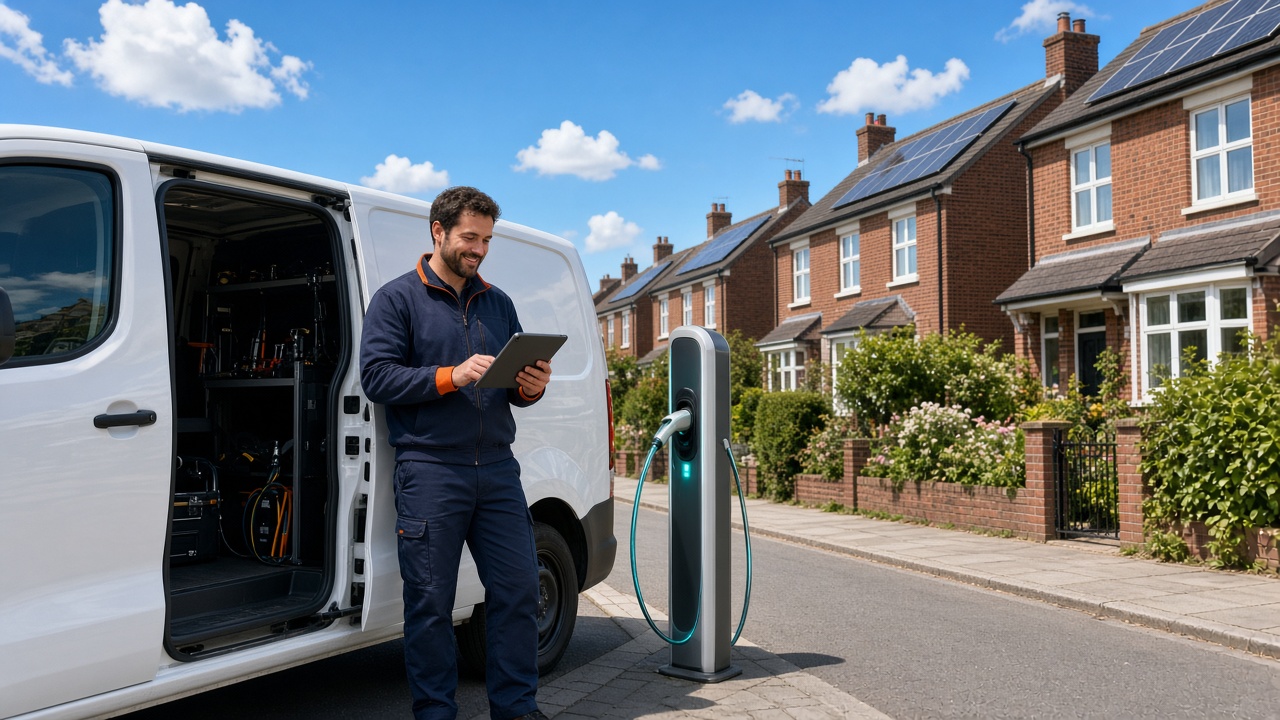
The same announcement reminds us that, as of 21 October, drivers no longer need planning permission for cross-pavement chargers, the channels that run a cable under the pavement from a house to the car. The government says that could save up to £300 on installation. For domestic installers, that's a new product line hiding in plain sight. Get familiar with the cross-pavement systems, talk to your local council about their approach, and you'll be ahead of most of your competitors.
According to Electrical Times, the Depot Charging Scheme has reopened with a further £38 million for chargers for electric trucks, vans and coaches. Simon Smith of Voltempo made a fair point in that piece: funding chargers without the infrastructure to power them "risks leaving businesses with equipment they cannot use." Translation for us: depot jobs are as much about supply upgrades, switchgear and load management as they are about bolting chargers to the floor. That's skilled commercial and industrial work.
Not everything went the industry's way. VAT on public charging stays at 20%, and EV groups are unhappy about talk of weakening the ZEV mandate. But the direction of travel is clear, and the government notes there are already over 124,000 public charge points in the UK. If you're thinking about specialising, my guide to becoming an EV charge point installer is a good place to start.

Apprentices: a 3% quota on big public projects
Here's the line I think will matter most for careers over the next five years. The Budget says the government will require at least 3% of the workforce on all large government construction and infrastructure projects to be apprentices.
Think about what's in that pipeline: grid upgrades, hospitals, schools, rail, defence. Every one of those projects needs electricians. A hard 3% floor means main contractors and their electrical subcontractors will need apprentices on site, not just good intentions in a bid document. If you're a young person looking for a way in, or an employer wondering whether to take someone on, that's a strong signal.
There's more alongside it:
- £100 million over 2027-28 and 2028-29 to expand mayoral apprenticeship brokerage pilots from 7 to 14 areas in England, to help young people and smaller employers create apprenticeships.
- The Union Learning Fund is coming back in England, with £15 million a year from 2027-28 for union-led workplace learning and upskilling.
- The £2,000 apprenticeship hiring payment for non-levy employers taking on young apprentices in England, and the £3,000 Youth Jobs Grant, both announced in spring, sit alongside these in the government's youth package.
This builds on the Construction Jobs Plan we covered last week. Put together, it's the most joined-up push on construction apprenticeships I've seen in years.
Wages: what changes in April 2027
From 1 April 2027, the National Living Wage rises 3.9% to £13.21 an hour. The rate for 16 to 17-year-olds and eligible apprentices also rises 3.9%, to £8.31 an hour.
Most electrical apprentices on JIB terms already earn above the legal minimum, so this is more of a floor than a headline. But it pushes up costs across the supply chain and for labourers and support roles, so build it into your 2027 pricing now. If you want the full picture on trade pay, see our breakdown of JIB pay rates for 2027.
One more for business owners planning an exit: the lifetime limit on Business Asset Disposal Relief halves from £1 million to £500,000 from April 2027. If you've built an electrical contracting firm and are thinking about selling in the next year or two, talk to an adviser sooner rather than later.
The cut domestic installers need to know about
Now the less cheerful part. To help fund other priorities, the Budget says the government will save £1 billion of capital grant from the Warm Homes Plan. It also says the majority of Warm Homes Plan funding for low-income households and social housing, delivered by mayors and councils, is protected, and that the Boiler Upgrade Scheme stays at £400 million in 2027-28, rising broadly with inflation after that.
So it's a trim, not a U-turn. The government says it remains committed to heat pump deployment, and the Warm Homes Loans we wrote about recently are still live. But if your business plan leans heavily on grant-funded retrofit, I'd diversify: solar, batteries, EV charging, consumer unit upgrades, and the EICR and remediation work coming through Awaab's Law.
Data centres and grid connections are now national priorities
The Budget launched a Data Centre Covenant, which sets out tests that strategic data centres are expected to meet, including local benefit plans and a commitment to "create jobs and invest in paid apprenticeships and training places." In return, a new Ministerial Control Centre will try to speed up their time to power, including using Planning and Infrastructure Act powers to prioritise strategically important demand connections.
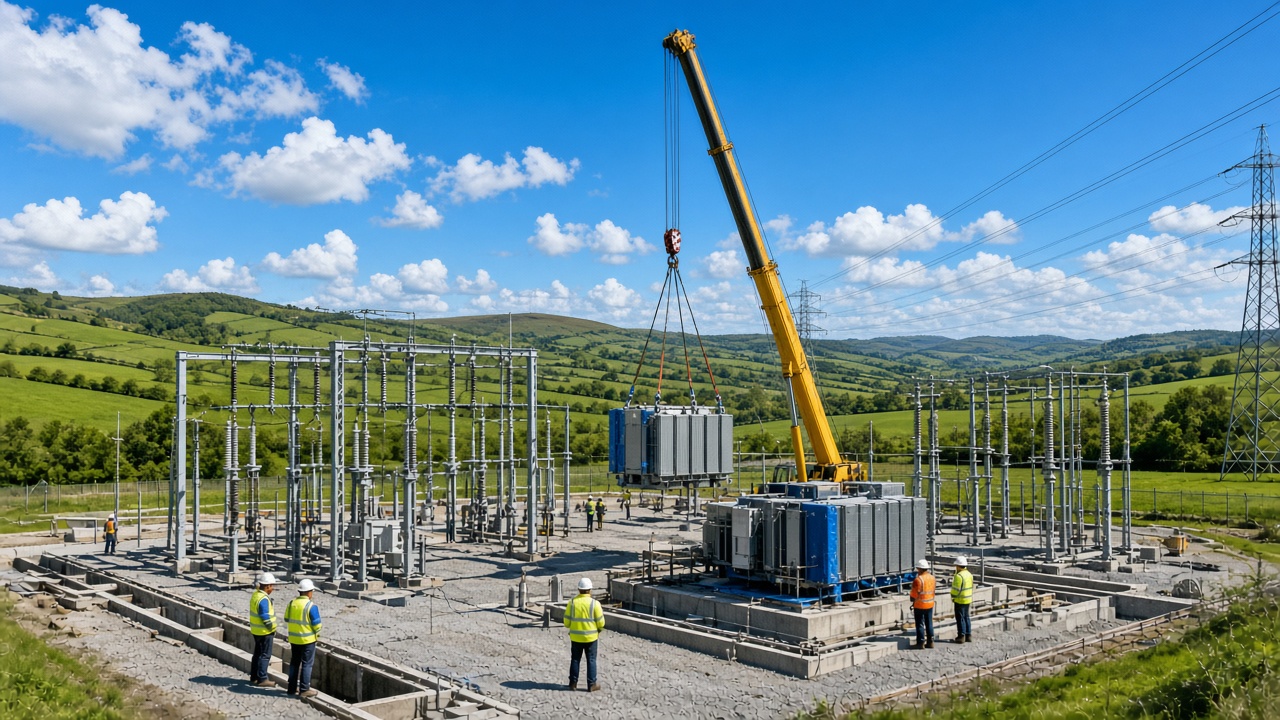
You can see where this is heading. In the same week as the Budget, National Grid agreed to buy land on Teesside for what's expected to be the UK's biggest substation, next to a planned AI data centre. That means years of HV, LV, containment and commissioning work before a single server goes in.
The Budget also confirmed a £2 billion Energy Wealth Fund, inside the National Wealth Fund, to invest in renewable and low-carbon energy infrastructure. And there's a promise of a more business-friendly visa system for high-skilled workers. That won't fill the shortage of electricians on its own. We still need to train our own.
My take
I came away from this Budget optimistic. Not because every line is perfect (it isn't), but because electricity is now at the centre of the government's economic story. Cheaper electricity bills, cheaper charging, faster connections, more data centres, more grid, and an apprenticeship quota to make sure people are trained to build it all. Every one of those needs electricians.
If you're an apprentice or career changer, this is a brilliant time to commit to the trade. If you're a qualified spark, think about which of these growth areas you want to own: EV charging, grid and substations, data centres, or domestic retrofit. If you're a contractor, log the miles, plan your 2027 equipment spending around the new allowance, and get ready to take on apprentices for public work.
And if you're ready to make a move, have a look at the latest electrical jobs across the UK and Europe. The opportunities are real, and there are more of them every week.