JIB Pay Rates 2027: What UK Electricians Earn From January

JIB rates rise 4.6% on 4 January 2027. Hourly rates by grade, annual pay, London and Scottish rates, apprentice rules and how to earn above the minimum.
If you're a JIB-graded electrician in England, Wales or Northern Ireland, you've got a pay rise coming on Monday 4 January 2027. It's already agreed, it's already in the handbook, and it's bigger than the rise in the National Living Wage that the government confirmed this week.
I'm a big believer in knowing your numbers. Whether you're an apprentice, a newly qualified spark or an Approved Electrician weighing up a move, the JIB rates are the floor that most of the industry's pay conversations start from. So here's exactly what changes in January, what it means in annual terms, how Scotland compares, and how to use it to earn more than the minimum.
The deal behind the January rise
The JIB facilitated a three-year wage agreement between the ECA, SELECT and Unite the Union covering 2026 to 2028, approved via the JIB National Board. It's front-loaded with certainty, which is great for both workers and contractors pricing long jobs:
- From 5 January 2026: 3.95% for graded operatives.
- From 4 January 2027: 4.6% for graded operatives and 2% for apprentices.
- From 3 January 2028: 4.85% for graded operatives, 3% for apprentices, plus a £10 a week increase to JIB sick pay in weeks 3 to 24 (taking it to £200 for an Electrician, £210 for an Approved Electrician and £220 for a Technician, on top of Statutory Sick Pay).
For context, on 28 October the government accepted the Low Pay Commission's recommendation to lift the National Living Wage by 3.9% to £13.21 an hour from April 2027. The LPC said that rise sits above the range of inflation forecasts for the year ahead. The JIB's 4.6% for graded operatives beats it, so qualified electricians should see a real-terms gain next year.
The 2027 JIB national rates
These are the hourly rates from 4 January 2027, taken straight from the JIB Handbook 2026 National Working Rules. "Transport provided" means your employer gets you to site, "own transport" means you make your own way and also get a mileage allowance on longer journeys, and "shop employed" is for the few operatives who work permanently at the employer's base.
- Technician (including Site/Installation Technician and Cable Installation Supervisor): £23.74 transport provided, £24.97 own transport, £22.22 shop.
- Approved Electrician (including Approved Jointer): £21.00, £22.16 and £19.47.
- Electrician (including Domestic Electrician and Jointer): £19.23, £20.44 and £17.73.
- ECS Experienced Worker / Trainee Electrician Stage 3: £18.32, £19.42 and £16.86.
- Electrical Labourer / Trainee Stage 1: £15.27, £16.41 and £13.69.
Inside the M25, London rates apply. From January an Approved Electrician on own transport gets £24.82 an hour, an Electrician £22.90 and a Technician £27.93.
What that looks like over a year
The JIB working week is 37.5 hours. Multiply the hourly rate across 52 weeks (holidays are paid) and you get a rough basic salary before overtime, shift premiums or bonuses. These are my calculations, not JIB figures:
- Electrician, own transport: about £39,860 a year.
- Approved Electrician, own transport: about £43,210 a year, up roughly £1,890 on 2026's £21.19 rate.
- Technician, own transport: about £48,690 a year.
- Approved Electrician in London, own transport: about £48,400 a year.
- Technician in London, own transport: about £54,460 a year.
Remember these are basic figures for a standard week. The National Working Rules add plenty on top. Overtime after 37.5 hours is time-and-a-half, and Saturday hours beyond the first six (or after 3pm) plus Sundays are double time. Permanent nights pay time-and-a-third, rotating double-day shifts pay time plus 20% for earlies and 30% for lates, and an agreed "any five days out of seven" flexible pattern earns a 15% premium. Approved Electricians supervising other operatives get responsibility money of 50p to £2 an hour. If you're sent away, the 2026 lodging allowance is £53.09 a night, and own-transport mileage is 22p a mile both ways for jobs more than 15 miles from the shop.
Put an Approved Electrician on a big project with regular overtime and a few nights away, and £50k-plus is very achievable on JIB terms alone.
Apprentices: read the small print
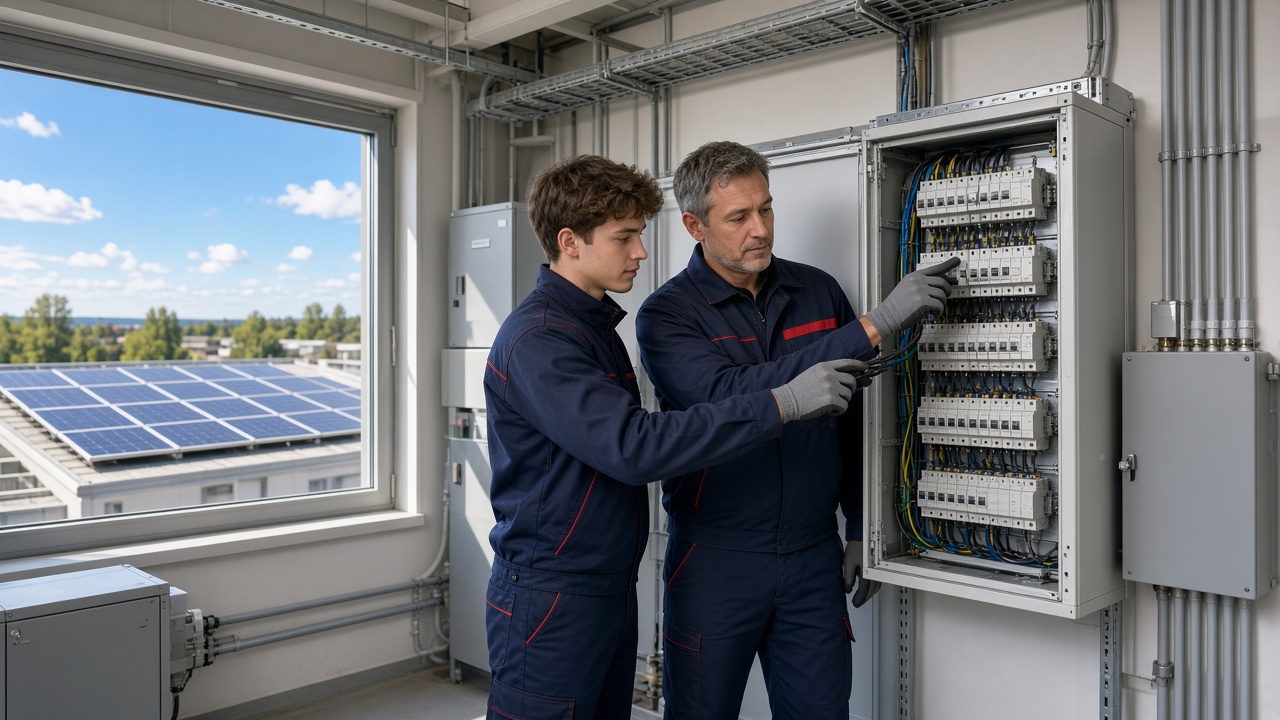
Apprentice rates rise by a smaller 2% in January. From 4 January 2027 the JIB apprentice rates are £8.32 an hour at Stage 1, £10.81 at Stage 2, £13.31 at Stage 3 and £14.31 at Stage 4 (London: £9.32, £12.12, £14.91 and £16.03). Apprentices in England, Wales and Northern Ireland get a single rate whether they're on site or at college.
Here's the bit worth understanding. The statutory apprentice rate goes up to £8.31 from April 2027, a penny below the JIB Stage 1 rate. And the JIB handbook is clear that apprentices over 19 and past their first year must get whichever is higher: the National Minimum or Living Wage for their age, or the JIB rate for their stage. From April 2027 that's £11.27 for 18 to 20-year-olds and £13.21 for anyone 21 and over.
So an adult apprentice aged 21+ at Stage 2 will legally be on at least £13.21, not £10.81. If you're a mature apprentice or career changer, check your payslip in April. And if you're an employer, budget for it now.
Scotland works differently
Scotland has its own agreement through the Scottish JIB, a three-year deal between SELECT and Unite also covering 2026 to 2028. It also has a 4.6% rise from 4 January 2027, and its "travel" rates match the JIB own-transport rates: £24.97 for a Technician, £22.16 for an Approved Electrician and £20.44 for an Electrician. Shop rates are £22.22, £19.47 and £17.73.
Scottish apprentice structure differs too. The SJIB keeps a separate college rate at Stage 3, and Stage 3 FICA apprentices (those cleared for their final assessment) get £13.31 at work. If you're crossing the border for a job, check which agreement you're employed under. Under the JIB rules, operatives working in Scotland are paid on Scottish JIB wage terms, and anyone on long-term Scottish work should, where possible, be offered a transfer to a Scottish shop.
Is the JIB rate what you'll actually earn?
Not always, and that's the good news. The JIB rate is a negotiated floor for member firms, not a ceiling. In the current market lots of employers pay above it, especially in mission-critical sectors. Gardiner & Theobald's October 2026 MEP Contractor Survey found average MEP labour rates are still 12% to 15% above June 2024 levels, and 96% of contractors expect trade labour costs to keep rising over the next six months. One respondent said simply that the data centre industry is "driving up salaries". We dug into that sector in our guide to what a data centre electrician does.
That gives you leverage. A clear grade, a current ECS card and specialist skills give you a strong case for more than the minimum.
How to move up the pay ladder
- Get graded properly. Your JIB grade sets your rate, and grading is only valid when the JIB issues it. If you've finished your AM2 or gained new qualifications, make sure your ECS card reflects it.
- Go for Approved Electrician. The jump from Electrician to Approved Electrician is worth about £3,350 a year on basic own-transport rates in 2027. It usually needs inspection and testing qualifications and post-qualification experience, and it's the gateway to supervisory roles.
- Then aim for Technician. Technicians earn about £5,480 a year more again on basic. Design, commissioning, supervision and specialist systems knowledge are what get you there.
- Ask about the hidden extras. Shift premiums, flexible working, lodging, mileage, responsibility money and call-out allowances (£20 for a first call-out) can add up to more than the headline rise.
- Know when you're out of scope. Many grid, offshore and engineering construction roles sit under other agreements or are paid well above JIB rates. Our guides on HV cable jointing and grid careers show where those premiums are.
- Use the tools. An AI assistant such as Grok Bot, Claude or ChatGPT can help you compare offers, work out what a shift pattern is really worth or polish your CV. Just check the numbers against the official handbook.
My take: a pre-agreed 4.6% rise, with another 4.85% already lined up for 2028, gives electricians real certainty in an industry that's crying out for skilled people. Use it as your baseline, then build on it with grades, specialisms and smart choices about where you work.
Browse electrical jobs across the UK and Europe and see what employers are offering above the JIB rate right now.