What Does a Heat Pump Electrician Do? UK Pay & Routes In
What a heat pump electrician does in the UK: circuits, isolators, EICs, MCS partnerships, pay ranges and routes in for domestic sparks.
Heat pumps are not a side hustle for the UK's heating trade any more. They are becoming everyday domestic work — and every single install needs a competent electrician on the electrical side. If you are a domestic spark wondering whether this niche is worth your time, the short answer is yes. The longer answer is what this guide is for.
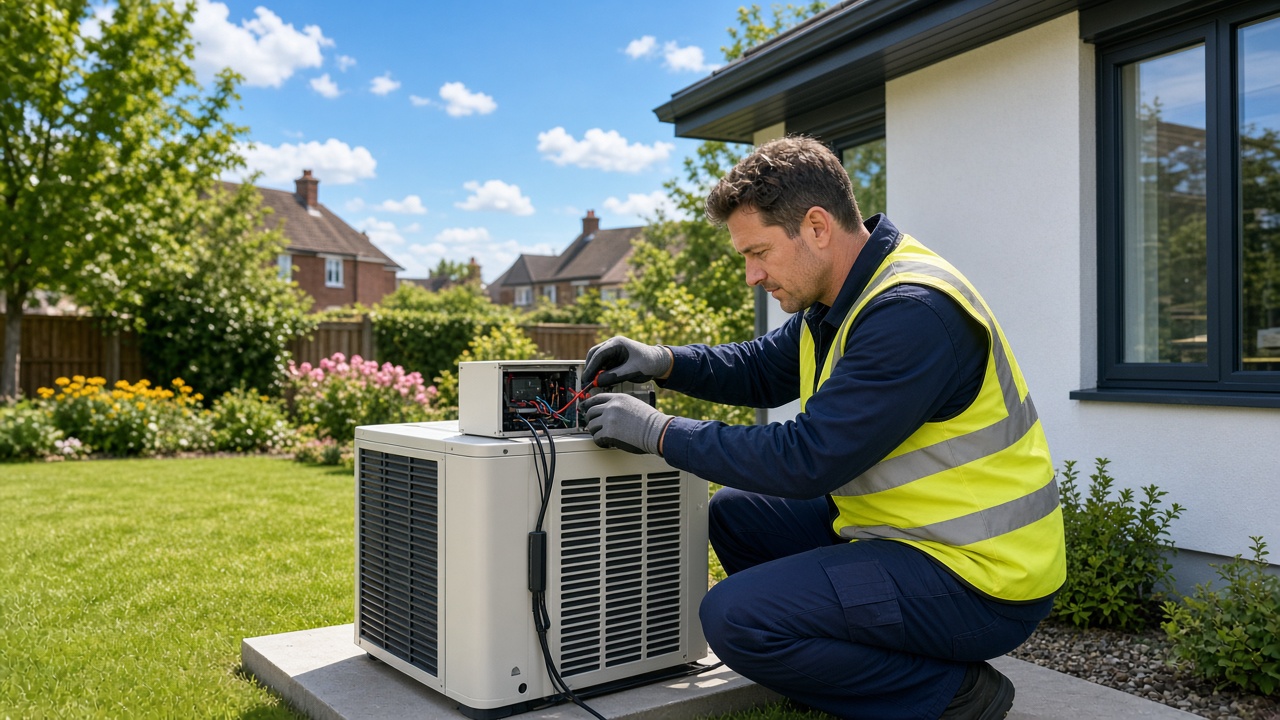
The role is not the same as being a full heat pump engineer. You are not fitting the refrigerant circuit or claiming the grant. You are making the electrical installation safe, compliant and ready to commission. That distinction matters when you plan training, partnerships and pricing.
What a heat pump electrician actually does
A heat pump is an electrical appliance first. Unlike a gas boiler, it moves heat with a compressor and fans, so the supply, protection and controls have to be right before anyone presses start.
On a typical domestic air-source job, your scope usually covers:
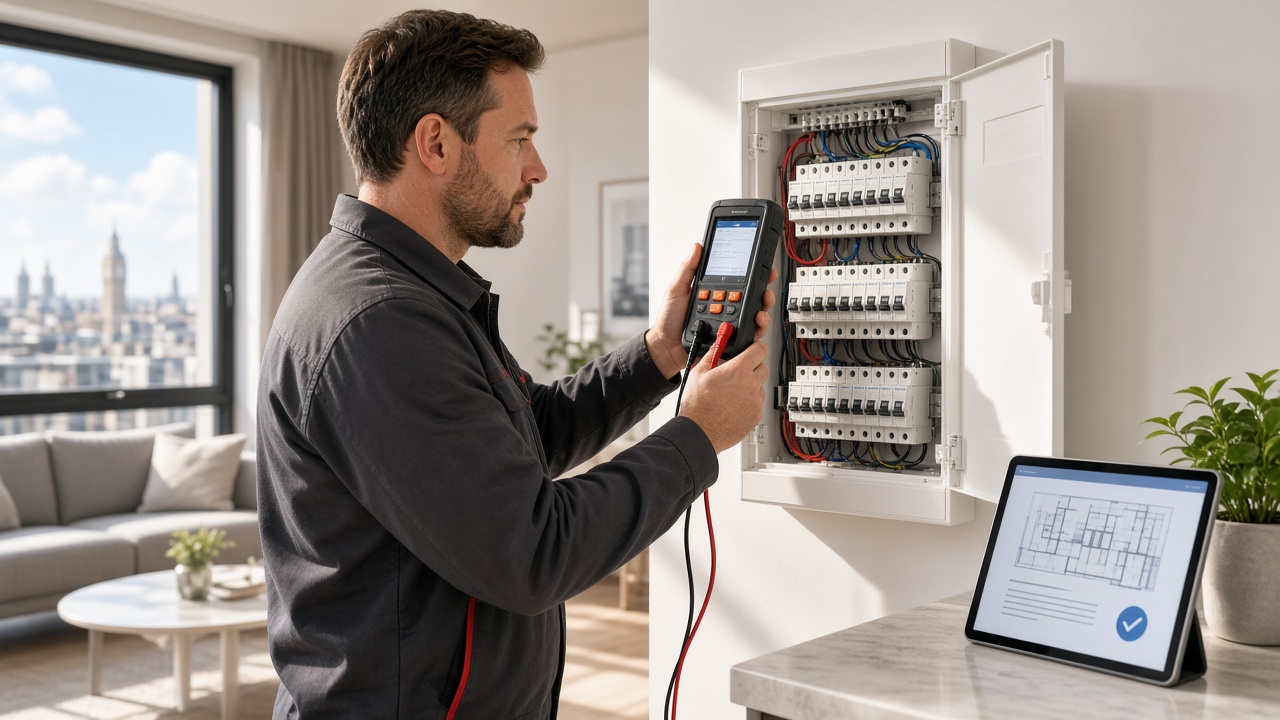
- Assessing the existing installation: service cut-out rating, consumer-unit capacity, earthing and bonding, and whether a supply upgrade or DNO notification is needed.
- Installing a dedicated radial circuit for the outdoor unit (often around 32 A or 40 A — always follow the manufacturer's nominal current and protective-device guidance, not the unit's heating kW label).
- Fitting a weatherproof, lockable outdoor isolator that disconnects all poles, placed where the manufacturer and BS 7671 allow.
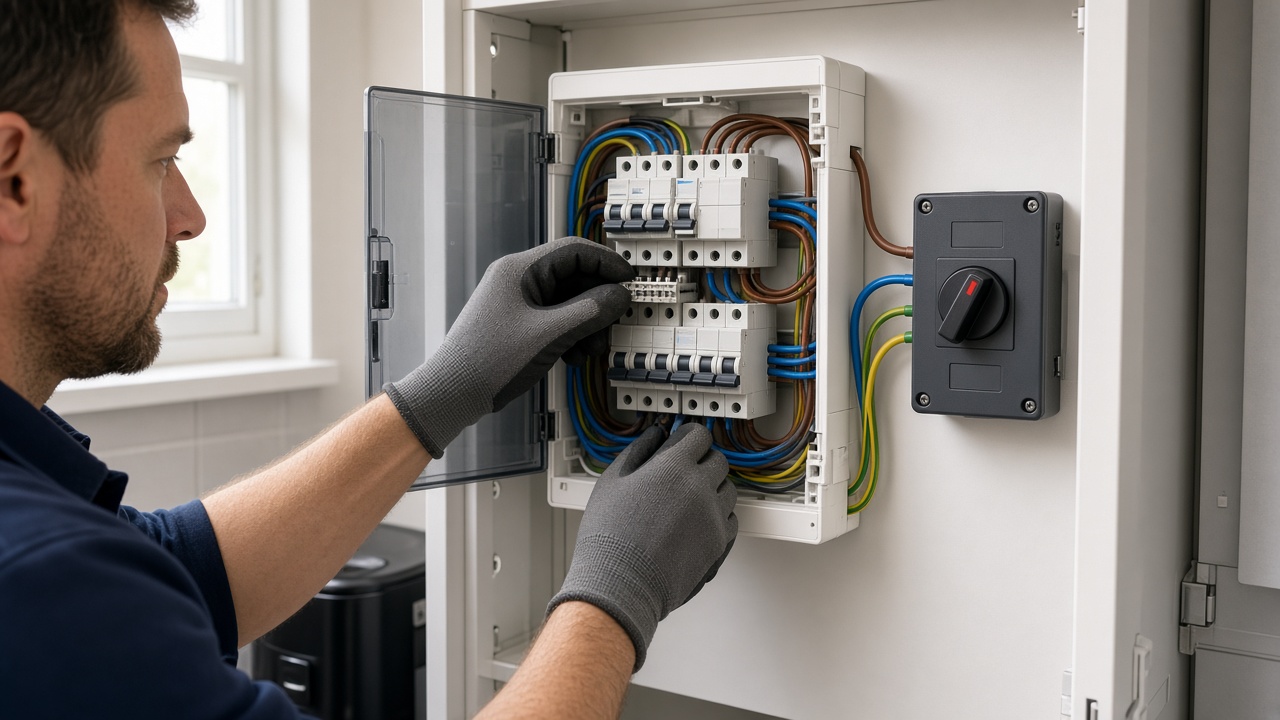
- Consumer-unit alterations or a full board change where there is no spare way, inadequate RCD arrangements, or an older fuse board.
- Controls wiring between indoor and outdoor units, and any immersion, cylinder or metering circuits required for the system and grant pack.
- Testing and issuing an Electrical Installation Certificate (EIC) so the installer can complete commissioning and handover.
NAPIT's technical guidance is clear that you design the supply like any other addition under Regulation 132.16: check existing equipment, the distributor's equipment, and earthing and bonding before you start. Do not confuse the heat pump's heating capacity in kW with the electrical design current — manufacturers publish nominal current and often call for Type C or Type D devices to handle compressor starting current.
Larger homes stacking a heat pump with EV charging and solar often push maximum demand higher. That is where DNO / Energy Networks Association connect-and-notify or apply-to-connect processes kick in. Experience with those applications is a genuine commercial skill, not admin fluff.
MCS, F-Gas and what you personally need
This is where a lot of electricians overthink it.
You do not personally need MCS certification or an F-Gas qualification to carry out the electrical connection of a heat pump. MCS sits at business level: the installing company must be MCS-certified for grant-funded work under schemes such as the Boiler Upgrade Scheme. F-Gas (or flammable-refrigerant competence for R290 systems) belongs with the people opening the refrigerant circuit.
What you do need is solid electrician competence: a recognised Level 3 route, current BS 7671 (18th Edition), and Inspection & Testing so you can issue a proper EIC. Heat-pump-specific electrical awareness courses help you quote faster and avoid snagging, but they are not a substitute for being a qualified electrician.
The practical model for most domestic sparks is partnership. Search the MCS installer register, talk to local renewable heating firms, and become the electrician they call every week. They need reliable availability, a clean EIC, and someone who understands BUS metering and outdoor isolators. You get a steady pipeline without carrying the full MCS overhead yourself — unless you later decide to expand into full system installs.
Why demand is rising now
Policy and product cycles are lining up. The Boiler Upgrade Scheme still offers £7,500 towards eligible air-source or ground-source heat pumps in England and Wales, with an extra £1,500 for many off-gas oil or LPG homes until March 2027. Grants are installer-led through MCS businesses, which is exactly why those firms need electricians on speed dial.
Warm Homes funding and retrofit programmes are also pulling volume into social housing and domestic upgrades. Pair that with the Future Homes Standard trajectory for new builds and you have a multi-year runway, not a one-winter fad. Every install still needs electrics. That is your lane.
Pay: what the market is actually showing
Be honest about money. Electrical-only heat pump work is often priced from a few hundred pounds on a simple circuit addition up to £1,500 or more where the board needs changing, cabling runs are long, or metering and immersion circuits add scope. Complexity — not a made-up average — drives the invoice.
On the employed side, current ads show a spread rather than one magic number. Octopus Energy recently advertised electrician roles covering EV, solar and heat pump installs at £36,500 basic plus overtime, a £2,500 performance bonus and London weighting inside the M25. The National Careers Service quotes heat pump engineer salaries from about £24,000 starting to £46,000 experienced — that band covers full installers as well as people coming from heating backgrounds, so treat it as context, not a promise for electrical-only work.
Self-employed domestic sparks who build installer partnerships can stack volume. Employed renewables roles trade some day-rate upside for van, training and steadier diaries. Check live heat pump and renewables electrician jobs rather than relying on last year's hearsay.
How this sits next to the EAS Level 3 shift
From October 2026, the updated Electrotechnical Assessment Specification expects accepted Level 3 qualifications for employed persons and qualified supervisors doing solar PV, electrical energy storage, EV charging, micro-wind, and periodic inspection and testing under scheme providers. Heat pump electrical work is not listed as one of those four new low-carbon categories — but it lives in the same electrification world.
If you are already tightening Inspection & Testing and adding EV or solar quals for scheme work, heat pump electrics fit naturally beside them. Homes rarely stop at one low-carbon kit. The sparks who can join the dots between heat pumps, EV chargers, solar and storage will be the ones installers and customers keep booking.
Practical routes in for domestic sparks
- Get the foundations tight. Current 18th Edition, Inspection & Testing, and a clean track record issuing EICs. Without that, you are not in the game.
- Add heat-pump electrical CPD. Manufacturer or short awareness courses covering outdoor units, isolators, controls and metering beat guessing on site.
- Learn DNO / ENA notification. Connect-and-notify versus apply-to-connect is where jobs stall — or where you become the person who unblocks them.
- Partner, do not compete blindly. MCS installers need electricians. Introduce yourself with availability, insurance and sample paperwork.
- Price for the whole job. Circuit, isolator, board work, metering, testing and return visits if the unit cannot commission on day one.
- Watch adjacent niches. Solar, battery and EV work share the same customer conversations and often the same visit.
Apprentices and career changers can also aim at low-carbon heating technician routes, then specialise. For already-qualified electricians, the fastest path is electrical competence plus partnerships, not starting the heating trade from scratch.
Is this niche for you?
If you like domestic work, problem-solving older boards, and being the person who makes a new technology actually switch on safely, heat pump electrics are a strong fit. The work is technical enough to stay interesting, policy-backed enough to keep coming, and close enough to what you already know that you can move without a five-year reinvention.
The UK is electrifying how it heats homes. That needs electricians who show up prepared, certificate properly, and treat heat pumps as serious electrical installations — because that is what they are.
Browse open electrician and renewables roles on ElectricalRoles.co.uk, set an alert, and talk to the MCS installers in your postcode this month. The ones who move first will own the diaries when volumes keep climbing.