What Does a Commissioning Engineer Do? UK Pay, Skills and Routes In

What UK electrical commissioning engineers do, what they earn in 2026 (£50k median), and how electricians, apprentices and graduates can move into the role.
If you've been reading this blog over the last couple of weeks, you'll have noticed a pattern. Every big story in UK electrical right now, from data centres to HVDC links to grid upgrades, ends at the same moment: the point where someone has to prove the whole thing actually works before it's handed over. That person is the commissioning engineer, and in my view it's one of the most underrated career moves an experienced electrician can make in 2026.
This is the next instalment in our "what each electrical role does" series. I'll cover what commissioning engineers actually do day to day, what the role pays in the UK right now, the routes in (including the one most sparks overlook), and my honest take on who it suits.
What a commissioning engineer actually does
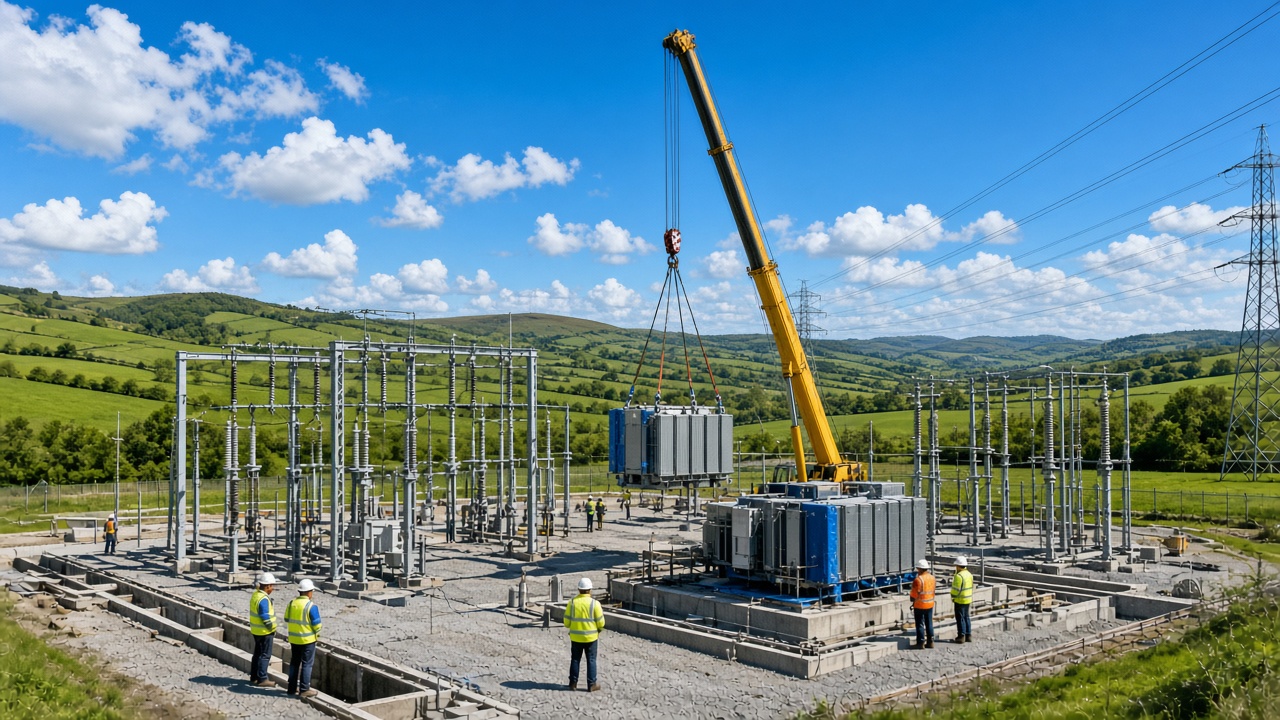
Commissioning is the bit between "installed" and "in service". An electrician or installation team builds the system. The commissioning engineer then tests it, step by step, from individual components up to the complete system running together, to confirm it does exactly what the design says it should, safely and reliably.
The government's occupational map for the Electrical Power Protection and Plant Commissioning Engineer puts it well: commissioning "requires a logical approach which builds from individual component tests through to full system commissioning", including making the equipment live and monitoring it when it's first turned on. That's the heart of the job. You are the person who takes a brand-new installation and switches it on with confidence.
In practice, the work looks different depending on which corner of the industry you're in:
- Building services and commercial M&E: proving distribution boards, lighting controls, emergency lighting, fire alarm interfaces, building management systems and plant all behave as designed, then pulling together the documentation for handover.
- Data centres: working through a structured series of commissioning levels, from factory testing of equipment before it ships, through installation checks and system tests on site, right up to integrated systems testing (IST), where the whole facility is run through planned failure scenarios to prove the backup systems take over as they should.
- Grid and power networks: testing transformers, switchgear and protection systems, including injecting currents and voltages into protection relays to simulate fault conditions and confirm the protection responds correctly. This is the world of the Level 4 standard linked above, which was developed with employers like National Grid, SSE, Scottish Power and UK Power Networks.
- Industrial and process: commissioning motors, drives, PLCs and control panels. Here the line between electrical and controls commissioning blurs, and brands like Siemens and Allen-Bradley come up again and again in job ads.
Across all of them, the day-to-day rhythm is similar. You read and interpret drawings and specifications, write or follow test scripts, carry out the tests, find and fix the faults (there are always faults), record everything, and work closely with installers, designers and the client to get the system signed off. It's part detective work, part project management, and part diplomacy.
Why demand is so strong right now
This isn't a niche that might grow. It's growing now, and the news this week shows why.
On 2 November the BBC reported that National Grid has bought 73.3 acres by the River Tees for what's expected to be the UK's largest electricity substation, with an initial capacity of 1.44GW and scope to grow to 3.2GW. Its first phase is due by the end of 2029, and every piece of switchgear, protection and control on a site like that has to be tested and commissioned before it carries a single megawatt.
The same week, BEAMA set up a new Electricity Networks Infrastructure Services Group, chaired by United Infrastructure with Balfour Beatty and M Group among its founding members. Its priorities include recruitment and training, and it points to the sector needing roughly 71,000 new direct entrants by 2035. Commissioning and testing skills sit right at the sharp end of that pipeline.
Then there's the data centre boom, which we've covered in depth. Every new data hall, power upgrade and cooling expansion needs to be verified before it goes live, and experienced commissioning people are in short supply.
The job ad numbers back this up. According to IT Jobs Watch, which tracks a slice of the UK market, permanent adverts mentioning "Commissioning Engineer" jumped from 26 in the six months to early November 2025 to 160 in the same period this year. That's only one data source and only one job title, but the direction is hard to miss.

What it pays in the UK
Pay varies a lot by sector, region and seniority, so treat the numbers below as a guide rather than a promise.
IT Jobs Watch puts the median advertised salary at £50,000 for permanent commissioning engineer roles in the six months to 3 November 2026, up 11% on the same period last year. The middle of the market runs from about £45,000 (25th percentile) to £57,875 (75th percentile), with the top 10% of adverts at £65,000 or more. Regionally, the East Midlands median came in at £60,000, Scotland at £57,500, London at £54,000 and the North West at £43,875, although some of those samples are small.
Data centre and mission-critical work generally pays a step above general building commissioning. A 2026 UK market brief from commissioningmanager.com, drawing on recruiter salary guides and the big job boards, puts data centre commissioning engineers with three to five years' experience at roughly £72,000 to £100,000 in total compensation, including bonus and allowances. The same brief quotes outside-IR35 day rates of around £450 to £750+ for experienced data centre commissioning contractors.
My advice: don't just compare the headline salary. Commissioning packages often include car allowances, per diems and project bonuses, and the hours can be intense during test windows. Work out what you're really earning per hour worked, not per contracted hour.
Routes in
There are three main doors into commissioning, and the first one is the one I'd shout about most.
1. Up from the tools
If you're a qualified electrician (NVQ Level 3, AM2, 18th Edition, and ideally your inspection and testing qualification), you already have the foundation. Plenty of commissioning engineers started out as installers who were simply the person on site everyone went to when something didn't work. If that's you, start putting your hand up for testing, snagging and handover tasks on your current projects. Build a record of the systems you've proved: switchgear, UPS, generators, BMS interfaces, fire alarm cause-and-effect, whatever you've touched. That's the evidence a commissioning manager wants to see.
Adding an HNC or HND in electrical engineering helps too. HNC and HND are among the most mentioned qualifications in commissioning job ads on IT Jobs Watch, and many employers will part-fund them.
2. Apprenticeship
For grid and power work, the Level 4 Electrical Power Protection and Plant Commissioning Engineer apprenticeship standard is purpose-built for the role. It covers high-voltage operations, protection and control, fault analysis, test equipment and safe systems of work. If you're early in your career and drawn to substations and transmission, this is a structured route with major network operators behind it.
3. Graduate entry
Electrical, electronic or building services engineering graduates often join contractors or specialist commissioning firms as graduate commissioning engineers, learning on the job under experienced leads.
Skills that make you stand out
Beyond the technical basics, these are the things I'd focus on:
- Methodical testing and record-keeping. Commissioning lives and dies on documentation. If you can't prove it, it didn't happen.
- Reading drawings and specs fluently. Single-line diagrams, schematics, cause-and-effect matrices and protection settings.
- Controls and communications. PLCs, BMS, Modbus and Profibus show up regularly in job ads. Electrical engineers who can also talk controls are worth more.
- Fault-finding under pressure. When a test fails at 2am with the client watching, calm, logical thinking is your biggest asset.
- Communication. You're often the bridge between installers, designers and the client. Being clear, honest and diplomatic gets systems signed off faster.
Is it right for you?
I'll be straight with you. Commissioning isn't for everyone. Big projects mean travel, and test windows can mean long days and nights for weeks at a time. If you want a fixed nine-to-five within ten miles of home, a maintenance or domestic role may suit you better.
But if you love solving problems, you enjoy seeing a whole system come to life, and you want a role where your value goes up every year as the grid, data centres and electrification projects keep coming, it's hard to beat. It also opens doors. Commissioning engineers move into commissioning management, project engineering, technical authority roles, or contracting at strong day rates. The skills travel well across the UK and Europe too, as data centre and grid programmes scale up across the continent.
I genuinely think this is one of the best times in a generation to be an electrical professional in the UK. The work is huge, it's long-term, and the people who can prove that the work is right will always be in demand.
If you're ready to take the next step, browse the latest electrical and commissioning jobs across the UK and Europe, and keep an eye on this series as we work through the roles shaping the industry.