What Does an Approved Electrician Do? UK Pay & Routes

Approved Electrician grade explained: JIB duties, 2026 pay rates, I&T routes, and how to progress from apprenticeship to Technician in the UK.
Why Approved Electrician still matters
If you have finished your apprenticeship and you are already working as an Electrician, the next grade most people aim for is Approved Electrician. It is the point where the industry trusts you to run a job without someone standing over your shoulder — and where the pay, responsibility and day-to-day variety jump up.
That matters more than ever. JTL's research shows the UK electrical workforce is about 25% smaller than it was in 2018. Demand has not shrunk with it. Domestic upgrades, commercial fit-outs, industrial plant, EV charging, heat pumps and data-centre work all need people who can install, test and take ownership of the finish. Approved Electrician is the grade built for that.
This guide walks through what the grade actually means under the JIB Handbook 2026 grading definitions, what you can expect to earn under the National Working Rules from January 2026, and a practical route from apprenticeship through to Technician if you want to keep climbing.
What the JIB means by Approved Electrician
Under Section 4 of the JIB Handbook 2026, an Approved Electrician is more than "Electrician plus a couple of years". The grade expects particular practical, productive and electrical-engineering skills, plus enough technical supervisory knowledge to work independently.
In plain language, that means you should be able to:
- Carry out electrical installation work without immediate supervision, efficiently and economically
- Set out jobs from drawings and specifications
- Requisition the materials you need
- Accept responsibility for completing the work properly
- Supervise other operatives when asked
You also need a thorough working knowledge of the National Working Rules, the current IET Wiring Regulations (BS 7671), the Electricity at Work Regulations 1989, the Electricity Safety, Quality and Continuity Regulations (as they apply to consumers' installations), relevant British Standards and Codes of Practice, and construction industry safety rules.
That is a serious list — and it is why employers reach for Approved Electricians when a commercial fit-out needs someone who can read the drawings, order the gear, keep apprentices productive and still leave a clean test file behind them.
How you qualify
The Handbook is clear. To apply for Approved Electrician grading you must:
- Fully meet the requirements for the grade of Electrician (Installation or Maintenance)
- Have two years' experience working as an Installation or Maintenance Electrician after training, immediately before you apply
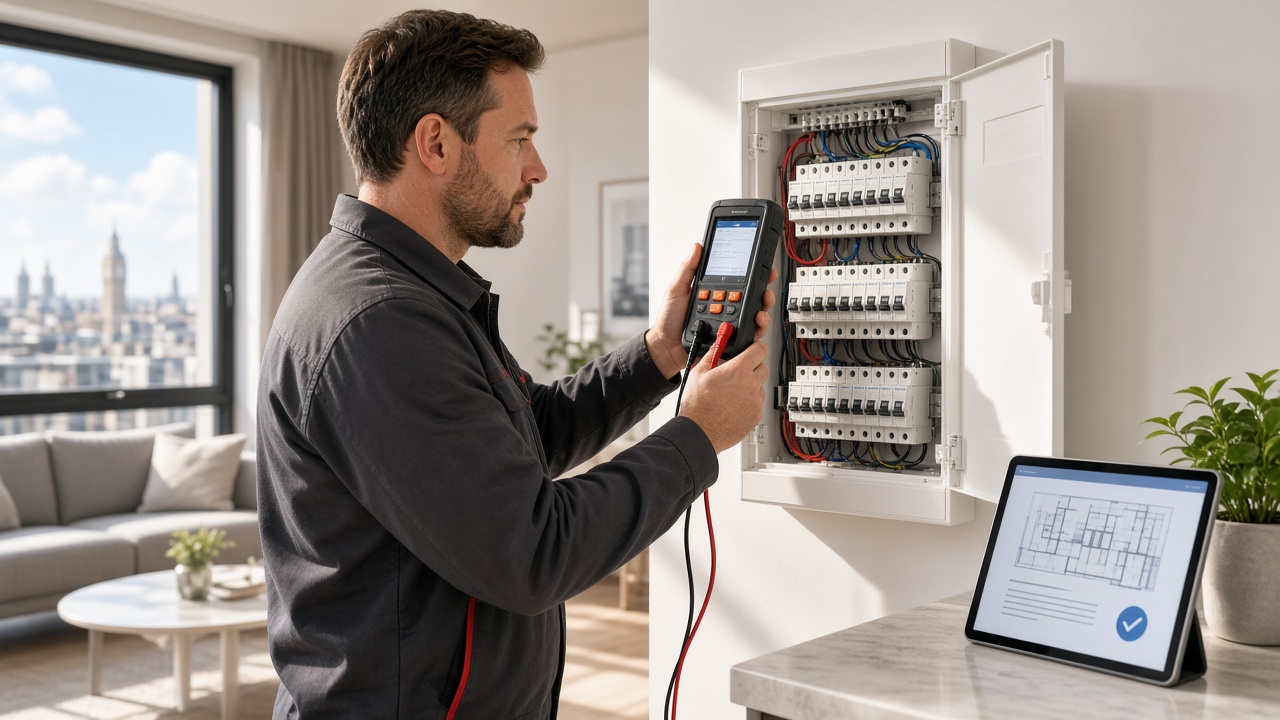
- Demonstrate competence in inspection and testing
For inspection and testing, the JIB accepts several routes, including the NET Advanced Assessment of Competence (AAC), older Level 3 certification routes that remain valid for people already graded, and current City & Guilds, EAL or LCL Awards Level 3 inspection-and-testing qualifications (for example C&G 2391-52, or the paired initial-verification and periodic-inspection awards). Scottish SELECT / SQA options are also recognised.
You do not have to have been previously graded as Electrician for the application to succeed, but you do have to fully meet those Electrician requirements first. Domestic Electricians who want Approved grading need the Domestic Electrician bridging assessment into the Installation Electrician standard, then the two years' experience as Installation or Maintenance Electrician.
When you have met the other requirements, JIB member employers cover the cost of a first attempt at the AAC, or the training and exams for inspection, testing and certification.
A practical path from apprentice to Approved
There is no single magic course. The reliable route looks like this:
- Level 3 electrotechnical apprenticeship — complete the knowledge, performance and industry assessment of occupational competence (AM2 or AM2S, depending on your pathway). That puts you in line for Electrician grade and an ECS gold card.
- Work as an Electrician — build two solid years on installation or maintenance. Seek variety: containment, first and second fix, panels, lighting, small power, snagging and variations from drawings. Keep a tidy evidence trail.
- Inspection and testing competence — book the I&T qualification your employer recognises (or the AAC pathway) and practise until you are confident writing certificates and condition reports that stand up to scrutiny.
- Apply for Approved grading — through ECS / JIB with the evidence above. Get the card that matches the grade; sites and principal contractors still check it.
- Keep learning on the tools — EV, heat pumps, battery storage, data centres and complex commercial work all reward people who stay current with BS 7671 amendments and manufacturer training.
If you came in via an Experienced Worker Assessment rather than a traditional apprenticeship, the same destination applies once you hold Electrician grade and the experience plus I&T competence.
What you earn under the 2026 National Working Rules
From 5 January 2026, the JIB National Working Rules set national hourly rates for Approved Electricians at:
- £20.08 per hour with employer-provided transport
- £21.19 per hour with own transport
- £18.61 per hour shop-employed
Treat those as the National Working Rules baseline, not a guarantee of what every site pays. London and site uplifts, overtime, travel time, lodging and local agreements can move the numbers. Always check the current JIB handbook and your contract before you budget around a figure you saw on a blog.
Outside JIB membership, many contractors still use these rates as a reference point — which is useful when you are comparing offers on electrical jobs across the UK and Europe.
What the job looks like day to day
An Approved Electrician's week rarely looks the same twice. On a commercial fit-out you might spend Monday setting out from the latest drawings, Tuesday coordinating with the ceiling and flooring trades, Wednesday mentoring an apprentice through second fix, Thursday chasing a variation that appeared after the client walked the floor, and Friday finishing testing and paperwork so the certificate is ready for handover.
Common threads include:
- Interpreting drawings and spotting clashes before they become expensive
- Ordering materials early enough that the programme does not stall
- Testing, snagging and leaving evidence that stands up to client and building-control review
- Supervising mates, apprentices or specialists without micromanaging every joint
- Talking calmly with site managers when the design changes mid-job
The grade is as much about judgement as it is about cable. That is why employers pay for it — and why the shortage of people who can do it well is felt across domestic, commercial and industrial work.

When to aim for Technician
Technician is the next step up. Per the Handbook grading definitions, you need to have fully met Approved Electrician requirements, then five years' experience as an Approved Electrician, plus either a higher technical qualification (for example a Level 4 / HNC with an electrical-installation bias, or the old City & Guilds "C" course) or a recognised BS 7671 design-and-verification course.
There are two flavours: Site Technician (at least three years in a supervisory capacity on complex installations) and Installation Technician (exceptional skill and value to the employer, with employer support). Aim for it when you are already organising other people, owning complex packages, and enjoying the design and planning side as much as the tools.
Practical next steps
If you are an Electrician with a year or so under your belt, map the gap to Approved now: which I&T qualification will your employer fund, what evidence of independent work can you collect, and when do you book the assessment? If you are still in an apprenticeship, treat every second-fix and testing opportunity as rehearsal for that grade.
If you are hiring, be honest in the ad about whether you need Electrician or Approved Electrician. The grades are different for a reason, and clear job specs attract people who can actually do the work.
Browse live Approved Electrician and related roles, keep an eye on the JIB grading page, and build the competence the industry is short of. The work is there. The people who can own it from drawing to certificate are the ones who will keep getting the calls.