What Does a Renewables Electrician Do? UK Pay & Routes
Renewables electrician UK guide: solar, EV chargers, batteries and heat-pump electrics, live Nov 2026 pay bands, routes and how to stand out.
Renewables electricians are ordinary sparks with a modern toolkit
A renewables electrician is still an electrician first. The difference is the kit on the van and the jobs on the diary: solar PV arrays, battery storage, EV charge points, and the electrical supply and controls that make heat pumps behave. You survey, install, test, commission, certify and — more often than not — explain the system to a homeowner or facilities manager who wants it to just work.
That mix of craft, product knowledge and customer skill is why the role is busy in late 2026. Clean-energy targets, domestic retrofit programmes and commercial electrification all need people who can leave a safe installation and a clean certificate. If you already hold a solid Level 3 electrotechnical route, 18th Edition and inspection-and-testing competence, you are halfway there. The rest is deliberate upskilling and choosing employers who actually do this work every week.
What the job covers day to day
Most renewables electricians move between domestic and light commercial work. A typical week might include:
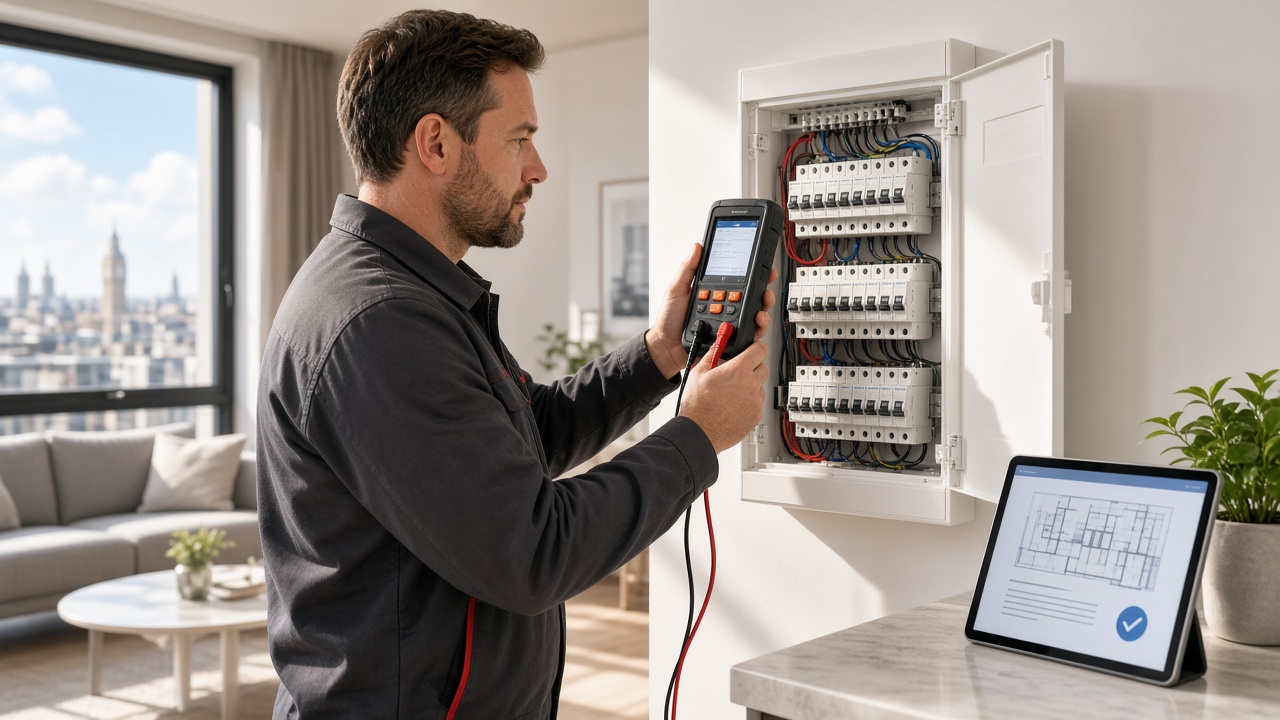
- Surveys and design checks — load assessment, earthing and bonding, spare ways in the consumer unit, cable routes, meter arrangements and whether the DNO needs notifying for the export or connection.
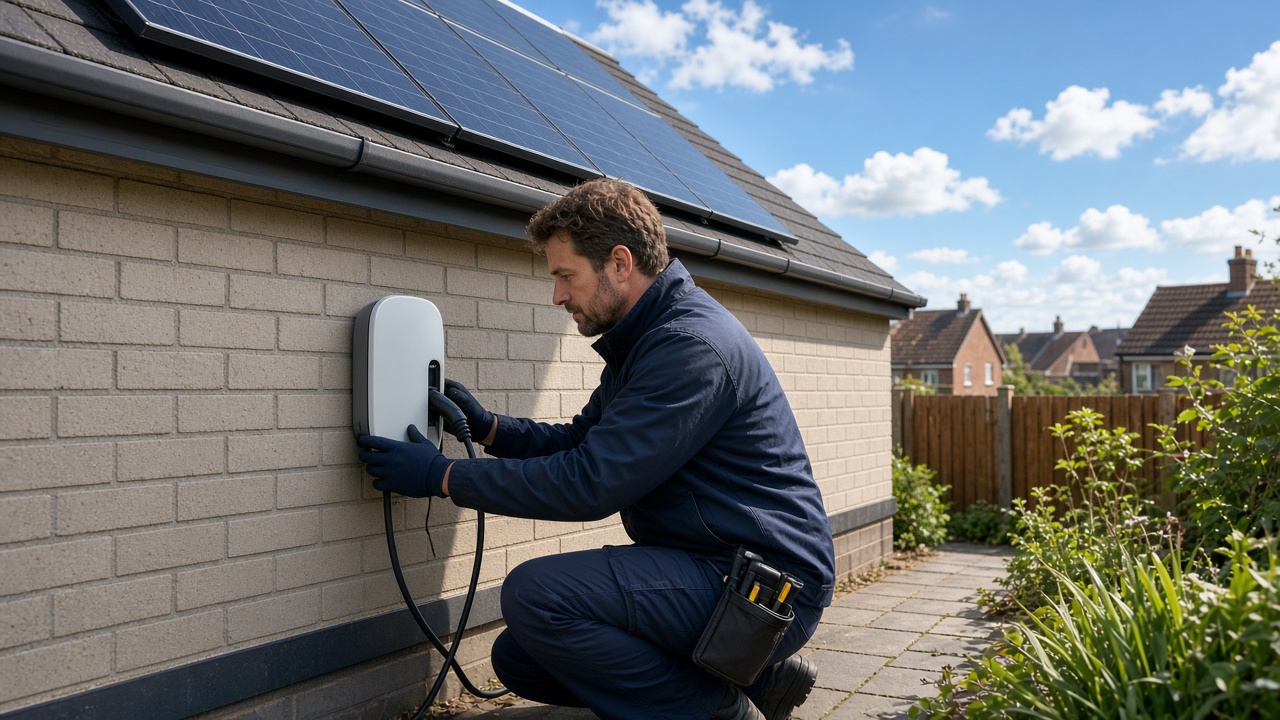
- Solar PV and battery storage — DC and AC side work within your competence, inverter and battery placement, isolation, labelling, and handover paperwork that matches what the scheme and manufacturer expect.
- EV charge points — wallboxes and commercial chargers, supply upgrades where needed, RCD / protection choices that match current guidance, and commissioning so the customer can actually charge.
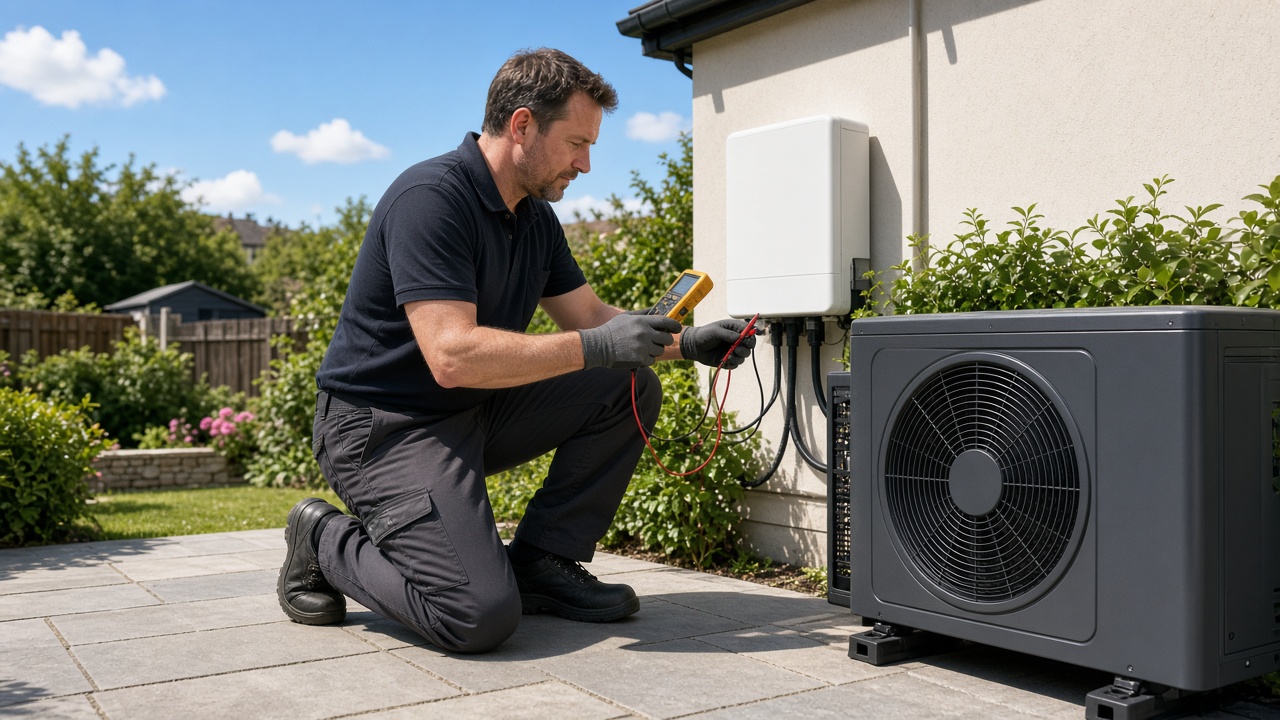
- Heat-pump electrics — dedicated supplies, controls, immersion / backup circuits and coordinating with the heating engineer so the system is safe and controllable.
- Fault-finding and aftercare — call-outs when an inverter trips, a charger will not talk to the app, or a battery behaves oddly after a firmware update.
- Certification and customer handover — electrical certificates, scheme notifications where required, and a calm walkthrough of how to use the system without fear.
You are not a sales rep. You are the person who makes the promise on the quote real. That is why good firms pay for reliability, tidy paperwork and the ability to say "no" when a survey shows the install is not safe or not suitable.
What employers are paying in November 2026
Treat pay bands as advertised offers, not a national grade. Live hiring in November 2026 shows a clear spread:
- Octopus Energy has been recruiting electricians for EV, air-source heat pump and solar work across England on around £36,500 basic plus overtime, with London weighting. Typical asks include a full driving licence with no more than six points, Level 3 NVQ or equivalent, 18th Edition, Part P / installation competence and inspection and testing.
- Win Berry in Orpington has advertised a renewables electrician role at roughly £45,000–£48,000 basic, with OTE around £55,000–£60,000 and a van. Requirements commonly include NVQ Level 3, AM2, ECS / JIB Gold Card, 18th Edition and City & Guilds 2391 (or equivalent I&T), with solar, EV or battery qualifications listed as desirable.
Broader Green Careers Hub and Total Skills-style ranges for qualified renewables-focused electricians often sit around £33,000–£50,000, with higher specialist upside when you combine scarce product skills, supervisory responsibility or London / South East weighting. Always read the full ad: van, overtime, on-call and London weighting change the real package as much as the basic.
If you are comparing offers, browse live renewables and electrician roles and weigh total package, training support and the mix of solar, EV, battery and heat-pump work — not just the headline salary.
Routes in — and how to stand out
There is a reliable path most people follow:
- Qualify as an electrician — Level 3 electrotechnical apprenticeship (or an Experienced Worker Assessment route into the same standard), AM2 / AM2S, ECS gold card, current BS 7671 and solid inspection and testing.
- Add manufacturer and MCS-aligned training — product courses for the inverters, batteries, chargers and heat-pump electrics you will actually fit. Pair that with whatever your competence scheme expects for low-carbon work.
- Build a portfolio of real installs — photos (with permission), certificates, DNO notifications and a short note on what went wrong and how you fixed it. Employers hire evidence, not buzzwords.
- Stay current with EAS and scheme rules — Electrotechnical Assessment Specification expectations for some Level 3 low-carbon work continue to evolve from October 2026. Check NICEIC and NAPIT guidance rather than assuming a short course alone covers you.
- Choose employers who do volume — the fastest learning happens where you see surveys, snags and handovers every week, not one solar job a quarter.
To stand out on applications: lead with your electrical competence, then list product training; show you can write a certificate that stands up; mention customer-facing experience; and be honest about what you have not done yet. A candidate who says "I have done twenty EV installs and I am booking battery training next month" beats one who claims to be an expert in everything after a weekend course.
A realistic day on the tools
Morning might start with a domestic survey: check the cut-out, earthing, consumer unit, loft or garage space, and whether the customer's expectations match the physics. Midday you could be second-fixing an EV charger on a commercial site, coordinating with the groundworker on ducting. Afternoon might be commissioning a solar-plus-battery system, walking the customer through the app, and leaving labels and documentation that the next electrician will thank you for.
The soft skills matter as much as the torque settings. Homeowners are investing serious money. Facilities managers hate downtime. Being early, tidy, clear about limitations and quick to escalate design problems is how you get called back — and how you avoid becoming the cautionary tale in the WhatsApp group.
Safety and quality are the brand
Renewables work sits at the intersection of BS 7671, product instructions, DNO / network rules and competence-scheme expectations. Cut corners on isolation, protection, earthing or documentation and you are not "being commercial" — you are storing a callback and a reputation problem. Favour:
- Surveys that say no when the install is unsuitable
- Manufacturer instructions followed, not approximated
- Proper isolation, labelling and as-fitted records
- Certificates and notifications completed while the job is fresh
- Continuous learning when standards or EAS guidance move
That discipline is also what keeps insurance, scheme membership and principal contractors onside.
Is this the right move for you?
If you enjoy variety, product learning and talking to customers, renewables work is one of the more exciting corners of the trade right now. If you prefer deep industrial plant or pure panel building, you can still add EV or solar as a side specialism without changing your whole career. Either way, the demand signal is loud: clean energy needs electricians who can finish the job properly.
Practical next steps this month:
- Map your gaps against a typical ad (licence, NVQ3 / AM2, 18th Edition, I&T, product tickets)
- Book one manufacturer course that matches the work you want
- Update your CV with installs, certificates and customer outcomes, not only course titles
- Apply for roles that list training support if you are early in the specialism
When you are ready, check renewables electrician and related jobs on ElectricalRoles.co.uk. The work is there for people who treat competence as a craft, not a checkbox — and that is exactly the kind of electrician this energy transition needs.