What Does a Data Centre Electrician Do? UK Pay, Skills, Routes
Data centres are the UK's hottest electrical market. What the job involves, JIB and site pay rates, the skills employers want and how to get in.
Every time someone asks me where the most interesting electrical work in the UK is right now, my answer is the same: data centres. They're the physical engine room of the AI boom, they're being built at an extraordinary pace, and they're hungry for skilled electricians.
So in this entry in our "what does this role do" series, I want to unpack the data centre electrician: what the job actually involves, what it pays, what you need to get in, and why I think it's one of the smartest career moves a UK spark can make in 2026.
Why data centres need so many electricians
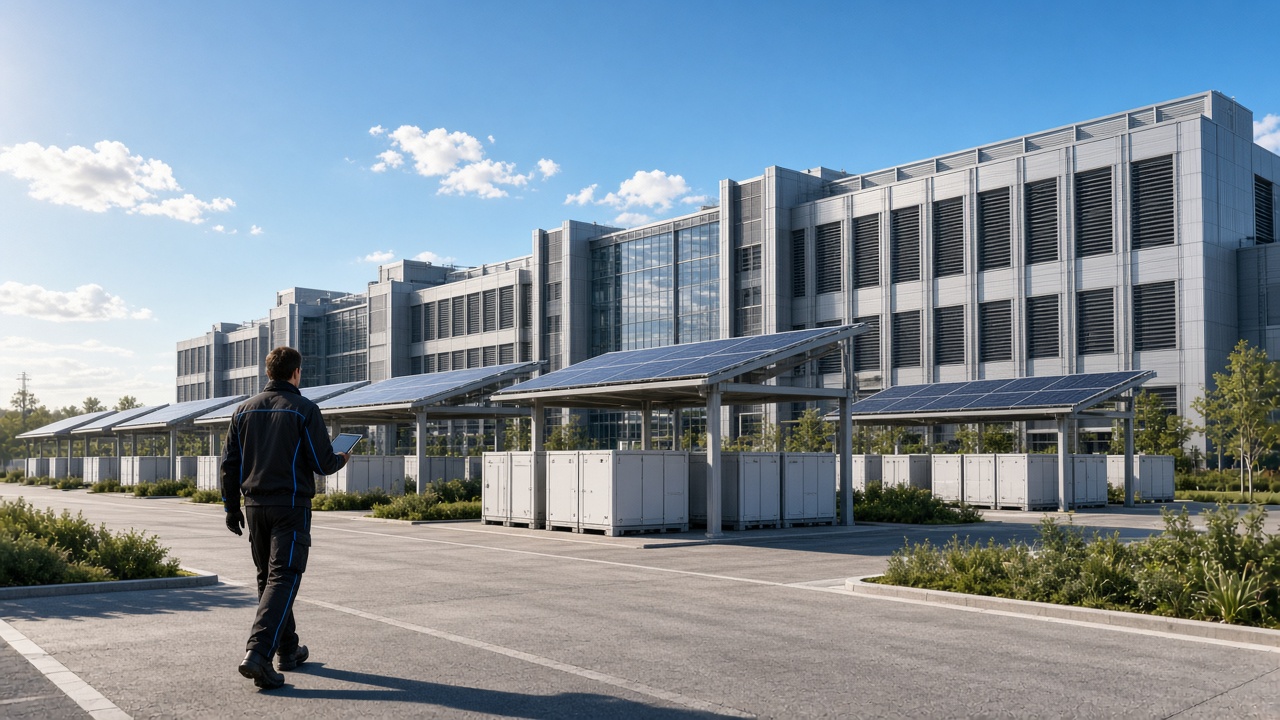
"The cloud" sounds weightless, but it isn't. Every AI model and every streaming service runs on rows of servers in enormous buildings that need huge amounts of power, delivered with near-perfect reliability. A data centre can't just lose power for ten minutes while someone resets a breaker. The whole electrical design is built around redundancy and resilience, and that makes it electrician-heavy work.
The scale of the UK pipeline is striking. The ECA says that with more than £14 billion of investment announced by the government and an estimated £88 billion pipeline of data centre projects, demand for electrical and specialist technical skills is growing rapidly, as it set out after its June skills roundtable with BESA. More recent estimates go higher: Construction News reported on 16 October that the latest figures suggest around £100bn of data centre work in the UK pipeline.
That same Construction News piece, covering Gleeds' latest quarterly market survey, found that four in ten respondents said M&E was the trade shortage having the greatest impact on project delivery and productivity. Gleeds said data centre builds are "effectively draining the talent pool available for other commercial or residential projects". In some cases, M&E firms are even acting as main contractor, because their specialist services can account for up to 80 per cent of a project's value.
And it's not a one-off survey. Electrical Review reported that 100% of Turner & Townsend's UK respondents were experiencing shortages of qualified mechanical, electrical and plumbing workers, with data centres among the busiest construction sectors in the country. If you're a skilled electrician, that's about as strong a signal as the market can send.
What a data centre electrician actually does
The job varies a lot depending on whether you're on the construction side or the operations side, but the core work looks like this.
On construction and fit-out, you're typically installing containment and cable management at serious scale, pulling and terminating large power cables, installing busbar, distribution boards and switchgear, wiring power to server racks, and putting in lighting, emergency lighting and fire alarm interfaces. A recent ad for a hyperscale project in Swindon, for example, described the scope simply as "complete fit out of new data halls", with 7am to 6:30pm working days over a seven to nine month programme.
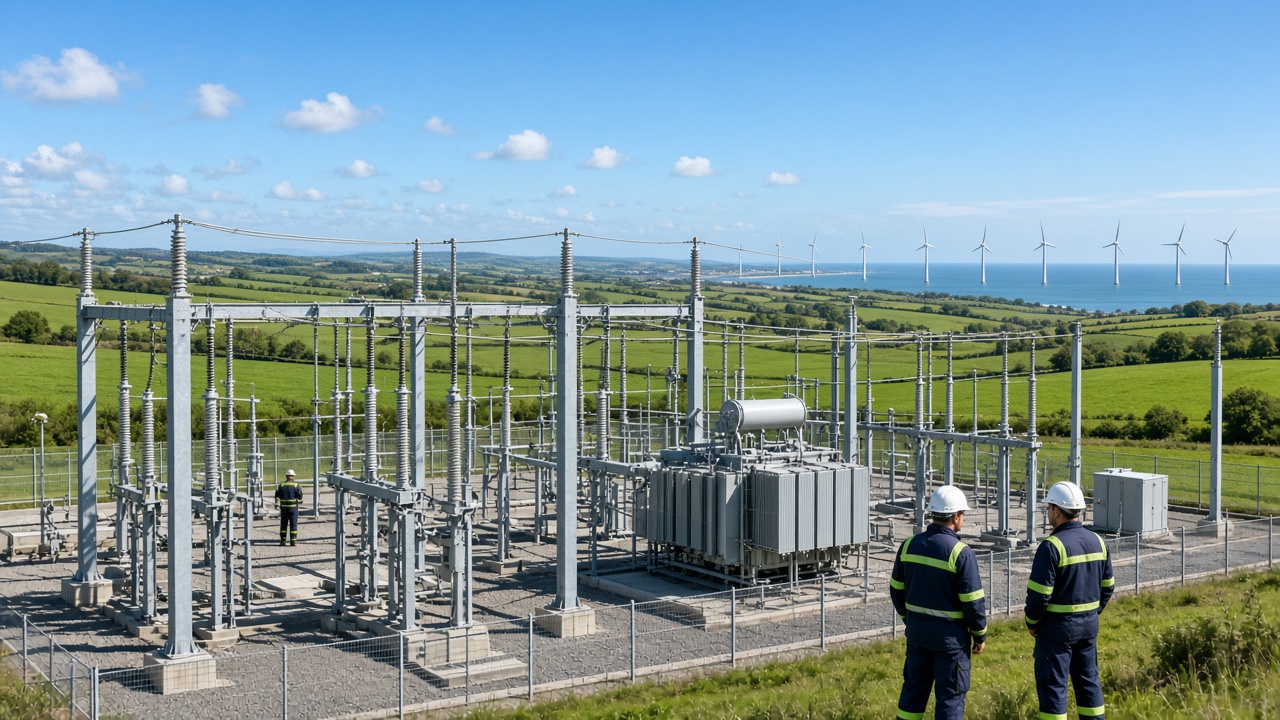
On the power infrastructure, you're working with HV and LV distribution, transformers, uninterruptible power supply (UPS) systems, battery rooms, standby generators and automatic transfer switches: the kit that keeps the servers running if the grid supply drops. Earthing and bonding are taken very seriously in these environments.
On testing and commissioning, you're part of the process that proves every system works before the client takes over, often including integrated systems testing where the team deliberately simulates failures to check the backup systems kick in as designed. Commissioning is one of the most valued skill sets in the sector right now. The ECA-BESA roundtable specifically flagged commissioning, cable jointing, HV and controls as specialist areas to focus on.
On operations and maintenance, once a site is live, critical facilities electricians carry out planned preventive maintenance, fault-find, carry out switching under strict permit-to-work systems, and support upgrades. These are often permanent, shift-based roles, and they're a great option if you want stability after years of moving between sites.

What it pays
Let's be realistic and use real numbers. The baseline is the JIB agreement. Under the JIB Handbook 2026 National Working Rules, from 5 January 2026 the national standard rate for an Approved Electrician is £20.08 an hour with transport provided (£21.19 with own transport), rising to £22.48 in the London zone. An Electrician grade is £18.38 nationally, and a Technician is £22.70. The ECA confirms the three-year deal brings a further 4.6% increase to graded operatives from 4 January 2027 and 4.85% from 3 January 2028.
Data centre projects often pay above that baseline, because contractors are competing hard for labour. That Swindon hyperscale job, posted in July 2026 by DT Source, offered £25 an hour for Gold Card electricians, £20 for improvers and £17 for mates, on long days. Rates vary by region, contractor and whether you're PAYE or self-employed, so treat any single ad as a data point rather than a promise. But the pattern is clear: when demand outstrips supply, pay follows.
The bigger financial win, in my view, is progression. Electricians who add commissioning, HV authorisation or controls experience on data centre projects can move into supervisor, commissioning engineer or critical facilities roles, and those skills transfer neatly into grid, renewables and industrial work too.
How to get in
You'll need the fundamentals. Employers expect a fully qualified electrician with an ECS Gold Card, and you'll need to be current on the 18th Edition, now BS 7671:2018+A4:2026, which became fully effective on 15 October. Expect the usual site safety inductions and tickets on major projects too.
Commercial or industrial experience helps a lot. If you've worked on large commercial fit-outs, hospitals, factories or anywhere with big distribution systems, highlight it. Mention specifics: the size of cables you've terminated, any switchgear or UPS work, and any testing and inspection experience.
Aim for the specialist skills. HV awareness and authorisation, commissioning, testing, controls and cable jointing are the areas the industry is shouting about. Even a short course plus some site experience can make your CV stand out.
Think about location. A lot of UK data centre development clusters around London and the M4 corridor, but projects are spreading, and the ECA has regional Electrotechnical Training and Careers Alliances, including Thames Valley and Local London, working on local skills issues.
If you're just starting out, an electrical apprenticeship is still the route in. The data centre boom is one more reason why a qualified electrician's ticket is one of the most valuable things you can earn in 2026.
The realistic bit
I'm a big believer in this sector, but go in with your eyes open. Construction phases can mean long days, travel and fixed-term contracts. Sites are highly controlled, with strict security, permits and quality standards, which suits some people more than others. And growth depends on grid capacity: the ECA has warned that data centre expansion must not outpace grid capacity or skills supply, and Gleeds flagged grid connections as a possible constraint.
The upside is that those constraints actually create more electrical work, not less: grid reinforcement, onsite generation and battery storage all need skilled people too.
My take
We're living through the biggest build-out of digital infrastructure the UK has ever seen, and it runs on electricity. Software might be getting smarter every month, but it still needs someone to install the switchgear, terminate the cables and commission the UPS. That someone could be you.
If you're a qualified electrician looking for your next step, or an improver thinking about where to specialise, data centres are well worth a serious look. Browse the latest electrical jobs across the UK and Europe on ElectricalRoles.co.uk, and keep an eye out for data centre and critical facilities roles.