Battery Storage Code Update: What UK Electricians Need to Know

IET's draft battery storage code, MCS 042 and new load control licence rules: what's changing for UK electricians fitting batteries and the deadlines to note.
Home and business battery storage has quietly become one of the busiest corners of UK electrical work, and this month the rulebook is catching up. Two consultations that directly shape how batteries are designed, installed and certified are open right now, with deadlines in the next fortnight. On top of that, the government has just published the licence conditions for companies that remotely control batteries, EV chargers and heating loads.
If you install, inspect or test battery systems, or you're thinking about adding storage to your services, this is the week to pay attention. Here's what's changing, why it matters, and what I'd do about it.
The numbers: storage is booming
Let's start with why this matters commercially. According to MCS, battery storage is now the fastest-growing MCS-certified technology, with more than 60,000 systems installed in UK homes and small businesses in 2026 by the end of September. That's already more than 50% above last year's record total, with a quarter still to go.
The quarterly figures tell the same story. MCS data summarised by GRE Energy Training shows 23,912 certified battery installations in Q3 2026, up 33.1% on Q2. Over the same period, the number of MCS-certified battery installers rose from 2,707 to 2,863, an increase of 5.8%.
Put those two numbers side by side and you can see the opportunity. Installations are growing more than five times faster than the installer base. Solar is pulling batteries along with it too: Q3 saw 75,331 certified solar PV installations, up 29.7% on the previous quarter. For electricians, that's a lot of work chasing a relatively small pool of certified firms.
1. The IET Code of Practice for Electrical Energy Storage Systems, 4th edition
The big one for technical practice is the draft fourth edition of the IET's Code of Practice for Electrical Energy Storage Systems, now out for public consultation.
If you work on batteries, you'll probably already lean on this document. It covers how to safely and effectively specify, design, install, commission, operate and maintain electrochemical storage systems, including how they integrate with low-voltage AC and DC systems. Its scope runs from individual homes through to commercial sites, multi-occupancy residential buildings and industrial applications.
The fourth edition's main job is to bring the code up to date with the market and align it with Amendment 4 of BS 7671, which came fully into effect on 15 October. According to the IET and NAPIT, the additions include:
- Updated guidance and references to other related standards
- New guidance on islanding equipment
- Expanded battery technology coverage, including sodium-ion batteries
- New guidance on values of consumer earth electrode resistance
- Enhanced guidance on arc flash, fire safety, RCD selection, earthing, signage and certification
A few of those jump out at me.
Islanding guidance matters because more customers want their battery to keep the lights on during a grid outage. That means changeover and isolation arrangements, earthing when the system is running independently of the grid, and making sure everything is correctly labelled. Clearer guidance here should make backup-capable systems easier to design and sign off with confidence.
Sodium-ion coverage is a sign of where the market is heading. It is a chemistry attracting growing interest, and it's good to see the code covering it early rather than playing catch-up.
Earth electrode values, RCD selection and certification are the day-to-day details that cause the most head-scratching on site. Better guidance here should mean fewer grey areas when you're filling in the paperwork.
The deadline for comments is 9am on Monday 16 November 2026. NAPIT's Steve Humphreys made the case well: "Industry feedback plays a vital role in ensuring guidance remains practical, technically correct and reflective of actual installation practices."
I'd echo that. If you've installed a few dozen batteries and something in the current guidance has made your life harder than it needed to be, this is your moment to say so. The people who write these documents genuinely want to hear from installers.
2. MCS's new Battery Storage Product Standard (MCS 042)
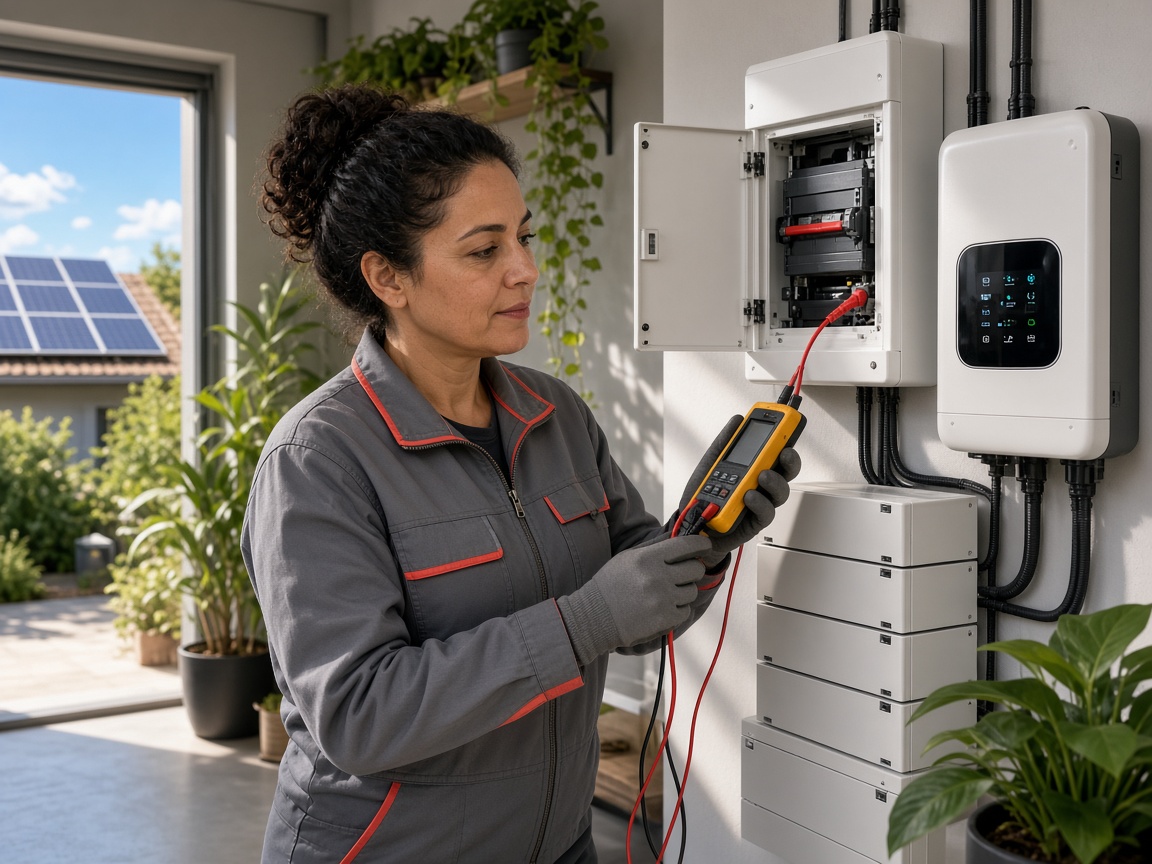
The second consultation comes from MCS. Battery storage has been part of the MCS installer scheme since 2021, but until now there's been an Installation Standard without a matching Product Standard. MCS is fixing that with the draft Battery Storage Product Standard (MCS 042), developed by its Battery Storage Technical Working Group of installers, manufacturers, trade associations and certification bodies.
The aim is to boost confidence in the quality of products MCS-certified installers use. In practical terms, that should make it easier to choose kit you can stand behind, and easier for customers to trust what's going on their wall.
Comments close at 11:59pm on Tuesday 10 November 2026, via the forms on the MCS site. MCS says this is the first step, and it'll review feedback, finalise the standard and then phase it into the scheme. I'd expect it to influence which products wholesalers and distributors push hardest over the next year or two, so it's worth keeping an eye on even if you don't respond.
3. Load control licences: who gets to switch your customer's battery
The third piece of news is less about the install and more about what happens afterwards. On 2 November, the Department for Energy Security and Net Zero published standard licence conditions for electricity load controllers and flexibility service providers in Great Britain.
In plain English, these are the companies that remotely shift when batteries charge, when EVs top up and when some heating runs, usually to save customers money or help balance the grid. The conditions cover operational capability, compliance with industry codes, cybersecurity and fair treatment of customers, including clear contracts and exit terms. Controllers responsible for 300MW or more of aggregate load must notify the Secretary of State.
It's important to be clear on timing. These conditions don't switch on a new licence yet. The regulations that will create the regime, the Electricity Act 1989 (Load Control Licence) Regulations 2027, are expected to be laid before Parliament later in 2026.
Why should an electrician care? Because a growing share of the batteries you fit will be enrolled in some kind of smart or flexibility service. Customers will ask you who's controlling their system, whether it's safe, and what happens if they want out. Being able to explain that confidently, and pointing them towards reputable providers, is part of a premium service.
A quick technical clarification worth knowing
One more nugget from this week. In Professional Electrician's latest NICEIC technical Q&A, NICEIC confirmed that BS 7671 doesn't require AFDDs on circuits supplying battery energy storage systems. The AFDD requirement applies to socket-outlet circuits rated up to 32A in four building types: care homes, high-rise residential buildings, houses in multiple occupation and purpose-built student accommodation. Of course, a designer can still choose to fit one where it makes sense, but it's useful to know where the requirement actually sits.
What I'd do this month
Here's my practical checklist if storage is part of your business, or you want it to be:
- Download the IET draft and skim the sections you use most. Even if you don't submit comments, you'll get an early look at where guidance on islanding, earthing and certification is heading.
- Respond if you've got real-world experience to share. Ten minutes of honest feedback from an installer is worth more than you'd think.
- Read the draft MCS 042 before 10 November and check how your preferred battery brands are likely to fit.
- Get your Amendment 4 knowledge sorted. The new EESS code is being aligned with it, so if you haven't done an update course yet, now's the time.
- Learn to explain smart control simply. Customers trust the installer who can tell them in two sentences who controls their battery and why.
- Think about certification. With installations growing far faster than certified installers, there's a clear gap in the market for well-trained firms.
The bigger picture
I love this kind of news. It's not flashy, but it shows a sector growing up. Batteries have gone from a niche add-on to a mainstream part of UK homes and businesses in just a few years, and the standards, product rules and licensing are now maturing to match. That's exactly what you want to see before the next big wave of growth.
For electricians, it adds up to a strong, long-term opportunity. Storage brings together the skills you already have, such as design, earthing, protection, inspection and testing, with newer ones like inverter set-up, smart controls and customer advice. Those who invest in that combination now will be in a great position as homes and businesses electrify over the next decade.
If you're looking for your next role in solar, storage or wider electrical work, browse the latest electrical jobs across the UK and Europe.