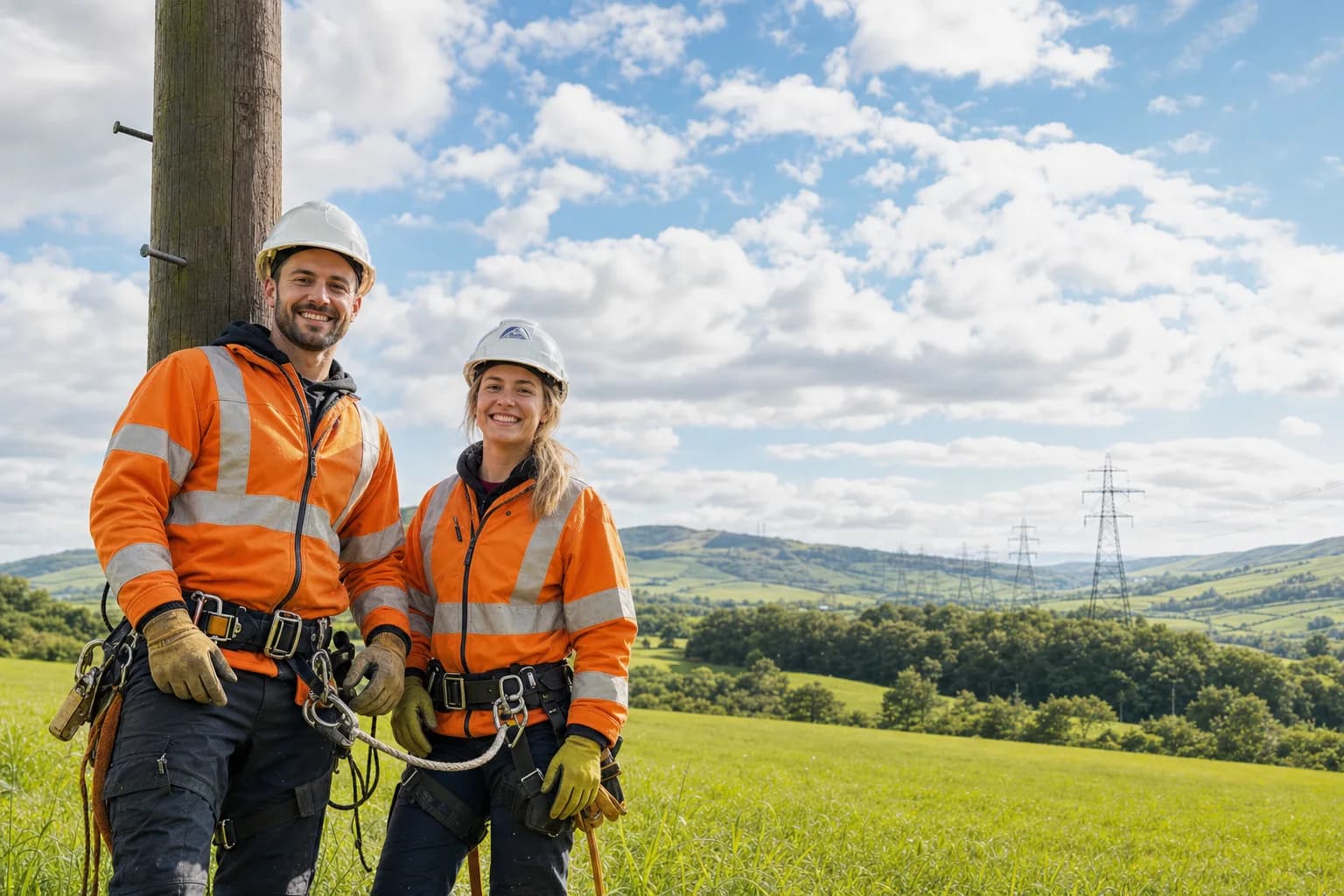
What does a rail electrician actually work on?
"Rail electrician" covers several jobs. Rail engineering splits into track, overhead line, electrification, signalling, telecoms, traction and rolling stock, and rail systems. Apprentices learn a shared core and then pick one of these. The work can be out on site, inside a depot or in a technical office.
Depot electricians fault-find and maintain traction and rolling stock. Electrification and plant staff look after the fixed power kit that feeds the railway. Signalling technicians inspect and repair signalling equipment and track down faults. Station work is mostly building services: lighting, power and small power. If you are a qualified installation electrician, station and depot building work is usually the shortest way in.
PTS and Sentinel: your licence to go trackside
Network Rail describes Personal Track Safety as the competence that lets a worker understand their responsibilities and duties when working on or near the line. PTS lives on Sentinel, the smart card system Network Rail uses to check a worker's competence and fitness to work in near real time. Sentinel covers more than Network Rail. Its Managed Infrastructure also takes in London Underground, London Overground, the DLR and the Elizabeth line.
You cannot get a Sentinel card by yourself. Under the Sentinel Scheme Rules every individual needs a Primary Sponsor and a Contract of Sponsorship with them. You may have one Primary Sponsor and at most two Sub-Sponsors, and Sub-Sponsors need the Primary Sponsor's permission. Whatever your employment status, the Primary Sponsor takes the employer's role for health, safety and welfare. They must give you your card, an induction briefing and PPE at no cost to you.
Checks before you start
Before sponsoring you, a Primary Sponsor has to confirm you have the legal right to work in the UK and that your spoken and written English is good enough. The rules say you must be able to follow instructions, challenge when you need to and make an emergency phone call in English. Supervisors need a higher standard. Where it applies, a drugs and alcohol screen is done before sponsorship and the result goes on the Sentinel database.
Expect a medical as well. The National Careers Service says signalling technicians take a medical that includes hearing and vision checks. They may also face regular drug and alcohol tests, need a driving licence, and have to live within an hour of their base. On site you must carry your card at all times and swipe in before you start work.
Night shifts and pay
A lot of trackside work happens in engineering hours, when trains are not running, which means nights, weekends and bank holidays. The National Careers Service gives signalling technicians 37 to 45 hours a week on shifts, with average pay from £28,000 for starters to £45,000 with experience. Depot and station roles more often run on rotating shift patterns.
If your employer follows the JIB National Working Rules for electrical contracting, night shifts are paid at time and one-third for hours worked up to 37½. Rail operators and Network Rail have their own pay deals. Shift allowances, overtime and call-out on those deals can lift your earnings well above basic pay.
Pay
GBP a year, before tax. The ranges are ONS Annual Survey of Hours and Earnings figures for all electricians, April 2026 (provisional), moved to the current year with a wage index. The regional figures are modelled and are not specific to rail. The JIB rows are official National Standard Rates from 5 January 2026 (Job Employed, Transport Provided), worked out at 37.5 hours over 52 weeks. Night shifts, overtime and rail allowances can add a lot to these. Refer to the Electricians salary guide for figures from live adverts.
What you need
- Personal Track Safety (PTS)This is the Network Rail competence you need to work on or near the line. It is held on your Sentinel profile.
- Sentinel sponsorshipYou need a Primary Sponsor and a Contract of Sponsorship. You are limited to one Primary Sponsor and two Sub-Sponsors.
- Right to work and EnglishSponsors must check you can legally work in the UK and can understand instructions and make an emergency call in English.
- Drugs and alcohol screeningWhere required, you take a screen before sponsorship and the result is recorded on Sentinel. Random testing is common across the industry.
- Medical fitnessSafety-critical rail roles include a medical, which can cover hearing and vision.
- Electrical qualificationsFor direct entry, employers look for electrical or electronic experience and qualifications from another industry or from the armed forces.
- Driving licenceMany maintenance roles expect you to drive company vehicles between sites.
How to get there
- Before startingChoose your entry routeSchool leavers usually join a rail engineering apprenticeship. Advanced level normally asks for 5 GCSEs at grades 9 to 4, including English and maths. Qualified electricians can apply directly.
- Weeks 1-4Pass selection checksYou will go through right-to-work and English checks, a medical and, where required, a drugs and alcohol screen before your sponsor puts you on Sentinel.
- First monthsGet PTS on your Sentinel cardYour sponsor puts you through Personal Track Safety training so you can go trackside on Network Rail infrastructure.
- Years 1-3Train in one disciplineApprentices learn a shared core and then specialise in electrification, overhead line, signalling, traction and rolling stock or another discipline. The Level 3 route typically takes 36 months.
- Years 3-5Build competences and shift experienceAdd discipline competences and get used to working at night in engineering hours, on call-outs and on depot rotas.
- Year 5 onwardsMove upGo for team leader or technician grades, or professional registration. Completing a Level 3 rail engineering apprenticeship meets the requirements for Engineering Technician registration.
Open now on ElectricalRoles.co.uk

Questions people ask
Can I get a PTS or Sentinel card without a job?
No. Under the Sentinel Scheme Rules every cardholder needs a Primary Sponsor and a Contract of Sponsorship with them. In practice your employer or labour agency sponsors you and arranges the training.
Does Sentinel cover London Underground as well as Network Rail?
Yes. Sentinel's Managed Infrastructure covers Network Rail, London Underground, London Overground, the Docklands Light Railway and the Elizabeth line. Each of these sets its own track safety competences.
Will I have to work nights?
Most likely, if you work trackside. A lot of maintenance and renewal is done when trains are not running, and signalling technicians work evenings, weekends and bank holidays on shifts. Depot jobs usually run on rotating rotas.
Who employs rail electricians?
Network Rail, train and tram operators, and Transport for London all take on apprentices. Contractors and manufacturers such as Alstom, Amey and Babcock helped write the rail engineering apprenticeship standard, and HS2 and Eurostar were also involved.
Can I work for more than one company on my Sentinel card?
Yes, within limits. You can have one Primary Sponsor and up to two Sub-Sponsors, but only if your Primary Sponsor allows sub-sponsorship. When you book in on site you must give the name of the sponsor you are working for.
Is the Level 3 Rail Engineering Technician apprenticeship still running?
Yes. Version 1.1 of ST0318 has been retired, but Skills England lists the Level 3 Rail Engineering Technician standard (ST0318) as approved for delivery in a newer version, and employers are still recruiting apprentices onto it.
Sources
- Network Rail Safety Central: PTS
- Network Rail Safety Central: Sentinel
- Sentinel: Scheme Rules page
- Network Rail: Sentinel Scheme Rules V5.1
- Skills England: Rail engineering technician (ST0318 v1.1)
- Skills England occupational maps: Rail engineering technician (OCC0318D)
- National Careers Service: Signalling technician
- JIB Handbook 2026: National Working Rules
- JIB Industrial Determination 2026-2028
- Network Rail: Become a Network Rail apprentice