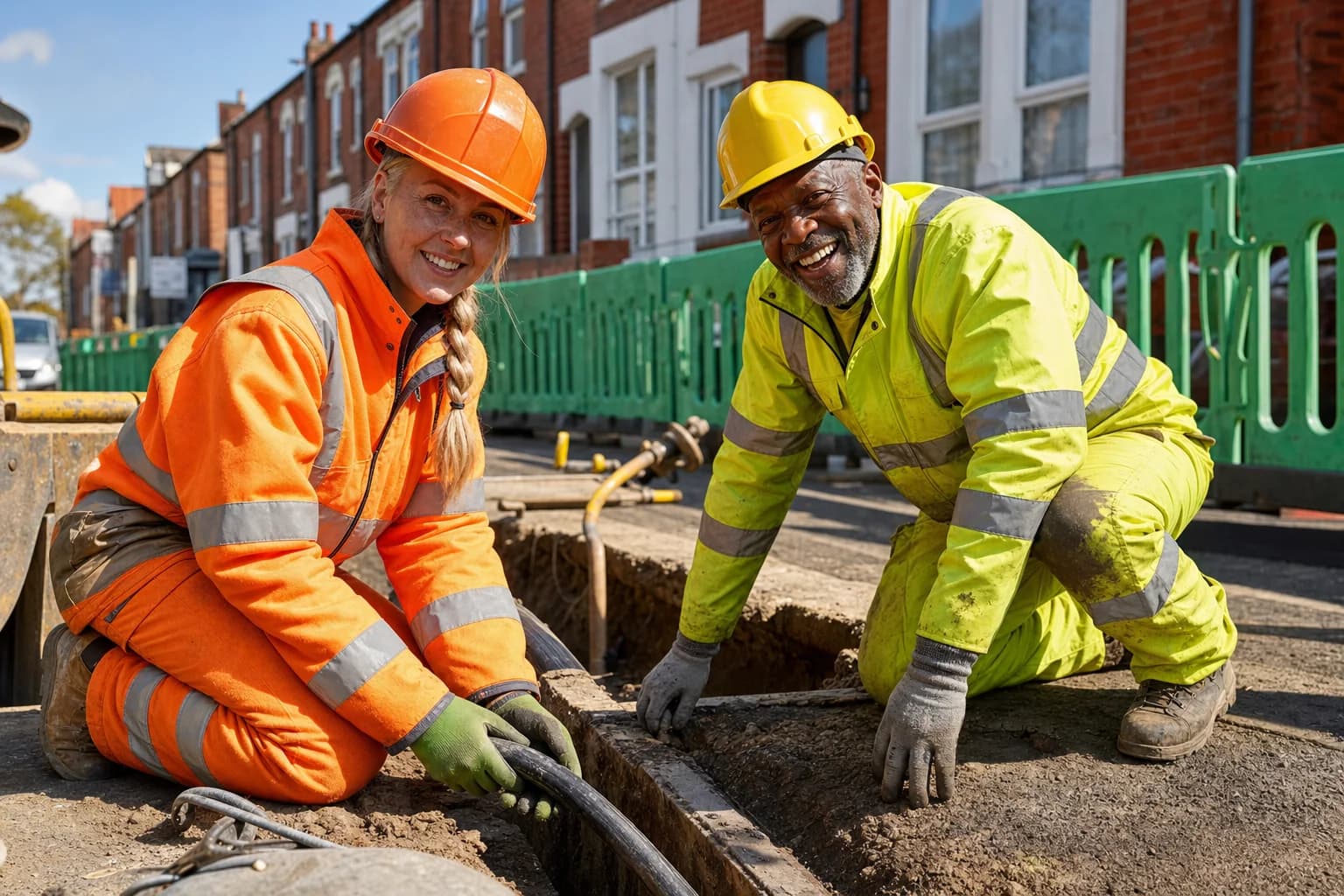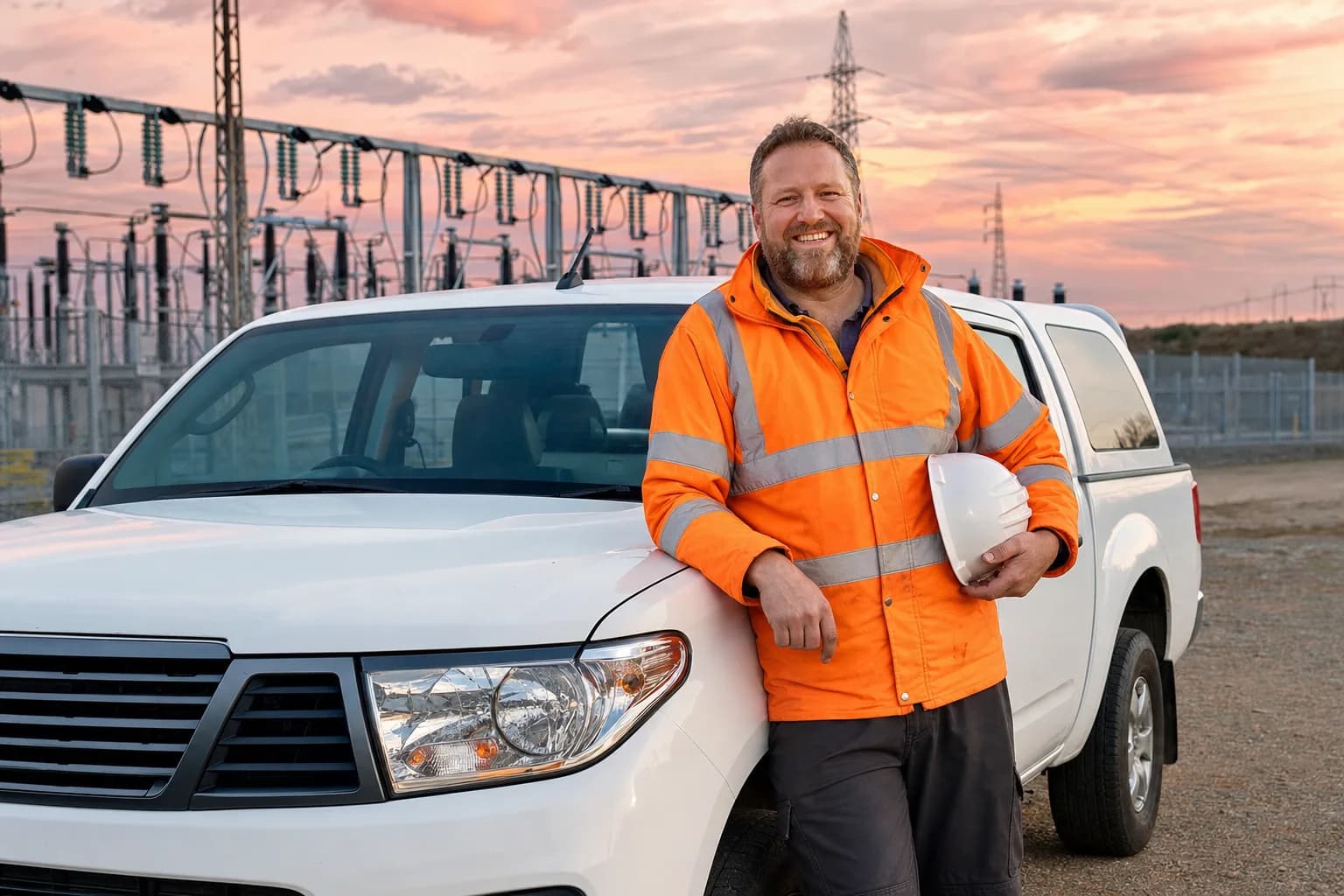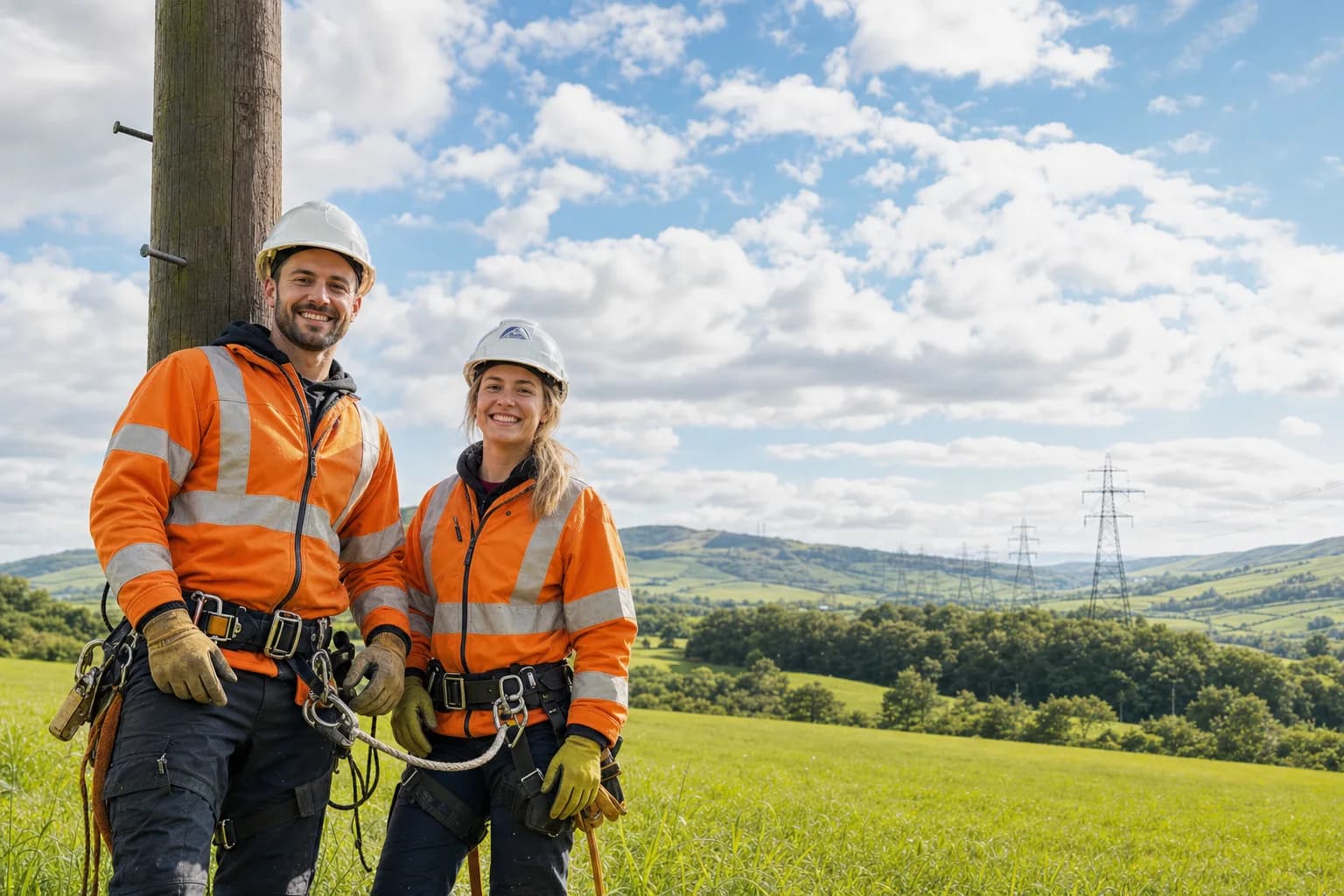
What does an overhead linesperson actually do?
You build, maintain and repair the power lines that hang between poles and towers. On distribution networks that means wood poles, stays, conductors, insulators and cut-outs carrying power from substations to homes and businesses. The government apprenticeship standard describes the role as planned and reactive work on distribution or transmission overhead lines. You climb, rig, earth lines before work, operate switchgear and fuses, and find faults. Employers such as UK Power Networks also expect you to go out to power cuts and get supplies back on quickly.
Transmission work is a different job on the same theme. It is high voltage steel tower work at 132kV and above, which covers rigging on towers, temporary earthing, compression jointing of conductors and fitting spacers. Much of it is done by specialist contractors whose gangs move around the country. One transmission contractor advertises site days of 07:30 to 18:00, usually 12 days on and 2 off, with a lodging allowance because you work away from home.
How does the apprenticeship work?
The standard is the Power industry overhead linesperson (level 3). It is a core and options apprenticeship: everyone learns the core, then trains and is assessed on either the distribution or the transmission option. Typical duration is 30 months, and the government will fund up to £27,000 of the training. The standard says applicants usually need no particular qualifications going in. The English and maths minimum is Entry Level 3, and an emergency first aid course is mandatory.
Network operators run their own schemes. UK Power Networks offers overhead linesperson as one of three craft apprenticeships, lasting two or three years depending on the programme. National Grid's transmission apprentices finish with the Level 3 Power Network Craftsperson apprenticeship plus the City & Guilds 2339-45 Diploma in Electrical Power Engineering. By the end you must be competent to hold an authorisation under your company's safety rules. Without that you cannot work on the network on your own.
Climbing, height and fitness
Height is the whole job. The standard requires you to choose, inspect and use your own climbing equipment to get into a work position on poles and towers, and to fit and operate a rescue device at height. You will also use platforms, ladders and scaffolding. The National Careers Service lists coping with height and a full driving licence as basic requirements.
Employers screen for this. National Grid Electricity Distribution warns that roles using personal fall protection equipment have a maximum weight limit for the worker. One transmission contractor takes apprentices from age 18 only, and they must pass a strict medical and physical standard first. If you have never climbed, try a height taster or a ground-based operator job before committing.
Storms, standby and conditions
Lines come down in bad weather, so the work goes on in bad weather. The apprenticeship standard says linespersons work in all conditions, may be put on standby, and may work shifts outside normal hours. The National Careers Service describes rota work covering evenings, weekends and bank holidays, often in remote rural areas. Expect tree cutting, digging pole holes and carrying gear across fields as part of the day.
Distribution operators want you close to base for call-outs. A National Grid Electricity Distribution craftsperson advert asked applicants to live within roughly 30 minutes of the depot because of standby duties. Transmission contract work is the other way round: long stints away, lodging on site, and extended shifts.
Pay
GBP a year, before tax. The ranges run from the 25th to the 75th percentile for power and utilities workers. They are based on ONS ASHE April 2026 (provisional) figures, moved to 2026 with a wage index, and the regional figures are modelled. A sample of real adverts: £19,500 for a transmission trainee, £31,393 for a 2022 NGED operator role and £41,459 for a 2024 NGED overhead lines craftsperson. Standby, overtime and time working away are what push take-home pay up. Refer to the Power & Utilities salary guide for figures from live adverts.
What you need
- Apprenticeship standardThe Power industry overhead linesperson (level 3) apprenticeship, done on the distribution or transmission option. It typically takes 30 months.
- English and mathsThe standard sets an Entry Level 3 minimum, but individual employers may ask for more. One NGED operator advert asked for GCSE English and maths or Functional Skills at the equivalent level.
- Working at heightYou must be comfortable climbing and working aloft. Employers check medical fitness and may set a maximum body weight for fall protection equipment.
- Driving licenceThe National Careers Service lists a full driving licence as a requirement, because crews drive to sites across the network.
- Emergency first aidA one-day emergency first aid course is a mandatory part of the apprenticeship.
- Company authorisationYou must be competent to hold an authorisation under your employer's safety rules before you work on the network. Some sites also need a CSCS card.
How to get there
- Before startingApply to a DNO or line contractorApply to a network operator's apprenticeship scheme or a contractor's trainee lines worker vacancy. You can also start as an overhead lines operator helping a craftsperson.
- Year 1Core trainingSafety rules, permits to work, earthing, climbing, rescue at height, first aid and hazard control.
- Years 2-3Distribution or transmission optionDistribution covers wood poles, LV live working, cut-outs and fault repair. Transmission covers steel towers at 132kV and above, rigging and compression jointing.
- Around month 30End-point assessment and authorisationPass the apprenticeship assessment and be authorised under your company's safety rules to work as a craftsperson.
- Year 4 onwardsProgressWith experience you can move into lines supervision, inspection, network planning or technician roles.
Questions people ask
Do I need to be a qualified electrician first?
No. The overhead linesperson apprenticeship is its own trade route, and the standard says applicants usually need no specific qualifications going in. Electrical knowledge helps, but the apprenticeship teaches the network side from the start.
How long does it take to qualify as an overhead linesperson?
The Level 3 apprenticeship typically takes 30 months. UK Power Networks says its craft apprenticeships take two or three years depending on the programme.
What is the difference between distribution and transmission lines work?
Distribution linespersons work on lines that take power from substations to homes and businesses, mostly on wood poles, on networks of up to 132kV (some employers, such as NGED's local teams, work up to 66kV). Transmission linespersons work on steel tower lines of 132kV and above, often for contractors who work away from home.
Will I have to work during storms and at night?
Yes. The apprenticeship standard says linespersons work in all weathers and may do standby and shifts outside normal hours. The National Careers Service describes rota work covering evenings, weekends and bank holidays.
Is there a minimum age or fitness requirement?
It depends on the employer. One transmission contractor takes apprentices only from age 18, and they must pass a medical and physical assessment. NGED says roles using fall protection equipment have a maximum body weight.
Can I switch in from another job as an adult?
Yes. The National Careers Service says people with electrical or maintenance experience from other industries can sometimes apply directly. NGED has also taken on overhead lines craftspeople without line experience, as long as they could reach the standard through training and City & Guilds study.
Sources
- GOV.UK Find apprenticeship training: Power industry overhead linesperson (level 3)
- Skills England: ST1330 Power industry overhead linesperson standard
- National Careers Service: Electricity distribution worker
- UK Power Networks: Apprenticeships
- National Grid: Apprentices
- National Grid Electricity Distribution: Craftsperson - Overhead Lines
- National Grid Electricity Distribution: Operator - Overhead Lines
- Find an apprenticeship: Apprentice Trainee Transmission Linesman