What does a cable jointer do?
A cable jointer installs, connects and repairs the underground cables that carry power to homes and businesses. The Level 3 apprenticeship describes the job as connecting new supplies, diverting and altering existing ones, and finding and repairing faults on the underground distribution network. UK Power Networks says its jointers carry out repairs on both the high voltage and low voltage cable networks.
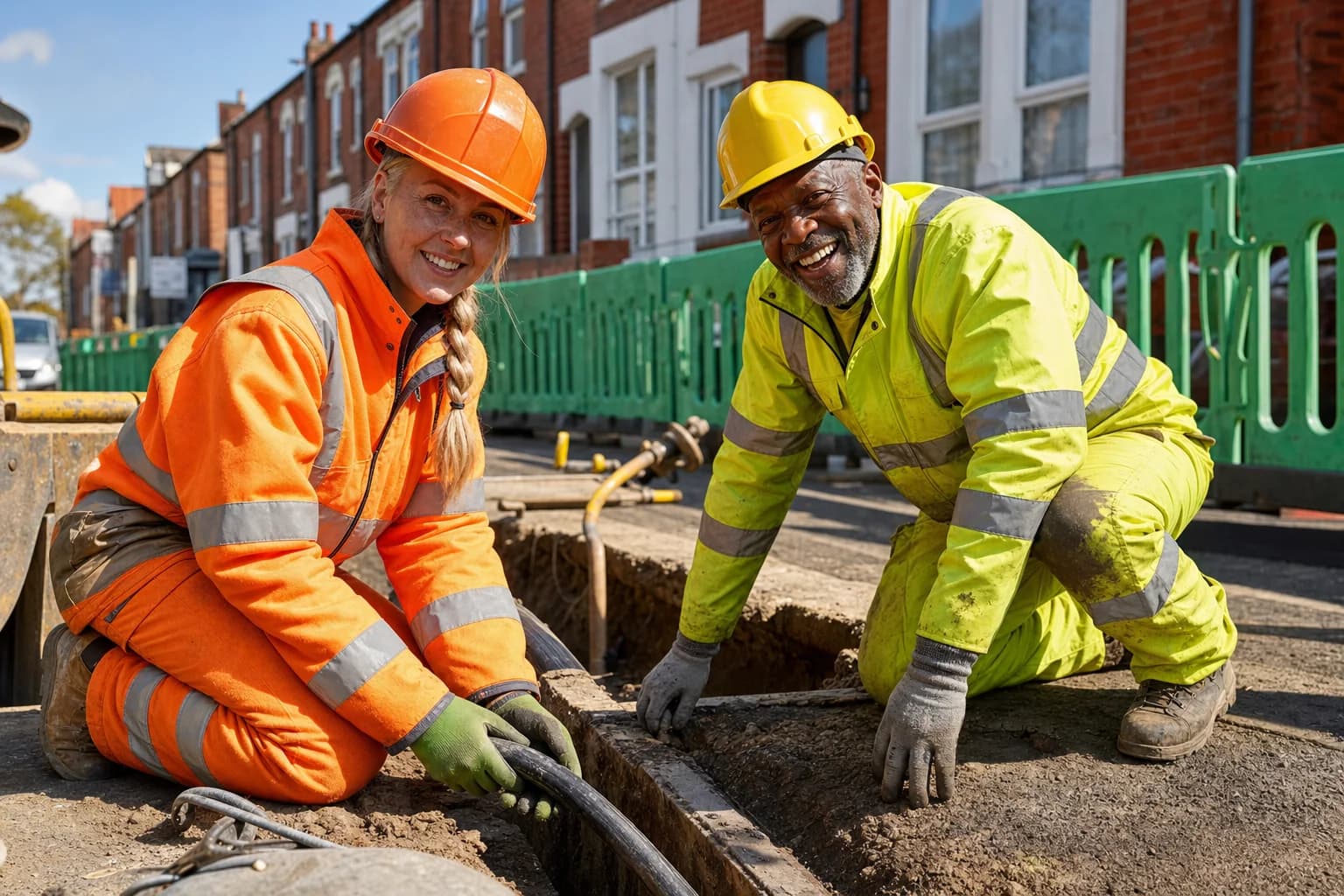
The work is not all jointing. You dig the hole, lay the cable, make the joint, then backfill and reinstate. On a fault you will use kit such as a time domain reflectometer to find where the cable has failed. Expect rota work: the National Careers Service lists evenings, weekends and bank holidays, and 37 to 42 hours a week.
LV, HV and EHV jointing
Apprentices start on low voltage. The apprenticeship covers cable types up to 33kV, including modern XLPE cable and older paper-insulated lead-covered (PILC) cable, which you still find in the ground across most of the country. The PILC work is the hard part to learn. It takes practice to get right.
How far up the voltages you go depends on the employer and the team. National Grid Electricity Distribution says its jointers work with jointing techniques up to 66kV, and up to 132kV in its Projects teams. You only work at the higher voltages once you are authorised under your employer's safety rules. The apprenticeship teaches the Model Distribution Safety Rules levels of competent, authorised and senior authorised person.
Apprenticeship or adult entry?
Most people get in through an apprenticeship with a distribution network operator (DNO), such as UK Power Networks, National Grid Electricity Distribution or Northern Powergrid, or with an independent utility contractor. National Grid's adverts start with a 12-week induction at a training centre. The full programme takes about three years. UK Power Networks says its programmes run for two or three years.
Adults can apply for apprenticeships too. UK Power Networks says it takes school leavers, graduates and people leaving the Armed Forces. The National Careers Service says you may be able to apply directly if you have electrical or maintenance experience from another industry. Contractors also take on trainee jointers. Either way, expect a full driving licence to be a requirement.
Street works: the NRSWA card
Jointers dig in public roads and footways, so street works law applies. Under the New Roads and Street Works Act 1991, a qualified operative must be on site whenever street works are going on. Qualifications are recorded on the Street Works Qualifications Register (SWQR), and your street works card comes from that register. The apprenticeship standard includes NRSWA signing, lighting and guarding.
Operatives need two key certificates: Location and avoidance of underground apparatus, and Signing, lighting and guarding. On top of those, you need certificates for the excavation or reinstatement work you actually do. City & Guilds says re-registration is due every 5 years. If a key certificate lapses, the other certificates on your card stop being valid too.
Pay
GBP a year, before tax. Refer to the High Voltage salary guide for figures from live adverts.
What you need
- GCSEs for DNO apprenticeshipsNational Grid Electricity Distribution asked for English, maths and science at grade 4 (C) or above, or Level 2 equivalents, plus two more GCSEs at grade 4 or above.
- Driving licenceThe National Careers Service lists a full driving licence as a requirement for electricity distribution work.
- Live near the depotNational Grid Electricity Distribution has asked apprentices to live within about 30 minutes of the depot they apply to, for operational reasons.
- Street works certificatesYou need the key certificates for location and avoidance of underground apparatus and for signing, lighting and guarding, registered on the SWQR, plus the excavation and reinstatement certificates for your work.
- Safety rules authorisationYou can only work on the network at the level your employer has authorised you to under its safety rules, and that limits the voltages you can work on.
Across the UK
| England | Operatives and supervisors register on the SWQR. Each certificate's registration lasts 5 years, and you renew it by reassessment. |
|---|---|
| Scotland | Road works qualifications come under the Road Works (Qualifications of Operatives and Supervisors) (Scotland) Regulations 2017. The Scottish Qualifications Authority runs the register for the Scottish Ministers, and each certificate has its own 5-year expiry date. |
How to get there
- Before applyingMeet the entry requirementsGet GCSEs in English, maths and science at grade 4 or above, or Level 2 equivalents, and a driving licence.
- Recruitment seasonApply to a DNO or contractorApply to the network operators' apprentice intakes or to a utility contractor. Adults and people leaving the forces can apply too.
- First 3 monthsInduction and early trainingNational Grid's programme starts with a 12-week induction at one of its training centres.
- 30 monthsComplete the apprenticeshipWork under supervision on LV and HV cables, get your SWQR street works certificates, then pass the end-point assessment.
- Year 3 onwardsCraftsperson and authorisationOnce qualified, work as a craftsperson and build up authorisations under your employer's safety rules.
- With experienceHigher voltages or supervisionMove up to 66kV or 132kV project jointing, or into supervising working parties.
Open now on ElectricalRoles.co.uk
See all →
Questions people ask
How long does it take to become a cable jointer?
The Level 3 Power industry distribution cable jointer apprenticeship has a standard duration of 30 months. Employers such as National Grid Electricity Distribution say their programme takes around three years, including a 12-week induction at a training centre.
Do I need to be an electrician first?
No. Jointing is a separate trade with its own apprenticeship, and you train on the network operator's safety rules and cable systems. Electrical or maintenance experience from another industry can help if you apply directly as an adult.
What is the street works card and do jointers need one?
It is your record on the Street Works Qualifications Register, which the New Roads and Street Works Act 1991 relies on. A qualified operative has to be on site whenever street works are going on. Jointers usually hold the location and avoidance and the signing, lighting and guarding certificates, plus excavation and reinstatement units, and renew them every 5 years.
What voltages do cable jointers work on?
The apprenticeship covers cable types up to 33kV. National Grid Electricity Distribution says its jointers work up to 66kV, and up to 132kV in its Projects teams. You need the right authorisation under your employer's safety rules for each level.
Is the Power network craftsperson apprenticeship still running?
No. The Power network craftsperson standard (ST0156) is retired, though current apprentices can finish it. New starters go on to trade-specific standards such as the Level 3 Power industry distribution cable jointer apprenticeship.
Sources
- Find apprenticeship training: Power industry distribution cable jointer (level 3)
- National Careers Service: Electricity distribution worker
- National Grid Electricity Distribution: advanced apprenticeship advert
- UK Power Networks: Apprenticeships
- City & Guilds: Streetworks Excavation and Reinstatement (6167)
- Transport Scotland: Road works qualifications in Scotland
- Skills England: Power network craftsperson (ST0156)