What does an offshore wind technician do?
You keep turbines at sea running. The National Careers Service describes the job as maintaining and repairing wind farm turbines, and the daily work covers fitting electrical, mechanical and hydraulic equipment, testing blades and control systems, finding and fixing faults, and safety checks on substations and cables. You also write up safety reports and job records.
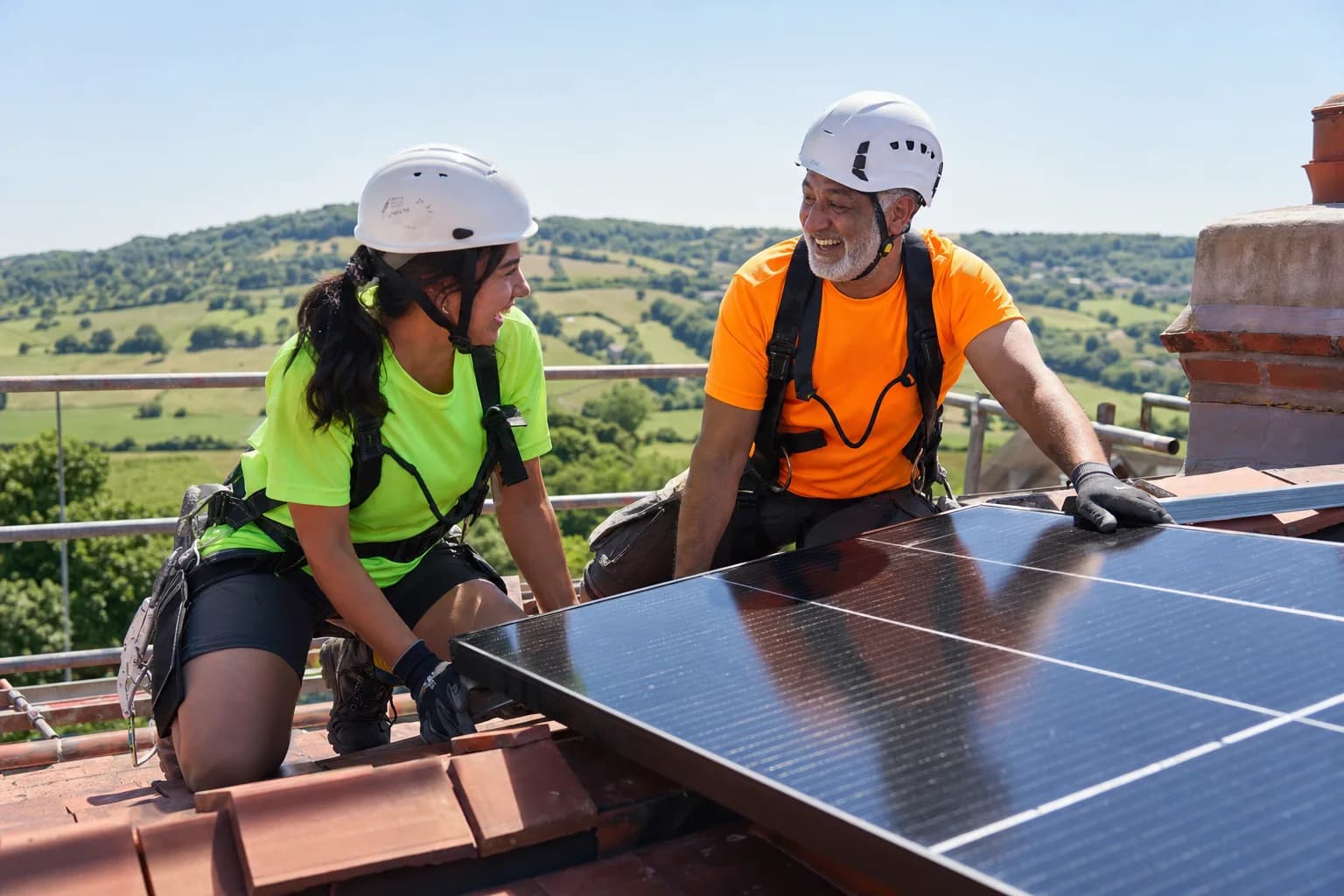
Expect to work at height, outdoors in any weather, and in protective kit. One RWE apprenticeship advert for an offshore major component team describes scheduled and unscheduled maintenance, fault finding in small teams at height using manuals, then heavy lifting and component exchange once you are trained.
Which GWO training do you need?
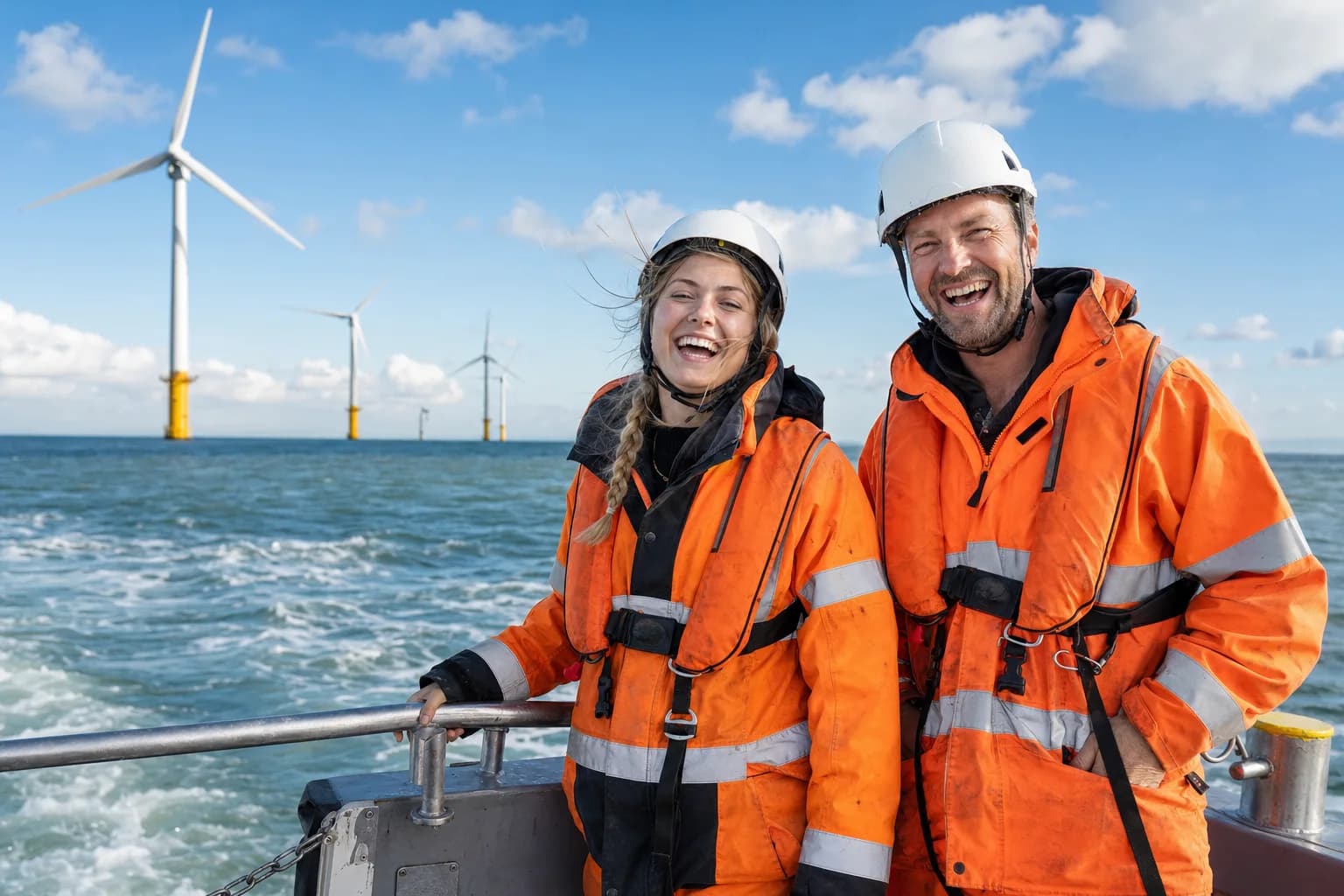
The Global Wind Organisation (GWO) sets the safety standards the industry uses. Its Basic Safety Training standard, version 20 dated 10 March 2026, has five modules: First Aid, Manual Handling, Fire Awareness, Working at Height and Sea Survival. Each module has an initial course and a refresher course. Sea Survival is the offshore one. It trains you to act safely on the trip from shore to vessel or turbine and back, in normal work and in an emergency.
GWO also publishes a Basic Technical Training standard with mechanical, electrical and other modules. GWO is clear that these courses do not make you a trained person able to do electrical or mechanical work unsupervised. They prepare you for your employer's own training. Training must come from a provider certified by a GWO-approved certification body, and GWO keeps a provider finder on its site.
Fitness, rotas and life offshore
Employers screen for the physical side of the job. RWE's recent apprenticeship adverts list being able to work at height and at sea as requirements. Its Greater Gabbard advert also asked applicants to live within an hour of site. You will also need to pass background checks, and the National Careers Service says you need a full driving licence.
Shift patterns vary by employer and by role. The National Careers Service gives 37 to 40 hours a week, with occasional on-call work. One RWE offshore apprenticeship advert, for the major component team, asked candidates to be willing to work shifts and stay on a jack-up vessel for up to two weeks, and to travel abroad to service ports.
How electricians and other trades move in
You can apply straight for technician jobs if you have qualifications and experience in electrical or mechanical engineering from another industry or the armed forces. That is the National Careers Service's direct entry route. A qualified electrician already brings the fault-finding, isolation and testing skills turbine work relies on. Expect to add GWO safety modules and the employer's own turbine training on top.
Oil and gas workers have extra help. In January 2025 RenewableUK and Offshore Energies UK launched the Energy Skills Passport. It maps the training a worker already holds against offshore wind roles such as turbine maintenance technician, then shows what is still missing.
Pay
GBP a year, before tax. Ranges run from the 25th to the 75th percentile. They come from ONS Annual Survey of Hours and Earnings, April 2026 (provisional), moved to the current year with a wage index. Regional figures are modelled, and ASHE has no separate offshore wind series. The National Careers Service gives £25,000 for a starter up to £47,000 for an experienced technician. Recent RWE apprenticeships paid £17,510 in year one. Offshore allowances, shift patterns and employer move pay most. Refer to the Renewables & Solar salary guide for figures from live adverts.
What you need
- GWO Basic Safety TrainingFirst Aid, Manual Handling, Fire Awareness, Working at Height and Sea Survival, under GWO's BST standard (version 20, March 2026). Each module has an initial and a refresher course.
- Sea Survival moduleThe offshore part of BST. It covers acting safely on transfers between shore, vessel and turbine, both in normal work and in an emergency.
- Engineering backgroundEither a Level 3 apprenticeship or qualifications and experience in electrical or mechanical engineering. Degrees and college courses in renewable, electrical or mechanical engineering are also routes in.
- Apprenticeship entryThe National Careers Service says advanced apprenticeships usually ask for 5 GCSEs at grade 9 to 4, including English and maths. RWE's adverts also asked for science.
- Fit to work at height and at seaEmployers list both as requirements in their adverts, alongside a willingness to work shifts.
- Checks and licenceYou will need to pass background checks and hold a full driving licence, according to the National Careers Service.
How to get there
- Before you startGet your GCSEs or an engineering courseAim for 5 GCSEs at grade 4 or above, including English and maths, or take an electrical, mechanical or maintenance engineering course at college.
- Year 0Apply for a wind technician apprenticeshipOperators recruit apprentices on Level 3 standards such as Mechatronics maintenance technician. Applications for recent RWE schemes closed on 20 February 2026 for starts on 1 August 2026.
- Years 1-2Classroom and workshop trainingOn RWE's Greater Gabbard scheme the first two years are classroom-based at a training centre in Rochester, Kent. Accommodation is provided while you are at college.
- Year 3On-site training at the wind farmYou move to the wind farm for on-site training with technicians. Your employer will tell you which safety training you need, such as GWO Sea Survival, before you work offshore.
- After year 3Qualify as a technicianYou finish with an NVQ Level 3 and work on scheduled maintenance, fault finding and repairs as part of the offshore team.
- Years 4+Progress to authorised technicianWith experience you can supervise a team and take on health and safety duties. Further training leads to operations and maintenance manager or control systems engineer roles.
Open now on ElectricalRoles.co.uk
See all →
Questions people ask
Do I need GWO training before I apply?
You need GWO safety training before you work on turbines, and offshore that can include Sea Survival. The National Careers Service says your employer will tell you which modules the job needs.
Can a qualified electrician become an offshore wind technician?
Yes. You can apply directly if you hold electrical or mechanical engineering qualifications and experience from another industry. Expect to add GWO Basic Safety Training and the employer's turbine-specific training. GWO's technical modules support that training but do not qualify you to work unsupervised on their own.
How long is a wind turbine technician apprenticeship?
Recent RWE schemes ran for three years. The National Careers Service says Level 3 advanced apprenticeships take three to four years. RWE's schemes ended with an NVQ Level 3.
How much do offshore wind apprentices earn?
Recent RWE wind technician apprenticeships paid £17,510 in the first year. Pay then rose each year in line with internal pay scales and the national minimum wage.
What is the shift pattern offshore?
It depends on the employer and the job. The National Careers Service gives 37 to 40 hours a week with occasional on-call work. One RWE offshore role asked for people willing to stay on a jack-up vessel for up to two weeks at a time.
I work in oil and gas. Is there a shortcut?
RenewableUK and Offshore Energies UK run the Energy Skills Passport. It compares the training you already hold with offshore wind roles such as turbine maintenance technician and sets out what you still need.
Sources
- National Careers Service: wind turbine technician
- Global Wind Organisation: Basic Safety Training Standard
- Global Wind Organisation: Basic Technical Training Standard
- Global Wind Organisation: wind training standards
- Find an apprenticeship: RWE wind turbine technician, major component team
- Find an apprenticeship: RWE wind turbine technician, Greater Gabbard
- Find an apprenticeship: RWE wind turbine technician, Greater Gabbard (on-site training)
- RenewableUK: Energy Skills Passport goes live