What does the job involve?
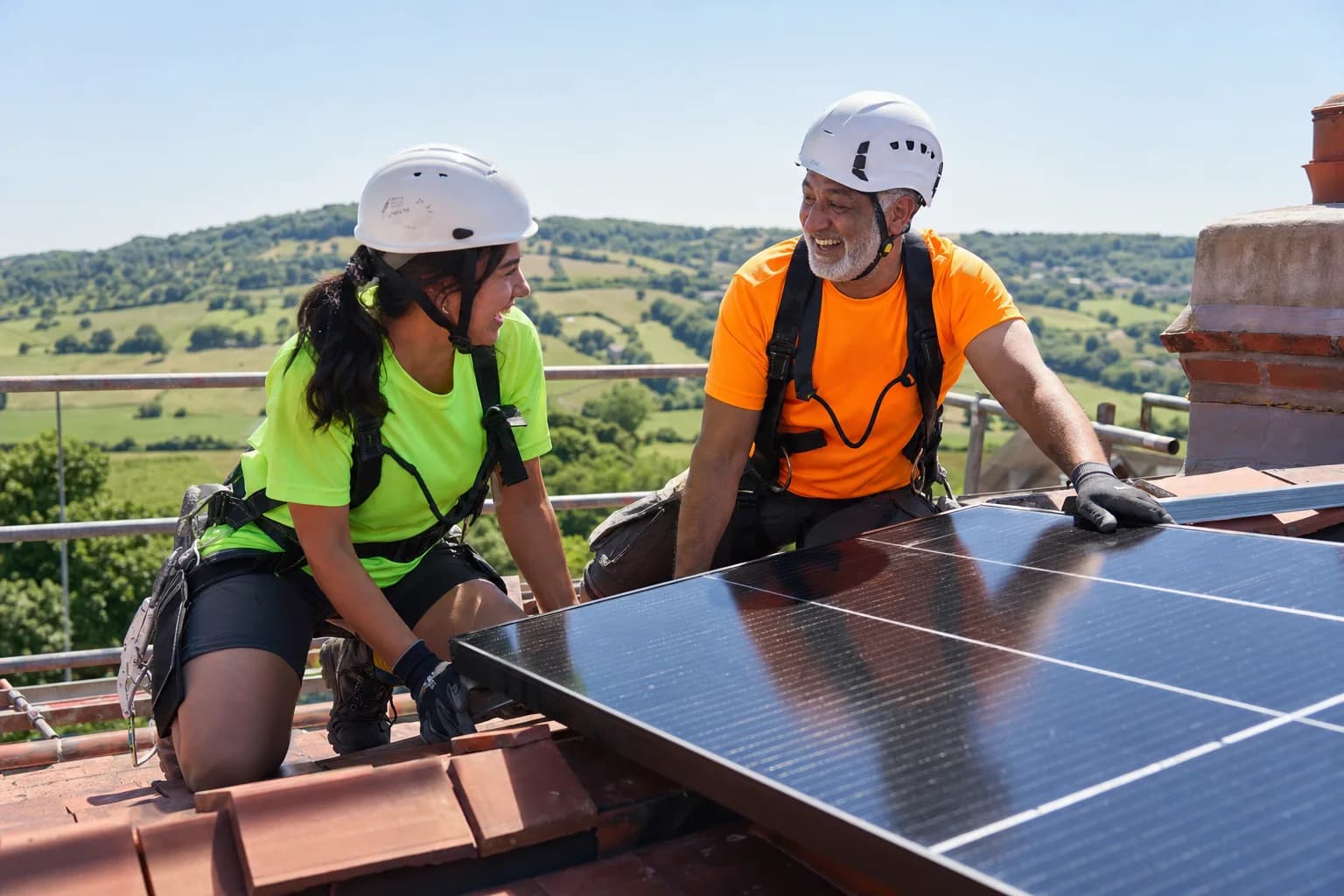
You survey the property, decide where the panels go from the design, fix the mounting system to the roof and fit the panels. Then you seal every roof fixing so it stays watertight, connect the inverter and any battery, test the system and show the customer how to use it. Later on you come back for maintenance and fault-finding. The work is at height and outdoors in all weathers, on homes, commercial buildings and construction sites.
The National Careers Service gives a typical week of 40 to 45 hours, usually between 8am and 6pm. On a construction site you will also need a CSCS card or an equivalent.
Which qualifications do you need?
The base is electrical. In practice that means an electrical installation apprenticeship or college route to full electrician, with BS 7671 (the 18th Edition) along the way. The National Careers Service lists the Installation and Maintenance Electrician Level 3 Advanced Apprenticeship as one way in. For that you will usually need five GCSEs at grades 9 to 4, including English and maths.
On top of that comes the solar award. City & Guilds runs the Level 3 Award in the Installation and Maintenance of Small Solar Photovoltaic Systems (2922-34). It follows the MCS technical specification, it is recognised as part of the ECS Gold Card, and JIB member firms can get funding towards it. If you want to fit batteries as well, there is a companion award, 2923-34, covering small electrical energy storage systems.
What is MCS and who needs it?
MCS certifies installation firms and products. The law does not require a system to be MCS certified. In practice, though, the customer needs an MCS certificate to claim incentives such as the Smart Export Guarantee. That certificate can only be issued if the system was commissioned by an MCS certified installer using MCS certified products, so most domestic customers will only use MCS firms.
MCS contractors work to the solar PV installation standard, MIS 3002. Systems have to be designed and installed to the IET Code of Practice for Grid Connected Solar Photovoltaic Systems, with BS 7671 taking precedence where the two conflict. Grid connection follows EREC G98 for systems up to 16 A per phase and G99 for anything larger.
How do you stay safe on roofs?
HSE says almost one in five deaths in construction involve roof work. Most of them come from falls off edges or through fragile roofs and rooflights. The law says all roof work must be planned and organised so it is done safely. Anyone doing the work must be trained, competent and told which precautions to use, and a method statement is the usual way to set those out.
Sloping roofs need scaffolding with edge protection at the eaves. On a terrace that means the back as well as the front. Secured ladders and roof ladders are only acceptable for jobs that take minutes. Treat every roof as fragile until a competent person has confirmed it is not. Never trust sheeted roofing or rooflights to take your weight.
Pay
GBP a year, before tax. Regional ranges are based on ONS ASHE April 2026 (provisional) electrician earnings, moved to the current year with a wage index; regional figures are modelled. The JIB row annualises the 2026 national standard hourly rates (£18.38 and £20.08). Overtime, travel and running your own MCS firm all move the figure. Refer to the Renewables & Solar salary guide for figures from live adverts.
What you need
- Electrical qualificationMost installer jobs expect you to be an electrician already, through an apprenticeship or college plus workplace training.
- Solar PV awardA short Level 3 course in installing and maintaining small solar PV systems, such as City & Guilds 2922-34.
- BS 7671 knowledgeThe 18th Edition wiring regulations take precedence over the solar code of practice wherever the two conflict.
- CSCS cardYou need a CSCS card or an equivalent to train and work on construction sites.
- Working at height competenceYou must be trained and competent in the roof access, edge protection and fragile-surface precautions set out in the method statement.
How to get there
- StartGet into electrical workStart on an electrical apprenticeship, or as an installation labourer learning on the job alongside qualified installers.
- End of trainingQualify as an electricianComplete the Level 3 electrical route, including the 18th Edition, and get your CSCS or ECS card.
- Once qualifiedTake the solar PV awardDo a short Level 3 solar PV course, such as City & Guilds 2922-34. Add 2923-34 if you also want to fit batteries.
- First jobsWork for an MCS installerGet experience on surveys, roof work, inverters and commissioning to the MIS 3002 standard and the G98 or G99 grid rules.
- With experienceProgress or go it aloneMove into design, project management or solar farm work, or set up your own MCS certified firm.
Open now on ElectricalRoles.co.uk

Questions people ask
Can I fit solar panels without being an electrician?
Yes, for the mechanical side. A qualified roofer can train to fit the panels to the roof. An electrician still has to connect the panels to the building's electrical system.
Is MCS certification a legal requirement?
No. The law does not require a system to be MCS certified. Without MCS, though, the customer gets no MCS certificate, and that certificate is what lets them claim incentives such as the Smart Export Guarantee. That is why most domestic installers are MCS firms.
Does the solar PV award count towards my ECS card?
City & Guilds says its 2922-34 solar PV award is recognised as part of the ECS Gold Card. JIB member companies can also get funding towards the course through the JIB Skills Development fund.
What standards does a solar PV install have to meet?
Under MIS 3002, systems are designed and installed to the IET Code of Practice for Grid Connected Solar Photovoltaic Systems, with BS 7671 taking precedence if the two conflict. Grid connection follows EREC G98 up to 16 A per phase and G99 above that.
Can I use ladders for solar work on a roof?
Only for very short jobs measured in minutes, and then only with properly secured access ladders and roof ladders. For a normal panel install on a sloping roof, HSE says you need scaffolding with edge protection at the eaves.