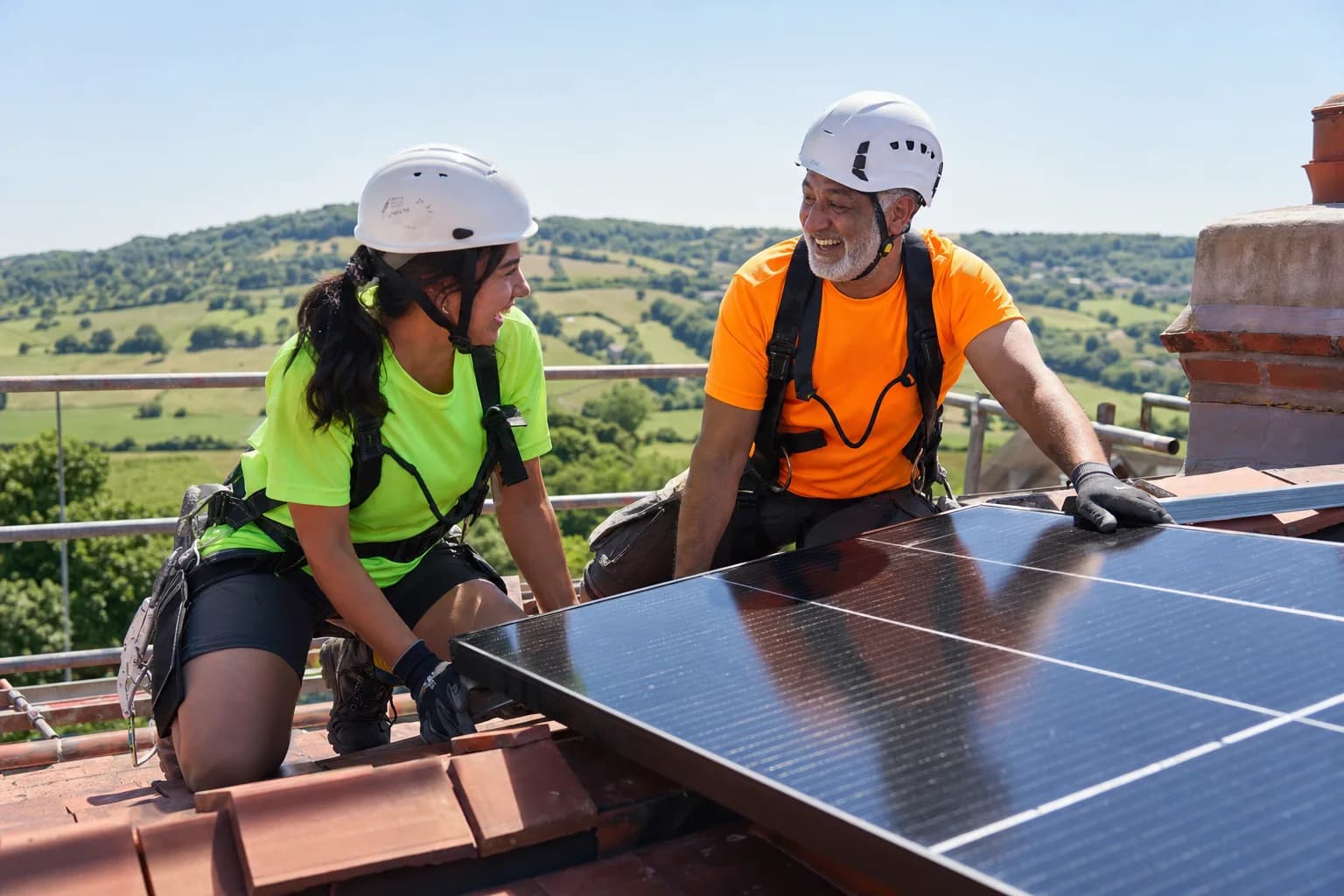
What does the job involve day to day?
On domestic jobs you survey the property, size the battery, fit it with the inverter, wire it into the consumer unit and set it up so it charges from solar or cheap overnight tariffs. MCS describes three common jobs: a battery fitted with new solar panels, a battery added to an existing solar array, and a battery installed on its own to run on off-peak electricity. Each needs different design checks, and retrofits mean working round someone else's earlier installation.
Commissioning is the part that separates a good engineer from a fitter. You test the installation, configure the inverter and monitoring, confirm the system charges and discharges as designed, and hand over. On an MCS job the customer should get a handover pack with product details and the workmanship warranty, and an MCS certificate within 10 working days of completion. Your paperwork has to be right for that to happen.
How does MCS certification work for batteries?
MCS published the Battery Installation Standard, MIS 3012, as the first standard for certifying complete battery installations. The current edition is MIS 3012:2025, version 1.0, issued on 1 January 2025. It covers systems up to 50kW across four classes of electrical energy storage system (EESS). Class 1 keeps everything in one enclosure with no visible DC cable. Class 2 has separate battery and inverter from one maker joined by DC cable.
Classes 3 and 4 are where your skill counts. In class 3 the battery and inverter come from different manufacturers, so the installer must confirm they are compatible. In class 4 the installer selects and assembles every component, including the safety devices. Certification is held by the business. MCS directs firms to NAPIT or NICEIC to start the process. As an employee you work under your firm's certification and must meet the competency requirements it sets.
What changes on large and grid-scale projects?
Grid-scale battery sites are construction projects with heavy safety law attached. HSE says anyone who designs, installs or operates a battery energy storage system must comply with the Health and Safety at Work Act, the Electricity at Work Regulations, the Dangerous Substances and Explosive Atmospheres Regulations and the Construction (Design and Management) Regulations. Fire and explosion risk is treated seriously. A site holding 25 tonnes or more of dangerous substances must notify the local fire and rescue service in writing and display signs.
On these sites you work in a larger team: installation crews, commissioning engineers, HV specialists and the operator's staff. The work is containerised battery units, power conversion, protection and the connection to the network. Expect permits to work, method statements and long spells away on site. Engineers with commissioning experience and an understanding of protection and HV switching are the people contractors struggle to find.
How do electricians move into battery storage?
The usual route is to qualify as an electrician first, then add a battery course. MCS keeps a search of approved training courses that meet its competency requirements, and battery storage is one of the technologies listed. Awarding and approval bodies on that search include City & Guilds, EAL, LCL and NICEIC. Many installers start with solar PV, because so many batteries go in alongside panels.
The IET Code of Practice for Electrical Energy Storage Systems, now in its third edition, is the reference most designers work from. It covers fixed systems in homes, commercial buildings, multi-occupancy buildings and industrial sites. Get a copy and learn it. After a few years of domestic and commercial installs, engineers with good testing and commissioning records move on to larger sites or into design.
Pay
GBP a year, before tax. Refer to the Renewables & Solar salary guide for figures from live adverts.
What you need
- Electrical qualificationBattery installation is electrical installation work, so employers expect a qualified electrician who can test and certify to current standards.
- Battery storage trainingTake a course listed on the MCS training search for battery storage. MCS lists these as meeting its competency requirements.
- MCS MIS 3012 knowledgeKnow the four EESS classes and how compatibility checks work when the battery and inverter come from different makers.
- IET Code of PracticeWork to the IET Code of Practice for Electrical Energy Storage Systems, 3rd edition, which covers domestic, commercial and industrial fixed systems.
- Firm-level certificationTo issue MCS certificates the business must be certified. MCS sends applicants to NAPIT or NICEIC.
- Site safety for large projectsGrid-scale work falls under CDM, DSEAR and the Electricity at Work Regulations, so expect site inductions, permits and risk assessments.
How to get there
- StartQualify as an electricianComplete an electrical apprenticeship or adult route so you can install, test and certify work.
- After qualifyingLearn solar PVMany batteries go in alongside panels, so solar experience makes you useful to installers straight away.
- After qualifyingTake an MCS-listed battery courseChoose a battery storage course from the MCS training search, with bodies such as City & Guilds, EAL, LCL or NICEIC.
- First 1-2 yearsInstall under an MCS-certified firmBuild a record of domestic and small commercial installs up to 50kW, including class 3 and 4 systems.
- Year 2 onwardsMove to commissioning or large sitesTake on commissioning, or join contractors building grid-scale battery sites under CDM and DSEAR.
- LaterDesign, supervise or start a businessMove into system design, site supervision, or set up a firm and apply for MCS certification through NAPIT or NICEIC.
Questions people ask
Do you need MCS certification to install home batteries?
MCS certification is held by the installing business. The MCS Battery Installation Standard, MIS 3012, sets the design and installation requirements for certified battery work up to 50kW. Customers who want an MCS certificate and handover pack need an MCS-certified installer.
What is MIS 3012?
MIS 3012 is the MCS Battery Installation Standard. The current version is MIS 3012:2025 version 1.0, issued on 1 January 2025. It covers electrical energy storage systems up to 50kW in classes 1 to 4.
What are EESS classes 1 to 4?
They describe how a battery system is put together. Class 1 is all in one enclosure, class 2 uses a separate battery and inverter from the same maker, class 3 mixes manufacturers, and class 4 is fully assembled by the installer. Classes 3 and 4 make the installer responsible for confirming compatibility.
Which certification bodies handle MCS battery certification?
MCS tells installers to contact NAPIT or NICEIC to register interest and begin battery installation certification. Those bodies assess the business against the MCS standard.
What safety rules apply to grid-scale battery sites?
HSE says designers, installers and operators must comply with laws including the Health and Safety at Work Act, the Electricity at Work Regulations, DSEAR and CDM. Sites holding 25 tonnes or more of dangerous substances must notify the local fire and rescue service in writing.
How much do battery storage engineers earn?
Modelled ONS figures put the middle half of earners in this group between £33,100 and £51,300 a year in the UK, with a median of £41,800. London and the South East pay more. Commissioning and HV skills on large projects push pay higher.
Sources
- MCS: The Battery Installation Standard (MIS 3012:2025)
- MCS: launch of the Battery Installation Standard
- MCS: Battery storage consumer guide
- MCS: Find a training course
- HSE: Grid-scale battery energy storage systems
- IET Shop: Code of Practice for Electrical Energy Storage Systems, 3rd Edition
- SELECT: Code of Practice for Electrical Energy Storage Systems