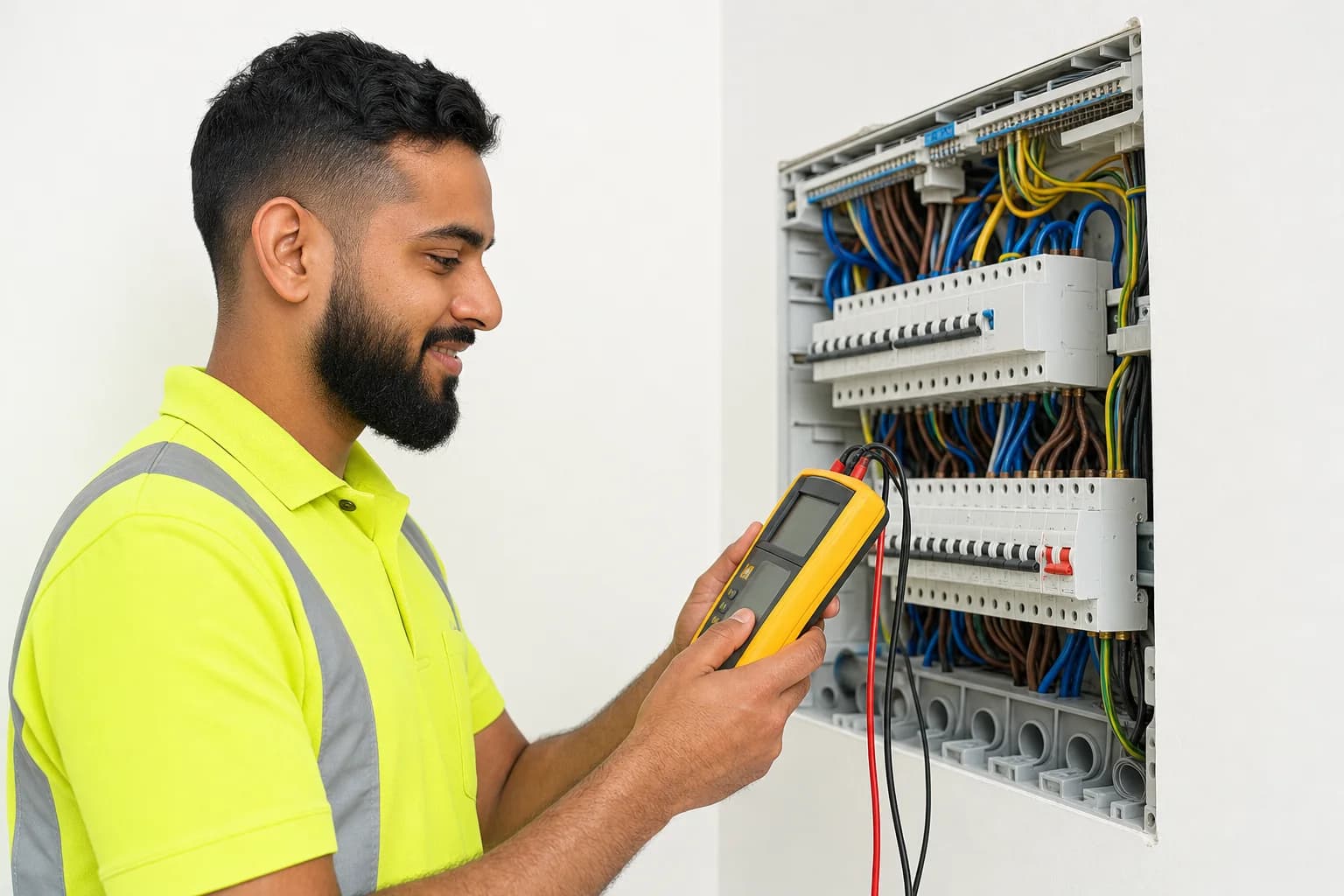
What does a commissioning engineer actually do?
Commissioning is the last check before a client takes an installation over. You prove that new or refurbished plant has been installed right and works within its operating limits, the manufacturer's specification and the company's procedures. The work goes in a fixed order. You test individual components first, then circuits, then the whole system. After that you make it live and watch how it behaves when it is first switched on.
Paperwork is half the job. You write test documents, record the results, produce technical reports and check them. You read drawings and schematics all day. When something fails you find the fault, sort it out or get it sorted, and test it again. On the power side that means injecting currents and voltages into protection relays to simulate faults, and checking that the settings work on both modern numerical relays and old electromechanical ones.
Which sectors hire commissioning engineers?
Power is the biggest employer. The Skills England standard for protection and plant commissioning engineers covers generation, transmission and distribution, with work on transformers, switchgear, conductors and battery systems. National Grid recruits commissioning engineers for HV substations. Defence is another: BAE Systems has advertised electrical and E&I commissioning roles on the Dreadnought submarine programme at Barrow-in-Furness.
Building services has its own version. On large projects the controls side commissions building energy management systems, which covers setting up, programming and training the end user. Low voltage commissioning on construction sites is part of the job description for an installation electrician's gold card, so many site electricians already do some of it.
How much travel is involved?
Expect to go where the plant is. A National Grid HV substation advert asked for a full UK driving licence and a place on a standby rota, and you had to live within 45 minutes of your base. It came with a company car. BAE Systems' electrical role covered factory acceptance tests, off-site test facilities and contractor sea trials, and possibly travel overseas.
Contractors who commission new builds usually move you from site to site as each job reaches handover. Hours can stretch near energisation dates, so ask about overtime, standby pay and travel time at interview.
How do electricians move into commissioning?
The usual route is from qualified electrician to testing work, then into commissioning. A good inspection and testing record helps. The City & Guilds 2391-52 award covers initial verification and periodic inspection, and that is the work commissioning is built on. Adverts often accept relevant experience instead of an HNC, but doing an HNC part-time in electrical engineering opens far more doors, especially in power and defence.
For HV work, employers look for knowledge of power systems, HV safe systems of work and protection. National Grid listed Senior Authorised Person status as desirable. School leavers can take the ST0157 apprenticeship, and the standard leads to EngTech registration.
Pay
GBP a year, before tax. Ranges show the 25th to 75th percentile for electrical engineers, from ONS ASHE April 2026 (provisional), moved to the current year with a wage index. Regional figures are modelled. Commissioning-specific adverts vary a lot: BAE Systems advertised E&I roles from £37,091 and electrical roles up to £39,000+, while National Grid offered £55,000 to £68,000 plus a car. Authorisations, standby pay and overtime raise the figure. Refer to the Electrical Engineers salary guide for figures from live adverts.
What you need
- HNC or equivalentAdverts commonly ask for an HNC (Level 4) in electrical engineering, or equivalent relevant experience. National Grid set a Level 4/HNC minimum for HV substation work.
- Testing and fault findingYou need proven skill in testing electrical systems, choosing the right test equipment, and reading drawings and technical documents.
- Inspection and testing qualificationFor LV work, the City & Guilds 2391-52 award covers both initial verification and periodic inspection and testing.
- ECS cardThe ECS Site Support Occupation card lists commissioning engineer as an eligible occupation. Electricians who commission LV systems can use the Installation Electrician gold card.
- HV authorisationIn transmission and distribution you need HV safe systems of work, and pay rises as you gain authorisations. Senior Authorised Person status is desirable.
- Driving licence and vettingPower network roles usually need a full UK driving licence. Defence roles need at least the Baseline Personnel Security Standard, and many need higher security vetting.
How to get there
- Years 1-4Qualify as an electrician or start an engineering apprenticeshipGet your Level 3 and gold card, or join the Level 4 ST0157 protection and plant commissioning apprenticeship.
- Years 4-6Build testing experienceDo as much inspection, testing and fault finding as you can, and take the 2391-52 award.
- Years 4-7Study for an HNCDo an HNC in electrical engineering part-time to meet the Level 4 requirement that most commissioning adverts set.
- Years 6-8Join a commissioning teamStart by commissioning under guidance, writing test records and taking part in factory acceptance tests.
- Year 8 onwardsGain authorisations and specialiseTake on HV authorisations, protection testing or E&I systems, and work towards EngTech registration and later IEng.
Open now on ElectricalRoles.co.uk


Questions people ask
Is commissioning the same as inspection and testing?
No. Inspection and testing proves that an installation is safe and meets the regulations. Commissioning starts from that and goes further. It proves that the whole system runs to its design specification once it is live.
Do I need a degree to be a commissioning engineer?
Usually not. Most adverts ask for an HNC or HND in electrical engineering, or equivalent experience. The ST0157 apprenticeship is at Level 4, and it leads to EngTech registration.
Which ECS card does a commissioning engineer hold?
The ECS Site Support Occupation card names commissioning engineer as an eligible occupation, and you apply for it as a manager rather than a craft worker. Electricians who commission low voltage installations on site can use the Installation Electrician gold card.
How long is the commissioning engineer apprenticeship?
The Skills England standard ST0157, electrical power protection and plant commissioning engineer, is at Level 4 and typically takes 36 months, not counting the assessment. It is approved for delivery, although the standard is being revised.
Will I be on call?
In power network roles you often will. National Grid's substation commissioning engineers join a standby rota for emergency call outs and must live within 45 minutes of their base.
Sources
- Skills England: Electrical power protection and plant commissioning engineer (ST0157)
- ECS: Card types
- IET Jobs: Commissioning Engineer - HV Substations, National Grid
- IET Jobs: Commissioning Engineer - Electrical, BAE Systems
- IET Jobs: Electrical and Instrumentation Commissioning Engineer, BAE Systems
- National Careers Service: Electrical engineering technician
- City & Guilds: 2391 inspection and testing FAQs