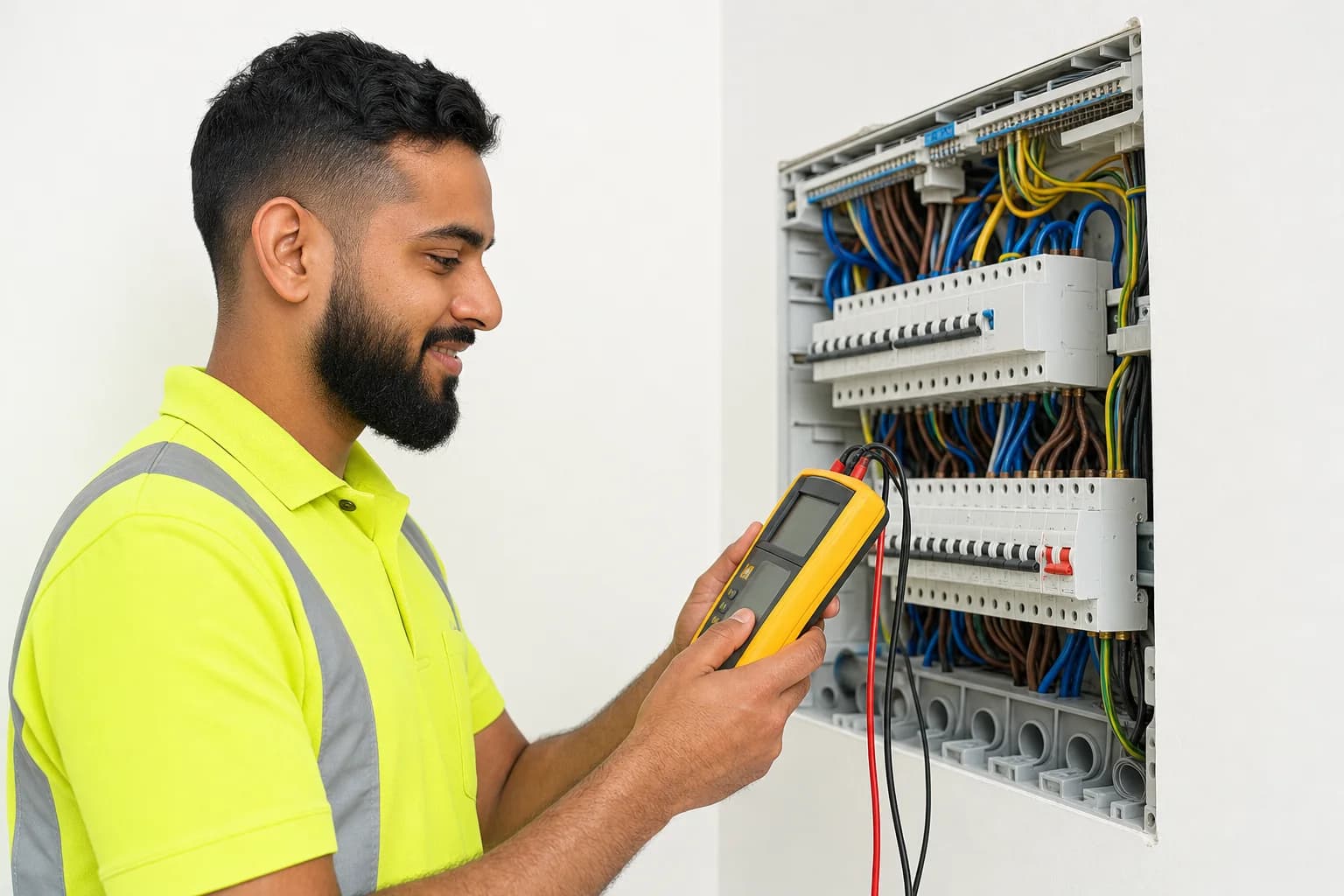
What is a qualified supervisor?
Every firm on a competent person scheme such as NICEIC or NAPIT has to name a qualified supervisor. The Electrotechnical Assessment Specification (EAS), the standard all certification and registration bodies assess against, defines the QS as a competent person who meets its Appendix 4 competence tables. That person carries specific day-to-day responsibility for the safety, technical standard and quality of the firm's electrical work. The scheme body has to accept the person you put forward, and it keeps assessing them for as long as they hold the role.
The QS sits alongside the principal duty holder (PDH). The PDH answers for the firm as a whole: making sure work meets the standards, certificates get issued, health and safety duties are met and all electrical work is assigned to a QS. The QS answers for the work itself. The ECS card scheme also runs a Qualifying Supervisor related discipline that can be added to an existing Installation Electrician, Maintenance Electrician or Manager card.
What does a qualified supervisor actually do?
Under the EAS the QS is directly responsible, every day, for the safety, quality and technical standard of the firm's electrical work. They make sure test results are recorded accurately on the right certificates and reports. On dwelling work in England and Wales they also make sure the work meets the Building Regulations and they verify the compliance certificates. They are the firm's technical contact with the scheme body and must be present for the whole of each assessment.
Supervision is graded by risk. The EAS guidance sorts operatives into three levels, from apprentices, mates and improvers up to skilled persons with supervisory experience close to a QS's. Each job is rated low, medium or high risk, and the result decides how closely the QS has to be involved on site. The QS does not have to be on site the whole time. The guidance does warn that a busy QS may end up doing little hands-on work, and that commercial pressure can weaken supervision. If you take the role on, ask for your duties in writing.
Can one person cover a whole firm?
Often, yes. The EAS asks for one principal duty holder and at least one QS for each contracting office. The number of supervisors has to suit the range, scale, geographical spread and categories of work run from that office. One person can be both PDH and QS. A sole trader who is the registered QS and does their own installing needs no extra supervision arrangements. NICEIC's own FAQ adds that its QS must be available full time.
A firm with several offices, or with gangs spread over a wide area, will need more than one QS. NICEIC's application fee covers the assessment of one QS, and extra supervisors are assessed once the firm is certified. If a QS leaves, the PDH must tell the scheme within 30 days, and the firm then has 120 days to get a replacement assessed for the same categories of work.
Which edition of the rules applies?
The IET publishes the EAS. Its current edition is dated June 2026 and replaced the October 2024 edition. The IET says the October 2024 changes still apply. The clause details in this guide come from the October 2024 text, including the two-year experience rule, the 30-day and 120-day limits and the qualification routes. That edition also dropped the Level 3 Certificate in Installing, Testing and Ensuring Compliance of Electrical Installations in Dwellings as a route for new applicants from 1 January 2026. People who passed it before that date can still apply through the historical qualifications route.
Pay
GBP a year, before tax. Refer to the Testing & Inspection salary guide for figures from live adverts.
What you need
- Core competenceOne of three main routes: a Level 3 electrotechnical apprenticeship with end-point assessment (including the Domestic Electrician apprenticeship in England), a historical industry apprenticeship or recognised equivalent, or the Electrotechnical Experienced Worker Assessment.
- Wiring Regulations awardThe Level 3 Award in the Requirements for Electrical Installations BS 7671. You must hold the current version within two years of any change to BS 7671 taking effect.
- Initial verification awardThe Level 3 Award in the Initial Verification of Electrical Installations, for installation work categories.
- Periodic inspection awardOnly if the firm does periodic inspection and testing: the Level 3 Award in the Periodic Inspection and Testing of Electrical Installations.
- Two years' responsibilityAt least two years' evidence of responsibility for the technical standard of electrical work, plus a record of ongoing CPD. NICEIC asks for two consecutive years of managerial or supervisory experience.
- Scheme acceptanceThe scheme body has to accept you, and you are assessed when the firm applies and on later surveillance visits.
Across the UK
| England | EAS Appendix 6 covers schemes for dwelling work under the Building Regulations. The QS has to make sure work complies with those regulations and verify the compliance certificates. |
|---|---|
| Wales | Appendix 6A sets the same QS duties for dwelling work, measured against the Building Regulations as they apply in Wales. |
| Scotland | Appendix 7 of the EAS sets separate requirements for firms working under the Scottish building standards. |
How to get there
- Years 1-4Qualify as an electricianFinish a Level 3 electrotechnical apprenticeship with end-point assessment, or the Experienced Worker Assessment if you already have years in the trade.
- During or after qualifyingAdd the BS 7671 and inspection awardsHold the current BS 7671 award and the Level 3 initial verification award. Add the periodic inspection award if the firm will do EICRs.
- At least 2 yearsBuild two years of responsibilityRun jobs, sign off your own testing and keep records that prove at least two years' responsibility for the technical standard of the work. Keep a CPD log too.
- ApplicationFirm applies to a schemeThe PDH signs the application and includes full details of each proposed QS.
- Assessment visitPass the assessmentThe assessor inspects samples of completed work and your records, and you must be there for the whole assessment.
- OngoingKeep it currentExpect surveillance visits, complete any CPD the EAS committee sets, and requalify on BS 7671 within two years of each change.
Open now on ElectricalRoles.co.uk


Questions people ask
Is a qualified supervisor the same as a principal duty holder?
No. The principal duty holder is responsible for the firm overall, and the qualified supervisor is responsible day to day for the technical standard of the work. The EAS allows one person to hold both roles, which is normal for small firms.
How much experience do I need to be a QS?
The EAS asks for at least two years' evidence of responsibility for the technical standard of electrical work, plus ongoing CPD. NICEIC's own FAQ says two consecutive years of managerial or supervisory experience.
Do I need the 2391 or an inspection and testing award?
For installation work you need the Level 3 Award in the Initial Verification of Electrical Installations. If the firm also does periodic inspection and testing, you need the Level 3 Award in the Periodic Inspection and Testing of Electrical Installations as well.
What happens if our QS leaves?
The principal duty holder must tell the scheme within 30 days. The firm then has 120 days to get a replacement assessed as competent for the same work categories, and that normally means a surveillance visit.
Can I move my QS status to a new scheme or firm?
Yes, if you have held QS status within the last two years. You will need a letter or similar evidence from your previous scheme confirming your status and the scope you were assessed for, and the new scope has to match it.
Does the dwellings certificate still qualify me as a QS?
The Level 3 Certificate in Installing, Testing and Ensuring Compliance of Electrical Installations in Dwellings closed to new applicants on 1 January 2026. If you passed it before then, you can still apply through the historical qualifications route.